Showing posts with label NEO. Show all posts

Tuesday, February 3, 2015

Occupy Hong Kong, Take Two

February 4, 2015 (Ulson Gunnar - NEO) Were Hong Kong's street demonstrations a movie, the director's chair would certainly be placed in Washington D.C. Several independent researchers have exposed the shockingly large number of direct links between funding and political backing from Washington and nearly every prominent leader organizing street demonstrations in Hong Kong.


The yellow umbrellas winding through Hong Kong's streets, whose numbers are inflated by American and British media's expert use of tight angles and close ups, could be considered "take two." Take one wasn't fit for Washington's vision for Hong Kong, which is ironic considering the protests claim to be fighting for Hong Kong's self-determination. Regardless, the last round of protests fared poorly, with the majority of Hong Kong's residents turning on protesters who blocked roads for weeks, hurting local businesses and disrupting the lives, peace, and prosperity of the majority.

A loud, disruptive minority, disrupting the peace and prosperity of the majority, all while shouting "pro-democratic" slogans presents another irony and one that seems lost on some.

Washington's Studio Faces Stiff Competition 

The problem for Washington is that its ability to manage public perception has been drastically diminished. This, all while the ability of others, particularly nations targeted by Washington's schemes, now have the ability to bring their side of the story to a larger audience. The balance of power struck means that attempts to portray crooked, clumsy criminals, awkward academics and washed up politicians as another iteration of the global "occupy" phenomenon were destined to fail from the beginning.


China in particularly is no longer the plaything of the West. It can defend itself, and it can do so across multiple dimensions from matters of media to those of military. So quickly did Beijing expose and pacify the core premise of the Occupy Central movement, that one wonders why Washington is even trying again.

Why Again? Why So Soon? 

Some might argue that Washington and the troupe of politicians and activists it sponsors have nothing to lose by trying. Several of the movement's leaders are facing increasing legal scrutiny, especially concerning large sums of cash they were moving around during the last round of protests. While success for the protests is a distant, remote possibility, the chances of each leader involved in them in turn self-destructing are much more likely. As time passes, that likelihood only seems to be increasing, leaving Washington and this immense, expensive network it has constructed in perpetual shambles. For Washington, it might be "now or never."

But perhaps there is another explanation, and one that security agencies in Beijing should be vigilant regarding, and that is the possibility that the US has somehow managed to formulate a strategy it believes may succeed. Pushing forward a pitiful, already defeated protest through the streets of Hong Kong may be a probing action to help inform precisely how to make its next moves, or it might be to lure Beijing and Hong Kong's local administrators into complacency.

The possibility that this otherwise spent force is serving as a diversion for greater unrest or violence planned for elsewhere cannot be discounted. The US currently maintains a variety of "entry points" into China in order to disrupt it. The others being the Tibet Autonomous Region and Xinjiang province in western China. The latter of these two is particularly volatile, with heavily armed, fanatical extremists currently honing their skills in what appears to be a CIA-backed exchange program bringing Chinese terrorists to Syria to fight alongside other US-backed militants, before returning home, bringing with them weapons, cash and extensive battlefield experience (and possibly some new friends).

What Worked for Beijing Before Will Work Again 

Beijing did two important things during the last round of US-backed protests. First, they categorically dismissed the protesters' demands. Doing anything less would have legitimized the leadership and their agenda. The second important thing Beijing did was then go on to systematically expose the leadership, their ties to foreign interests and improprieties revolving around how they were funding their protests.

Beijing's increasingly mature intelligence networks and growing sophistication across mass media greatly helped these efforts where traditional methods would have not only failed, but perhaps even accelerated instability.

Together, an insurmountable wall was erected between Washington and its troupe of politicians, activists, and money men, and their goal of not only destabilizing Hong Kong, but helping seed the grounds of the mainland for similar subversion. All Beijing had to do was then wait for the local population to grow tired of the occupations, and by not allowing itself to be provoked into violence. The wait wasn't long. Without incidents to spur on protesters and attract attention from a wider audience, the public was not only inconvenienced by the occupations, but bored as well.

By the end of the protests, the people of Hong Kong were begging police to drag Washington's cast of characters and all their extras from the streets. Even some of the protesters themselves appeared relived that the streets were finally being cleared.

But what Beijing might also try to do is reach out to those attracted unwittingly to the protests either out of youthful ignorance and curiosity or confusion regarding the actual definition of democracy, and Washington's definition. Alternative avenues for those feeling disenfranchised should be created, ones that lead away from street demonstrations and political contests, and toward more practical means to address their grievances, real or imagined.

It is difficult to tell if there will be a "take three," because it all depends on what these recent protests at the beginning of 2015 are truly aimed at achieving. Since achieving political transformation in Hong Kong is all but an impossibility, the only two options that appear to remain are the creation of instability meant to spread to the mainland, or a diversion meant to distract Beijing and tie up resources while a more insidious plot prepares to unfold.

Ulson Gunnar, a New York-based geopolitical analyst and writer especially for the online magazine “New Eastern Outlook”.

Tuesday, January 27, 2015

EU Exploits Paris Attacks to Build US-Style Police State in Europe

January 28, 2015 (Vladimir Platov - NEO) - After the bloody events in Paris, when journalists of Charlie Hebdo were murdered in the broad daylight, all across the globe numerous journals have been discussing who could benefit from this tragedy.

In some countries (primarily Muslim) the manifestations against the provocative publications of controversial cartoons of the Prophet that mocked the religious feelings of all Muslims are still on the rise. Some experts have linked these provocative anti-Muslim cartoons with the acquisition of Charlie Hebdo by the Rothschilds in December 2014, the latter of whom are constantly worrying about their profits. But now they can be fairly content since after these tragic events the number of copies sold increased tenfold.

Another group of experts believes that the attack on French journalists was the result of direct actions of Western intelligence agencies. Therefore, the consequences of the Charlie Hebdo massacre can be compared to those of 9/11 attack, such as the tightening of security in Europe. These agencies have been seeking ways to create obstacles to the spread of Islam in Europe, along with obtaining legislative support to establish total surveillance over the activities and private lives of Europeans. Political elites behind such agencies believe that democratic rights, the protection of which has been the focal point of all populist political speeches in the West, should be narrowed. Police control in Western countries is increasingly intrusive with each passing day, as the growing distrust and discontent of the European population becomes more apparent. Western elites have failed to put forward comprehensive social and economic measures that could ease this growing angst, therefore an increase in political activity, anti-government demonstrations, and electoral control over ruling parties was inevitable.

The recent two-day meeting of Foreign Ministers of the EU in Brussels, summoned to discuss the “urgent measures to strengthen the fight against terrorism.” can be regarded as damning evidence against Western elites. It was of little surprise for experts that the topic of these discussions was the adoption of a EU version of the US Patriot Act, that is used by Washington to control not only its fellow citizens, but “allies” alike.

In an attempt to set an example to the rest of Europe, Paris took the first steps in the general tightening of a growing police state in Europe, by spending a week pushing the agenda for the urgent need of this new legislative initiative across national media. Ultimately, the French Patriotic Act was adopted last week in the form of a new anti-terrorism law, as it was announced by French Prime Minister, Manuel Valls. According to Waltz, “to strengthen security efforts” a total of 122,000 police and military officers will be mobilized all across France.

In addition, France will create 2,680 new security positions over the next three years to “help counter the threat of Islamic extremism“. This threat is posed by 3,000 suspects in France and abroad, out of which 1,300 are living in metropolitan areas and have ties with terrorist groups in Syria and Iraq. The French government is planning to allocate a total of 425 million euros to fund this project.

However, these figures sound pretty confusing, since it is hard to believe that France can put such security measures in place against the activities of a mere 3,000 suspects by introducing pretty much the same number of positions in the national security to watch after them, while spending 1,5 million euros per officer.

However, Manuel Valls made it clear that, in addition to the fight against the “radicalization” of French society, which will take a hefty 60 million euros out of the budget, the new anti-terrorism law will increase the amount of surveillance over the Internet and social networks. He underlined that as a result of severe control over the social networks and personal correspondence of French citizens, national intelligence agencies have managed to flag more than 30,000 cases of “illegal” content.

According to the new anti-terrorism law, the French secret services now have the right to carry out investigations in places of work and living of specific individuals that were found “suspicious”, while sharing the information obtained this way with the US and other allied countries.

Thus, Paris is clearly following the lead of Washington in the use of a pretext of fighting against “radical Islam” and “terrorism” in order to tighten up national legislation by adopting a French version of the notorious Patriot Act. Somehow it doesn’t make Western intelligence agencies look less guilty as far as the attack on Charlie Hebdo is concerned. French authorities are now empowered to undermine thousands of opponents of Elysee Palace, along with progressive and pro-democracy organizations and parties, as well as members of the independent press, as has been done in the US.

What follows will be other European countries putting on a similar totalitarian hat, by handing over the personal lives of their civilians to intelligence services, both local and American.

Vladimir Platov, an expert on the Middle East, exclusively for the online magazine “New Eastern Outlook”

Wednesday, January 21, 2015

US Spying in Germany - With Friends Like These, Who Needs Enemies?


January 21, 2014 (Vladimir Platov - NEO) - A German spy employed by Bundesnachrichtendienst (BND) was arrested in Berlin in early July 2014. He was charged with handing out the top secret documents to foreign secret services, namely the CIA. A few days later it was announced that German law enforcement agencies began searching for another US spy that had been stealing information from the The Federal Ministry of Defence.

The general secretary of the Social Democratic Party (SPD) Yasmin Fahimi called for the adoption of a list of “effective countermeasures” that would allow Germany to protect its national secrets from being stolen by Washington. Speaking on national TV Yasmin Fahimi said that: “We are not yet another banana republic.”

The incident involving a CIA spy uncovered within the BND ranks was perceived by most Europeans as total nonsense: a total of 218 top secret documents were stolen from BND by a 31-year-old employee Marcus R. over a period of two years while he was cooperating with the ”friendly” CIA. The White House was paying “the loyal agent” according to the “banana republic,” rates up to and including 25 thousand euros, omitting glass beads and colored feathers.

However, according to the German newspaper Bild, the investigation found out this January that this double agent had provided the US intelligence with a list of 3,500 of BND employees, all who are currently working across the world. This can hardly be regarded as an expression of Washington’s friendship towards Germany.
...if Washington has been treating Germany like a regular “banana republic”, one can only imagine what it has been doing to smaller countries in Europe, across the Middle East, and in Southeast Asia as well. 
Such aggressive US intelligence activities in Germany have become commonplace, but no prominent politician of this vassal state yet has voiced his concerns over this fact. Indeed, within the last few years, according to the German newspaper Suddeutsche Zeitung, BND has been transferring the personal data of German citizens to the US National Security Agency (NSA), via to the world’s largest center-neutral Internet exchange point DE-CIX in Frankfurt. According to the newspaper, the NSA has been intercepting up to 500 million phone calls and Internet messages in Germany per month. And all this was done despite the fact that private information is protected by the German Constitution, yet it seems that the well-being of its “big brother” is by far more important to German politicians that their own Constitution. In addition, the NSA had made a number of attempts to use DE-CIX to obtain a profile on the European Aerospace and Defense group and its French management, a fact released by Edward Snowden last year.

According to numerous publications in Bild and Sonntag, more than a dozen employees of German ministries and departments are still working as CIA informants.

One should note that a sharp increase in US intelligence activities against Germany have been observed as early as October 2013, when Edward Snowden announced that the CIA and NSA tapped all of Angela Merkel’s phones. The scandal was followed by a phone conversation on this matter between the German Counsellor and the US President in January 2014. Shortly after, the US declared a policy of “no spying against the leaders of friendly countries.”


In response to the revealed information about the phone tapping at the end of 2013, Merkel established a committee to investigate foreign electronic surveillance, which included representatives from the ruling parties – the Conservatives and the Social Democrats along with “green” and “left” opposition figures. However, the latter stated that the committee is not interested in a thorough investigation of all the circumstances of US intelligence activities in Germany due to the desire to avoid the deterioration of relations between “fellow states” – Germany and the United States.

England, speaking as the most loyal vassal of Washington, has been trying to justify recent US intelligence activities in Germany on the pages of the online magazine The Daily Beast, by trying to convince the audience that the need for surveillance over Germany is a must “given its intense business and political ties to Russia and Iran, and Moscow’s decades-long cultivation of intelligence assets and collaborators from the first Cold War up through the current one, American intelligence agencies would be crazy not to conduct intensive espionage operations in Germany. “

Last summer, while referring to the scandal surrounding the activities of US intelligence in Germany, the President of the European Commission , Jean-Claude Juncker in an interview with foreign journalists noted that there may be a crisis of trust between the EU and the US and that authorities must try to explain to their American partners that friends are listening to each other, but don’t wiretap each other. According to Juncker this incident could lead to a crisis of confidence – not only in regards to transatlantic relations, but also among EU citizens.

It’s hard not to sympathize with Germany’s hardships and the lack of decency its citizens face, therefore it’s only natural that anti-American sentiments will grow. According to surveys, more than half of Germans believe in these circumstances that it’s dangerous to cooperate with the US ever more closer and they expect their Chancellor to give Washington a response, the one Angela Merkel had promised to give last year, but never dared.

Still, if Washington has been treating Germany like a regular “banana republic”, one can only imagine what it has been doing to smaller countries in Europe, across the Middle East, and in Southeast Asia as well. And maybe none of these countries are actually aware of what is going on if their citizens have been reading the White House propaganda outlets that haven’t touched upon the illegal activities of American intelligence agencies elsewhere around the world?

Vladimir Platov, Middle East expert, exclusively for the online magazine “New Eastern Outlook”

Tuesday, January 20, 2015

Et tu Poland? Putin Excluded from Holocaust Commemorations

January 20, 2015 (Ulson Gunnar - NEO) - Glancing at the headlines one might believe Russian President Vladimir Putin had inappropriately decided not to attend Holocaust commemorations in Poland.


In one breathtaking display of misinformation, Reuters would report in its article Putin will not attend Holocaust commemorations in Poland that, "Sources told Reuters on Monday that Putin was unlikely to join world leaders gathering at the site of the Auschwitz death camp because distrust caused by the conflict in Ukraine has cast a pall on arrangements."

In reality, The Russian leader was never invited by Poland, the nation hosting the commemorations.

The geopolitical thrust and accompanying misinformation is designed to reinforce the perception that Russia is now a hegemonic threat, on par with Nazi Germany during World War II. Reality could not contradict this contrived narrative more.

On June 22, 1941, Operation Barbarossa was launched. Three massive German armies moved at lightning speed into the Soviet Union as part of a long anticipated Nazi attempt to conquer Russia. The invasion would quickly overwhelm unprepared Russian forces bringing German armies up to the gates of several major Russian cities, Moscow included.


Along their way, Nazi forces would carry out mass arrests and executions of Eastern European Jews, Slavs, and Russians. While welcomed as "liberators" in western Ukraine where populations eagerly aided and abetted Germany's sweeping genocide, the Russian people and their allies fought bitterly at the cost of millions of lives to first slow then stop the invasion, then turn it back before finally reaching the gates of Berlin themselves.

Europe's Jews, imprisoned and mass murdered by the millions, owe their eventual liberation to the heroic sacrifices of the Russian people who fought the majority of the war in Europe against Germany, years before American boots landed on the beaches of Normandy in 1944.

Thus, Russian President Vladimir Putin is a representative of the nation and the peoples who formed the vanguard against the Nazi scourge and ended the threat of fascism in Europe. While American soldiers were shocked to find Hitler's death camps upon the conclusion of the war, the Russian people had been living the nightmare of Germany's systematic regional genocide for years, firsthand. Putin's exclusion from Holocaust commemorations is more than mere politics, it is a warning sign that an old enemy once again stirs in its dark lair.

Upon the conclusion of World War II, the Americans along with their newly formed NATO alliance, quickly made use of Nazis who surrendered to them rather than face "justice" at the hands of the Soviets for their serial crimes against humanity. The Americans integrated them into some more noble causes such as space exploration, but also among darker networks including intelligence, propaganda and even domestic terror networks (later to be known notoriously as Operation Gladio).

Former Nazis and their ideological allies in Soviet territory like the Ukraine, were continuously backed by NATO at the end of the World War to resist Soviet rule. These networks have survived, continuously, and manifest themselves even today in the form of the current regime in Kiev, which violently overthrew the elected government of Ukraine between late 2013 and early 2014.

Fully backed by NATO, these successors of Nazi collaborators who literally served Adolf Hitler's catastrophically tragic bid at global domination and assisted in the genocide that accompanied that bid, are carrying out similar dark deeds in eastern Ukraine, albeit on a smaller but no less tragic scale. In true form reflecting the obscenely dishonest narratives woven by Nazi propagandists like Joseph Goebbels, the Western world has sidestepped these historic and current realities and instead insist Russia, not literal fascists carrying Nazi flags, represent the resurgence of a fascist threat in Europe today.

President Putin's exclusion from Holocaust commemorations is a direct part of forming and reinforcing this narrative. No greater insult could be given to the victims, survivors and heroes who suffered and eventually overcame the Nazi scourge than to twist and intentionally distort history, propping up the successors of villains and condemning those representing the millions of Russian lives lost to confront such villains and a people who are once again ready to confront them again.

Europe once again approaches precariously the precipice of self-inflicted tragedy. Fascism both old and new is festering and spreading in all directions as European leaders and the special interests that direct them seek a familiar ploy used when all else fails to unite and regiment their peoples. Once again Russia seems to be standing alone in the face of this growing menace along their border, and once again the Russian people are quietly preparing to make sacrifices befitting the heroic deeds of their fore-bearers.

Must it come to this? What if people saw and pointed to the gross hypocrisy and betrayal of Poland and the forces of fascism once again festering within that dealt the nation such a tragic blow during the last World War? What if people realized, regardless of their feelings toward Russia, that the path they are on leads only to self-ruination? Could Europeans as a whole realize there is a middle path between the extremes being presented before them? The coming weeks and months will yield these answers. For those who have keenly kept one eye on history, and one on current events today, they must try to hope for the best, but prepare for the worst, remembering the lessons World War II has taught them, even if such lessons seem to be lost on everyone else.

Ulson Gunnar, a New York-based geopolitical analyst and writer especially for the online magazine “New Eastern Outlook”.  

Sunday, January 18, 2015

Did a Russian Parliamentarian Just Commit Treason?

PowerPoint given by Russian opposition leader blueprints US-backed violent overthrow of Russian government.

January 19, 2015 (Eric Draitser - LD) - An interesting thing happened in Washington recently, and it had nothing to do with Beltway politics, Democrats vs. Republicans, or any of the other standard fare for the middle of the week in mid-January. Rather, a relatively small, little publicized event took place at the Center for Strategic and International Studies (CSIS), a prominent liberal-leaning think tank in Washington.


Image: Ilya Ponomarev prepared an entire PowerPoint detailing his contempt for Russia and his best advice for its ruination. The entire presentation can be viewed here. 


The event, “Russia’s Opposition in a Time of War and Crisis,” featured prominent Russian liberal opposition parliamentarian (member of the Russian Duma) Ilya Ponomarev, a noted critic of Russian President Putin, providing a detailed presentation regarding the current political climate in Russia, and the potential for the ousting or overthrow of the Russian government. Yes, you heard that right. A Russian elected official came to the United States to give a talk about how best to effect regime change in his own country.

At this point, the question is not so much whether what Ponomarev did was improper. The much more pressing issue is whether or not, by making this presentation in Washington precisely at the moment of heightened tensions between the US and Russia, Ponomarev has committed treason. While this may seem a rather extreme characterization, it is in fact quite appropriate.

What Is Treason and Does It Apply?

If we define treason as “the offense of acting to overthrow one’s government or to kill or harm its sovereign,” then Ponomarev’s actions seem to tread very close to the threshold for treason. Moreover, the fact that such a presentation was delivered at CSIS – a think tank rife with “strategic planners” and proponents of the use of “soft power” to expand US hegemony – is instructive as it provides a window into both Ponomarev’s thinking and, perhaps more importantly, that of the political establishment in the US.

During his presentation, Ponomarev touched on a number of critical issues related to Russia’s domestic political situation, trying to illustrate for the attendees that the political reality in Russia, despite the simplicity of the western corporate media narrative, is rather complex. Though he described the Putin-led government as “Bonapartist,” he noted that “Putin is Russia’s only reliably working institution.” While the veracity of that statement is debatable, it does seem interesting that an elected Russian lawmaker would go to a foreign country under the auspices of wanting to help his country move forward, and then proceed to advocate the overthrow of the “only reliable institution.” Would this not be a thinly veiled attempt to advocate for destabilization, putsch, or something similar? 
 
The most significant portion of Ponomarev’s presentation centered on a slide titled “Conditions for the Change of Power in Russia,” which laid out essentially a roadmap or blueprint for regime change in Russia. Ponomarev’s slide outlined what he believes to be the essential elements for successful overthrow of the democratically elected government. These include: 


  1. Organized street protest (versus spontaneous one)
  2. Appealing vision of the future presented to the majority of Russians
  3. Leader, acceptable for all protesters and the elites
  4. Access to some financial resources
  5. Part of the elites should support the revolution
  6. Trigger event


Examining these points, it is clear that Ponomarev is not merely “informing” the assembled policymakers, journalists, and guests about what should happen, but rather is making a case for what must be made to happen. This is no educational exercise, but a thoughtfully crafted appeal to the political establishment of the US to support Ponomarev and his faction both financially and politically.
Of course the prescription above is nothing new to keen political observers who have followed the development of the crisis in Ukraine, and who have knowledge of how “soft power” works, and the concept of the “color revolution.” What Ponomarev is describing has happened more than a few times before. What is particularly troubling this time is that a sitting parliamentarian, himself a beneficiary of the democratic electoral process, is openly advocating an anti-democratic, unconstitutional overthrow of his own government. 

And Ponomarev is perfectly aware of this fact. Indeed, he included in the slide entitled “Conditions for the change of power in Russia” the following points: 


  • Unlikely – elections
  • Likely – revolution (non-violent or violent)
  • Compromise with the current elites increases probability of non-violent changes, but decreases the probability of successful reforms in the future

Here, Ponomarev is openly acknowledging a number of critical points. First, that regime change is unlikely to come through elections. This is a blatant admission that not only is Putin democratically elected and wildly popular, but that the opposition will never have anything close to enough popular support to defeat him. In other words, Ponomarev is tacitly saying that Putin must be overthrown precisely because the Russian people support him, and will likely continue to do so. Imagine: a democratically elected politician from a country supposedly run by an “authoritarian dictator” comes to the US – allegedly the world’s great champion of democracy – to advocate an anti-democratic regime change scenario. The hypocrisy is beyond words.
Imagine: a democratically elected politician from a country supposedly run by an “authoritarian dictator” comes to the US – allegedly the world’s great champion of democracy – to advocate an anti-democratic regime change scenario. The hypocrisy is beyond words. 
Second, and this is crucial to the question of treason, is the fact that Ponomarev is advocating “non-violent or violent revolution” in collaboration with a foreign power. Here the propagandists and assorted mouthpieces for the Empire might argue that CSIS is a private institution that is not affiliated with the US Government. One would have to painfully naïve about the nature of power in the US and how it functions to believe such a line of argument.

CSIS, with its long association with individuals such as Zbigniew Brzezinski who come from the uppermost echelons of power, is one of a small number of hugely influential think tanks that directly impact US foreign policy. CSIS, along with the Rand Corporation, Council on Foreign Relations, and a handful of other groups, are a useful barometer for measuring the pulse of the US establishment, and for individuals such as Ponomarev to get close to the levers of US power.

Therefore, it could be argued that Ponomarev is openly collaborating with a foreign government – in this case through the nominal intermediary of CSIS – to bring about the overthrow of his own government. I would refer readers back to the above-referenced definition of treason.

Third, and perhaps most telling about Ponomarev, is the fact that he openly warns against any form of compromise with the government, or the elites with influence in the government. Such a preemptively hostile, and inherently adversarial, relationship with the government precludes any possibility for dialogue or even negotiation. Considering the fact that, at best, Ponomarev and the liberal opposition represent a relatively small proportion of the Russian people (primarily the western-oriented business, finance, and media community, and the young liberals they can mobilize on the streets), the net effect of what he is advocating is that a small, foreign-backed minority with deep pockets seize control of the government in a quite possibly violent putsch. Ukraine anyone? Treason anyone?

While such open treason might come as a shock to many outside Russia, those who follow the country closely are all too aware of the insidious role of the United States in fomenting unrest and bankrolling the liberal opposition. It is an open secret in Russia that many, if not most, of the opposition liberals are either directly or indirectly collaborating with the US against their own country.

Liberal Opposition or Agents of a Foreign Power?

It would be an extreme oversimplification, and not entirely honest, to characterize all Russian liberals as foreign agents. Some are simply socially liberal people who see in the West a political, economic, social and cultural template for their own society. Needless to say, such a view is a small minority in Russia where traditional values and social/cultural conservatism have been on the rise since the end of the Soviet Union, and especially since Putin came to power.

However, when one examines key figures and institutions of the liberal establishment in Russia – both in politics and civil society – it becomes clear that some of the most influential are in fact collaborating with foreign powers (especially the US) to undermine the Russian government.


Boris Nemtsov is not only one of the leading liberal opposition figures in Russia, he is also a notoriously corrupt and oligarch-friendly politician who, in recent years, has fashioned for himself the public persona of an anti-corruption, anti-oligarch crusader. Of course, he doesn’t care to mention his notorious, and politically and financially lucrative, relationship with disgraced Russian oligarch Khodorkovsky. Nor does he advertise his deep commitment to aiding the US further its own agenda, as evidenced by his appearance at the now infamous 2012 gathering at the US Embassy of liberal leaders with then newly appointed Ambassador, and self-described “expert” in regime change, Michael McFaul.

Similarly, Nemtsov’s ally Vladimir Ryzhkov, according to various accounts, “formed a Committee…in 2003 to ‘draw’ funds of the imprisoned Khodorkovsky along with soliciting funds from fugitive oligarchs such as Boris Berezovsky and western foundations such as the Soros Foundation. The stated aim of the effort was to rally ‘democratic’ forces against Putin.” The anti-corruption campaigner seemed to have little qualms with being financed by the most corrupt forces in the country.

Gary Kasparov, the outspoken opposition figure, former chess champion and darling of the US neocon establishment, has his own questions to answer. As F. William Engdahl has written: 


In April 2007, Kasparov admitted he was a board member of the National Security Advisory Council of [the] Center for Security Policy, a “non-profit, non-partisan national security organization that specializes in identifying policies, actions, and resource needs that are vital to American security.” Inside Russia Kasparov is more infamous for his earlier financial ties to Leonid Nevzlin, former Yukos vice-president and partner of Michael Khodorokvsky. Nevzlin fled to Israel on being charged in Russia on charges of murder and hiring contract killers to eliminate “objectionable people” while Yukos vice-president.

Can one really doubt the true intentions of a Russian “activist” and “leader” who happily sits on the board of a US think tank that focuses on “American security” (coded language for US foreign policy objectives)? Rather than being interested in progress in Russia, Kasparov is motivated only by his desire to gain power and prestige.

Beyond just the individuals, a number of influential “civil society” organizations deeply tied to the US establishment figure prominently in the liberal opposition. These organizations (Strategy 31, the Moscow-Helsinki Group, Levada Center, GOLOS, and many others) are either directly or indirectly funded by the United States through its myriad soft power organs, the most infamous among them being the National Endowment for Democracy. That these organizations knowingly take money from the US Government, and then present themselves as objective, disinterested civil society organizations is the height of cynicism and hypocrisy. What does one call such an organization if not an “agent of a foreign power”? I would again refer readers to the above-cited definition of “treason.”

Whether or not Ponomarev’s presentation fits the legal definition of treason would be for lawyers and legal scholars to decide. What is clear however is that Ponomarev, and indeed the vast bulk of the Russian liberal establishment, is a de facto appendage of US soft power in Russia. They act not in the interests of the Russian people, but of themselves and their patrons in the West. As such, it is up to the people of Russia to address this sort of treacherous behavior in their elected (and unelected) officials. And it is up to those of us around the world – those who refuse to go along with western imperialism in its many forms – to expose these individuals and organizations wherever they rear their ugly heads.


Eric Draitser is an independent geopolitical analyst based in New York City, he is the founder of StopImperialism.org and OP-ed columnist for RT and frequent contributor to “New Eastern Outlook.” 

Thursday, December 18, 2014

The Feeding Begins: Foreign Bankers Descend on Ukraine

December 18, 2014 (F. William Engdahl - NEO) - If it were not for the fact that the lives of some 45 million people are at stake, Ukrainian national politics could be laughed off as a very sick joke. Any pretenses that the October national elections would bring a semblance of genuine democracy of the sort thousands of ordinary Ukrainians demonstrated for on Maidan Square just one year ago vanished with the announcement by Victoria Nuland’s darling Prime Minister, “Yat” Yatsenyuk, of his new cabinet.

The US-picked Ukraine President, billionaire oligarch Petro Poroshenko called “snap” elections at the end of August for October 26. He did so to make sure genuine opposition to his regime of murderers, gangsters and in some cases outright Nazis would be able to push an unprepared genuine opposition out of the Verkhovna Rada or Parliament. Because the parliament had significant opposition parties to the US-engineered February 22 coup d’etat, they had blocked many key pieces of legislation that the Western vultures were demanding, from changing key land ownership laws to privatization of precious state assets. By law, the old parliament would have sat until its five year term ended in October, 2017. That was clearly too long for State Department neo-con Ukraine puppet-mistress Victoria Nuland and her backers in Washington.

Now, with a new parliament that is controlled by the Petro Poroshenko bloc as largest party and the boyish-looking former Prime Minister Arseniy Yatsenyuk, who is also new Prime Minister as head of the second largest party, the way was clear to get on with the rape of Ukraine. What shocked some is the blatant foreign takeover that followed, like a Wall Street vulture fund raid on a distressed debtor country of the Third World.

The ridiculous charade

Yatsenyuk, former finance minister in a previous criminal regime, and a suspected senior member of the US-intelligence-friendly “Church of Scientology,” has named three complete foreigners as cabinet ministers in key economic posts. And in an extraordinary act, the three have been made instant Ukrainian citizens by Poroshenko in a ridiculous ceremony. Ukraine is looking more and more like the US-occupied Philippines after the Spanish-American War of 1898 when General Arthur MacArthur, father of the mentally-dis-ordered Douglas, was Washington’s dictator on the spot.

The new Ukrainian Finance Minister, the one who will control the money and decides where it goes, is one Natalia A. Jaresko. She speaks fluent Ukrainian. Only problem—she is an American citizen, a US State Department veteran who is also a US investment banker. Now, the Ukrainian Constitution, prudently enough, stipulates that government ministers be Ukrainian. How then does our sweet Natalia come in?

The President of Ukraine, another Victoria Nuland favorite, the “Chocolate King” corrupt oligarch billionaire, Petro Poroshenko, made her a Ukrainian citizen in a bizarre ceremony the same day just hours before the parliament declared her Finance Minister.

In justifying his astonishing move, Poroshenko declared, “There are absolutely extraordinary challenges facing Ukraine…All this requires innovative solutions in the government…These decisions mean searching for candidates for the new government not only in Ukraine but also abroad.”

Forget your earlier silly schoolbook notions about how a democracy and a nation function. This is the age of no nation state, of private capital taking over the world for sake of profit. Looting über alles is the motto. The nation of Ukraine is being put on the auction bloc to be privatized anyway, so it makes sense that the auctioneers at the US State Department head-hunt the ones to do the inside job of preparing that auction wherever they find the willing executioners. And because what the privatizers have planned, it is easier to believe a non-Ukrainian would let the country be raped easier than a native Ukrainian, even corrupt natives.


In her acceptance speech Jaresko declared, “The new team aims to change the country, to improve its transparency and to eliminate corruption. The members of the team are ready to deal with the challenges Ukraine faces today. This is a government of professionals and technocrats, and we intend to work. I’ve been living in Ukraine for 22 years and until this day I was the head of a large company that controlled three investment funds.,” she told Ukrainian television news service TSN.

What Jaresko did not say was that she had been sent to Ukraine 22 years before as a member of the US State Department.

Jaresko’s qualifications for the job fit the requirements of a vulture fund rapist banker. She was founder and CEO of Horizon Capital Associates, LLC. Her Horizon Capital is “a private equity and venture capital firm specializing in early stage, buyouts, growth capital, and expansion opportunities. It prefers to invest in financial services, fast moving consumer goods, retail, and industrial goods sectors. It typically invests in mid-cap companies based in Ukraine, Belarus, and Moldova,” according to Business Week. They were founded in 1995 and have offices in Kiev. Jaresko is also at the same time CEO of a private equity fund WNISEF.

WNISEF or Western NIS Enterprise Fund is a $150 million private equity fund, active in Ukraine and Moldova investing in small and medium-sized companies. Since its inception, “WNISEF has invested approximately $168 million in 118 companies in the region in a range of industries with a concentration on fast moving consumer goods, construction materials, packaging, retail, and financial services. WNISEF is managed by Horizon Capital Associates, LLC. WNISEF was established by the US Congress and funded by the US government via US Agency for International Development (USAID).”

Before she founded Horizon and WNISEF, the Harvard-trained Jaresko worked for the US State Department in the IMF-steered looting of the country that began just after the US-inspired collapse of the Soviet Union in 1991. From 1992-1995 she was Chief of the Economic Section of the US Embassy in Kiev. When US-backed Viktor Yushchenko was installed via Washington’s “Orange Revolution” as President in 2004, Jaresko served on his Foreign Investors Advisory Council.

US State Department deputy spokeswoman, former CIA spokeswoman Marie Harf has already denied Washington had any hand in her appointment. Of course she would never lie.

Another foreign banker as Economy Minister

Apparently not satisfied that only one investment banker as Finance Minister would suffice, Nuland’s Washington friends have installed Aivaras Abromavicius, a Lithuanian investment banker, to be Economy Minister. According to the official US Government propaganda site, Radio Free Europe—the old CIA Cold War propaganda news service still exists, with its old name as kind of a sick joke—Abromavicius, born in Vilnius, Lithuania, has worked in Kyiv since 2008 as partner and fund manager at the East Capital asset management group. East Capital reportedly has invested almost $100 million in 2012 in Ukrainian projects. It would be interesting to know whose money. Abromavicius describes himself as a Ukrainian patriot (sic!), and has pledged “radical measures.”

East Capital is a Sweden-based “frontier markets” fund active in 25 emerging market countries. The founder of Abromavicius’ East Capital is Peter Elam Håkansson according to their website. Before that Håkansson held leading positions with the Swedish Wallenberg family’s Enskilda Securities.

And a Georgian Health Minister

Rounding out the bizarre new Cabinet of Yatsenyuk is Alexander Kvitashvili, a Georgian. Kvitashvili was health minister in Georgia between 2008 and 2010, under then-President Mikheil Saakashvili, like Yushchenko, another US-installed corrupt puppet President from the US-financed Rose Revolution of 2003. Kvitashvili studied and worked in the United States before becoming Georgia’s health minister.

According to Radio Free Europe, “Yatsenyuk has tasked Kvitashvili with introducing sweeping reforms to tackle rampant corruption among health authorities.” However, the designated corruption-fighter has one handicap: he does not speak the Ukrainian language. That doesn’t matter apparently, as he has stated that he has a “deep respect for Ukraine and its people.” More than that, a corruption-fighting health minister in Ukraine these days apparently doesn’t need.

Rape of an entire country, just as rape of a small child, is murder. It is a form of murder of the soul and ultimately of the child. Forty five million Ukrainians do not deserve such treatment any more than an innocent four-year-old child does.

F. William Engdahl is strategic risk consultant and lecturer, he holds a degree in politics from Princeton University and is a best-selling author on oil and geopolitics, exclusively for the online magazine
“New Eastern Outlook”

Saturday, October 25, 2014

Putin Exposes Criminal Global Order

October 26, 2014 (Ulson Gunnar - NEO) -Russian President Vladimir Putin, before an international audience, exposed an international order capitalizing on the end of the Cold War to reshape the world according to its own interests, sidelining concepts such as basic international relations, international laws, systems of checks and balances, and even the very concept of national sovereignty itself. Amid President Putin's speech, he would condemn the United States' support for neo-fascists, terrorists, and its contempt for national sovereignty around the world.

The West's Rebuttal

Curious language accompanied the New York Times' account of the Valdai International Club discussion in the Black Sea coastal region of Sochi, Russia in front of which President Putin spoke. In an article titled, "Putin Accuses U.S. of Backing ‘Neo-Fascists’ and ‘Islamic Radicals’," the NYT attempts to portray President Putin's statements about US support for neo-fascists and terrorists as merely baseless accusations.

The NYT claims, "instead of supporting democracy and sovereign states, Mr. Putin said during a three-hour appearance at the conference, the United States supports “dubious” groups ranging from “open neo-fascists to Islamic radicals.”" The NYT would also report, "“Why do they support such people,” he asked the annual gathering known as the Valdai Club, which met this year in the southern resort town of Sochi. “They do this because they decide to use them as instruments along the way in achieving their goals, but then burn their fingers and recoil.”"

It is difficult to understand why the NYT attempts to portray this statement as particularly controversial, or as a "diatribe," as the Times puts it, rather than a factual, timely, and necessary observation. 

The NYT would also state, "Russia is often accused of provoking the crisis in Ukraine by annexing Crimea, and of prolonging the agony in Syria by helping to crush a popular uprising against President Bashar al-Assad, Moscow’s last major Arab ally. Some analysts have suggested that Mr. Putin seeks to restore the lost power and influence of the Soviet Union, or even the Russian Empire, in a bid to prolong his own rule."

Technically speaking, Russia is regularly accused of all of this, though the NYT fails to fill in for readers how ridiculous each and every one of these accusations are.

To begin with, the Ukrainian crisis began when neo-fascists violently overthrew the elected government of Ukraine in late 2013, early 2014 with the United States' full backing. The political order that seized power constituted overtly fascist political parties including Svoboda and the "Fatherland Party," and was openly backed by flagrantly Neo-Nazi armed groups such as Right Sector. It was only then that eastern Ukrainians began to flee into the arms of Russia who in turn oversaw a referendum returning Crimea to Russian sovereignty.

Likewise regarding Syria, there is no question today that the conflict Damascus is fighting is not a "popular uprising against President Bashar al-Assad," but rather a proxy war being fought against Damascus using sectarian extremists ranging from various Al Qaeda affiliates, to the newly christened "Islamic State," all of which constitute terrorist fronts and in no way equate to a "popular uprising."

As far as the NYT's claims that President Putin seeks to "restore the lost power and influence of the Soviet Union, or even the Russian Empire," readers may be left confused when considering that the Soviet Union and Russian Empire represent two diametrically opposed political orders, and still, neither aspired toward nor achieved the global hegemony Western military and economic expansion has reached.

The US is its Own Worst Enemy

President Putin's comments about the United States using various proxies as "instruments" toward achieving their goals, but with which they"burn their fingers and recoil" in the process could best be exemplified in the US' arming of Al Qaeda and other militant groups in Afghanistan during the 1980's. Al Qaeda would go on to become a global scourge the US claims it must now wage an equally global war to extinguish, of course with no apparent success.

Part of the United States' growing problem upon the global stage, a problem where it is irredeemably losing respect and legitimacy it had once commanded, is its own mass media and its utter failure to hold accountable poor policy driven by corrupt, criminal special interests. Leaving it to Russian President Vladimir Putin to point out the sorry state of American foreign policy grants Russia the respect and legitimacy the US would have otherwise held onto were it capable of putting its own house in order. The inability of America's media to serve public interests is in itself a symptom of America's greater malaise.

Of course as with all nations, Russia does what is in Russia's own best interests. Occasionally, however, these interests converge with public interests and in this case, global interests. The United States' foreign policy has become a global menace to all, not just a menace to Russia. However, because US foreign policy is a menace to Russia as well, Russia by necessity must protest it at venues like the Valdai International Club.


Because of this, President Putin's words strike with a popular resonance.

From Afghanistan, to Iraq, to Syria, to Ukraine and now ironically back to Iraq again, the United States has left a trail of catastrophe behind all that it has done overseas. Nations so far spared such catastrophe are most likely considering what happens if they're next. It is not the Kremlin's ability to sway the minds of the world that has turned the tables on America causing it to slink away into irrelevancy and general disdain, but its own actions it refuses to address or reform.

When America's Agenda Becomes the "World's" Agenda...

President Putin would continue with comments stating, "it looks like the so-called 'winners' of the Cold War are determined to have it all and reshape the world into a place that could better serve their interests alone." He would also state, "in a world dominated by one country and a group of its satellites, the process of 'global decision-making' often boils down to pushing through their own recipes under the guise of a universal proposal. This group has in fact become so ambitious that its solutions are now passed off as decisions made by the entire global community."

It is difficult to disagree. With the rise of the BRICS highlighting just how "global" America's "recipes" are not, President Putin's "diatribe" will soon become painfully obvious facts understood widely around the world and only further hinder the West as it tries to manufacturing legitimacy and authority out of thinner and thinner air. Indeed, as President Putin suggests, there is nothing truly "international" about what is often called "international consensus." Instead, it is a collection of "satellites" around the United States, and often even states strong-armed into lending their "consensus." When nations a billion strong refuse to sign onto the US' agenda, or an entire continent rejects the authority of America's so-called "international" institutions, can they truly be called "international?"

Such tactics however, resemble those of tyrannies, in fact, the very tyrannies the United States had once been thought of as the champion against. Ironic that it has become what it had once fought, from its inception to the pinnacle of its power, influence and respect. The tides will change when President Putin's message becomes better understood and the true global consensus develops the power and resources to have its voice heard over the manufactured "consent" the US wields upon the world's stage. While it is possible that the US might alternatively right itself before this happens, it is unlikely. As the NYT proves, those charged with holding the United States' special interests accountable have clearly committed themselves to doing precisely the opposite.

Ulson Gunnar, a New York-based geopolitical analyst and writer especially for the online magazine “New Eastern Outlook”.

Friday, October 17, 2014

Iran and the Proxy War in Kurdistan


October 17, 2014 (Eric Draitser - NEO) - In the midst of the war against ISIS (Islamic State) now taking place in both Iraq and Syria, a possible shifting of alliances that could fundamentally alter the balance of power in the region is taking place, and no one seems to have noticed. Specifically, the burgeoning relationship between the Islamic Republic of Iran and the semi-autonomous Kurdistan region of Northern Iraq has the potential to remake the political landscape of the Middle East. Naturally, such a development is part of a broader geopolitical gambit by Iran, and it will have significant ramifications for all regional actors. However, it is Turkey, the gulf monarchies, and Israel that potentially have the most to lose from such a development.

While Iran has long-standing disputes with elements of its own Kurdish minority, it has demonstrably taken the lead in aiding Iraqi Kurds in their war against extremist fighters loyal to ISIS. As Kurdish President Massud Barzani explained in late August, “The Islamic Republic of Iran was the first state to help us…and it provided us with weapons and equipment.” This fact alone, coupled with the plausible, though unconfirmed, allegations of Iranian military involvement on the ground in Kurdish Iraq, demonstrates clearly the high priority Tehran has placed on cooperation with Barzani’s government and the Kurdish people in the fight against the Saudi and Qatari-backed militants of ISIS. The question is, why? What is it that Iran hopes to gain from its involvement in this fight? Who stands to lose? And how could this change the region?

The Iran Equation

While many eyebrows have been raised at Iranian involvement on the side of the Kurds in the fight against ISIS, perhaps it should not come as a much of a surprise. Tehran has steadily been shoring up its relations with Erbil, both out of a genuine desire to form an alliance, and as a counter-measure against the ouster of their close ally and partner, former Iraqi Prime Minister Nouri al-Maliki.

Since the US war on Iraq began in 2003, and especially after US troops left in 2011, Iran had positioned itself as a key, and in some ways dominant, actor in Iraq. Not only did it have significant influence with Maliki and his government, it also saw in Iraq an opportunity to break out of the isolation imposed upon it by the US, EU and Israel over its disputed nuclear program. For Iran, Iraq under Maliki was a bridge both physically (linking Iran with its allies in Syria and Southern Lebanon) and politically (serving as an intermediary with the West in negotiations). In addition, Maliki’s Iraq was to be the linchpin of a new economic strategy which included the proposed Iran-Iraq-Syria pipeline, a project which would have provided Iran overland access to the European energy market, thereby allowing the Islamic Republic to overtake Qatar as the region’s dominant gas exporter to Europe.

Additionally, Iraq was in many ways the front line in Iran’s continued struggle against western-backed terror groups, the most infamous of which is the Mujahideen-e-Khalq (MEK). It was Maliki’s government which closed down Camp Ashraf, the notorious base from which the MEK operated, conducting their continued terror war against Iran. It is of course no secret that MEK is the darling of the neocon establishment, lauded by nearly every architect, supporter, and enabler of Bush’s Iraq War.

Seen in this way, Iraq was both an economic and political necessity for Iran, one that could not simply be allowed to slip back into the orbit of Washington. And so, with the emergence of ISIS, and the subsequent toppling of the Maliki government through behind-the-scenes pressure and a comprehensive propaganda campaign that portrayed him as a brutal dictator on par with Saddam Hussein, Iran clearly needed to recalculate its strategy. Knowing that it could not trust the new government in Baghdad, which was more or less handpicked by the US, Tehran clearly saw a new opportunity in Kurdistan.

Why Kurdistan?

While the imperatives for Iran to engage in Iraq are clear, the question remains as to what specifically Kurdistan offers Tehran both in terms of strategic necessity and geopolitical power projection. To understand the Iranian motive, one must examine how Kurds and Kurdistan fit into Iran’s national and international relations.

First and foremost is the fact that Iran, like Iraq, Syria and Turkey, is home to a considerable Kurdish minority, one that has consistently been manipulated by the US and Israel, and used as a pawn in the geopolitical chess match with the Islamic Republic. With the chaos in Iraq and Syria, and the continued oppression and marginalization of the Kurdish minority in Turkey, it seems that an independent Kurdistan, one that could fundamentally alter the map of the region, is becoming an ever more viable possibility. So, in order to prevent any possible destabilization of Iran and its government from the Kurds, Tehran seems to have begun the process of allying with, as opposed to aligning against, Kurdish interests in Iraq. Likely, Iran sees in such an alliance a tacit, if not overt, agreement that any Kurdish independence will not be used as a weapon against Tehran.

Secondly, by siding with Barzani’s government and providing material and tactical support, Iran is clearly jockeying for position against its regional rivals. On the one hand, Iran recognizes the threat posed by NATO member Turkey whose government, led by Erdogan and Davutoglu, has been intimately involved in the war on Syria and the arming and financing of ISIS and the other terror groups inside the country. While Ankara has publicly proclaimed its refusal to participate in military action in Syria, its actions have shown otherwise. From hosting terrorists to providing space to CIA and other intelligence agencies involved in fomenting civil war in Syria, Turkey has shown itself to be integral to the US-NATO-GCC attempt to effect regime change.

It is, of course, not lost on the Kurds precisely what Turkey has done, and continues to do. Not only has Turkey waged a decades-long war against the Kurdish Workers Party (PKK), it has steadfastly refused to treat its Kurdish minority as anything other than second class citizens. And now, given the central role that Erdogan, Davutoglu & Co. have played in fomenting the war in Syria, they allow their terrorist proxies of ISIS to massacre still more Kurds. It should therefore come as no surprise that many Kurds view Turkey, not Syria or Iran, as the great threat and enemy of their people. And so, Iran steps into the vacuum, offering the Kurds not only material, but political and diplomatic support.

From Tehran’s perspective, Turkey continues to be the representative of the US-NATO-GCC agenda; Ankara has played a key role in blocking Iranian economic development, particularly in regard to energy exports. It should be remembered that Turkey is one of the principal players in the Caspian energy race, providing the requisite pipeline routes for both the TANAP (Trans-Anatolian Pipeline) and Nabucco West pipeline project, among a basket of others. These projects are supported by the US as competition to both Russia’s South Stream (a pipeline which would bring Russian gas to Southern Europe) and the proposed Iran-Iraq-Syria pipeline. Essentially then, Turkey should be understood as a powerful chess piece used to block Iranian moves toward economic independence and regional hegemony.

Iranian overtures toward the Kurds, and involvement in the fight against ISIS generally, must also be interpreted as a check against Iran’s other regional rivals in Saudi Arabia and Qatar. Both countries have been implicated in organizing and financing many of the terror groups and networks that now operate under the “ISIS” banner, using them as proxies to break the “Resistance Axis” that includes Hezbollah, Syria’s Baath Party, and Iran.

The economic and political interests of Saudi Arabia and Qatar, more specifically the families ruling those countries, are self-evident; maintaining their grip on power is only possible by maintaining dominance over the energy trade. In Iran, the gulf monarchies see a powerful, resource-rich nation that, given the opportunity to develop economically, would likely displace them as the regional leader. And so, naturally, they must activate their jihadi networks to deprive Iran of its two strategic allies in Iraq and Syria, thereby severing the link with Hezbollah and breaking the arc of Shia dominance. It is basic power politics, only it is now Kurds paying with their lives for the petty aspirations of gulf monarchs.

Finally, Iranian moves in Kurdistan represent a new phase of the long-standing proxy war between Iran and Israel. It is no secret that, as mentioned above, certain Kurdish factions and organizations have long been quite close with Tel Aviv. In fact, the decades-long relationship between the two is one of the primary reasons for Kurdish acquiescence to western designs against both Iraq and Iran. As pro-Israeli blogger and self-proclaimed “prodigious savant” Daniel Bart wrote:
There was very close cooperation between Israel and the KDP in the years 1965-75. During most of that time there were usually some 20 military specialists stationed in a secret location in southern Kurdistan. Rehavam Zeevi and Moshe Dayan were among Israeli generals who served in Kurdistan…The Israelis trained the large Kurdish army of Mustafa Barzani and even led Kurdish troops in battle…The “secret” cooperation between Kurdistan and Israel is mainly in two fields. The first is in intelligence cooperation and this is hardly remarkable as half the world including many Muslim states have such relationships with Israel. The second is influence in Washington.
Bart, relying on the work of noted Israeli author and researcher Shlomo Nakdimon, is quite correct to point out that Israeli intelligence, including some of the most celebrated (or infamous, depending on one’s perspective) Israeli leaders, have had intimate ties with the Kurdish leadership for more than half a century. Though the documented evidence is scanty, those who follow the relationship closely generally believe that the level of cooperation between Tel Aviv and Erbil has increased dramatically, particularly since the US invasion of Iraq in 2003. Indeed, Israel likely has covert operatives and intelligence officers on the ground in Kurdistan, and has for some time. This is certainly no secret to the Iranians who are convinced (and are likely correct) that many of the assassinations, bombings, and other terrorist acts perpetrated by Israel have been planned and organized from Kurdish territory.

Such thinking is backed up by the investigative reporting of Pulitzer Prize-winning journalist Seymour Hersh who noted in 2004:
“The Israelis have had long standing ties to the Talibani and Barzani clans [in] Kurdistan and there are many Kurdish Jews that emigrated to Israel and there are still a lot of connection. But at some time before the end of the year [2004], and I’m not clear exactly when, certainly I would say a good six, eight months ago, Israel began to work with some trained Kurdish commandoes, ostensibly the idea was the Israelis — some of the Israeli elite commander units, counter-terror or terror units, depending on your point of view, began training — getting the Kurds up to speed.”
Iran’s leaders have been keenly aware of the presence of Israeli Special Forces and intelligence on the ground in Kurdistan, knowing that ultimately it is Tehran in the crosshairs. And so, Iran has clearly taken this brief window as an opportunity to assert its own influence in Kurdistan, inserting itself into what had been, until now, the domain of the Israelis. It remains to be seen how Tel Aviv will respond.

While the world watches with horror the continued advance of ISIS in both Iraq and Syria, there is another story unfolding. It is the story of how Iran, long since demonized as the regional pariah, has turned the chaos meant to destroy it and its allies into a possible springboard for future cooperation. It is the story of how terrorism and proxy war has brought former enemies closer together, while exposing before the world the treachery of governments once seen as Iranian allies. It is the story of alliances shifting like desert sands. But in this story, the next chapter has yet to be written.

Eric Draitser is an independent geopolitical analyst based in New York City, he is the founder of StopImperialism.org and OP-ed columnist for RT, exclusively for the online magazine “New Eastern Outlook”.

Saturday, October 11, 2014

The "Islamic State" is Neither Islamic nor a State


October 12, 2014 (Ekaterina Ryzhkova - NEO) In recent months, the world shudders as the militants of the Islamic State of Iraq and the Levant (ISIL) carry on their violent spree. Originally this group was created by the US after the fall of Saddam Hussein, as a part of a project of establishing a “new democratic Iraq”. This project was doomed to fail, just like all the previous attempts by Washington of redrawing the Middle East map. From the very start the White House has been unable to recognize the potential danger of its “political formula” that was both inaccurate and explosive. A similar Western project that had been put in place “in the name of fighting the Soviet threat,” resulted in the rise of Al-Qaeda and the Afghan Taliban, both were funded with CIA money. One can also mention an attempt of putting the Muslim Brotherhood in power in Egypt and the fruitless efforts of toppling Bashar al-Assad in Syria, the latter move had been publicly supported by US Senator John McCain.

In other words, first the West is raising fanatics in areas of strategic interests, then it advises those fanatics to wage wars on its enemies, and then abruptly, Western rhetoric changes in order to launch and assault “against the world’s most dangerous evil.” Well, this modus operandi has been known since the World War II, when Harry Truman said that: “If we see that Germany is winning we ought to help Russia and if Russia is winning we ought to help Germany, and that way let them kill as many as possible.”

In fact, the ISIL militants have been acting boldly since the first manifestations of Washington‘s sympathy towards them, at that point in time they were perceived as members of a “moderate opposition in Syria and Iraq.” But their leaders have become assured of their exceptionalism, assured that would enjoy impunity far too easily. From the first days of the Islamic State declaration, while mimicking US arrogance, they have been violating a number of universally recognized legal principles. 

Firstly, it is worth noting that from the point of view of the theory of law, an organization can not be called a “state” since it is lacking a number of defining characteristics. The area ISIL claims to be their own is assigned to the recognized states, particularly Iraq and Syria. In addition, the Islamic State has stated that is going to occupy the Levant, which refers to the territories of a number of countries of the eastern Mediterranean that includes Syria, Lebanon, Israel, Jordan, Palestine, Egypt and Turkey.

In addition, there is no body of law implemented in the Islamic State, a body that constitutes the binding rules of conduct that are essential in actual states. As for the Shariah law, that ISIL is citing most of the time, it is nothing more than a set of religious norms, the highest law of a Muslim state, but modern Muslim societies demand additional standards that would regulate legal relations.

Above all, the financial basis of any state in existence is provided by a system of taxes and fees. Muslim tax systems in its modern state is unable to satisfy the demands of the Islamic State. ISIL has no budget, no financial institutions, nothing… Cash inflow is provided by spontaneous donations made by individuals that sympathize with the Islamic State ideology, along with oil profits. It would be naive to assume that the international community would refuse to buy certain oil due to its origin. All of this revenue is serving a single purpose – to ensure that ISIL military and terrorist activities continue, the Islamic State is not going not to solve anybody’s social problems.

It should also be noted that the principle of justice is one of the governing principles of Islamic law. Islamic rulers have always been preoccupied with supporting their people, especially those who found themselves in dire need, in accordance with the lines of the Qur’an and Sunnah. However, the Islamic State couldn’t care less. 

As for the population, which is yet another defining attribute of a state, it’s a big question as far the Islamic State is concerned. Any population must be able to reproduce, but all the activities of ISIL, as mentioned above, are aimed at fighting external enemies, hence its population is increased by the capture of women. But Islam has always condemned violence against women! Throughout its history Islamic civilization, especially the Sunnis, defended women’s right to marry voluntarily. The relationships between the sexes outside of marriage are generally considered adulterous, and it is believed to be one of the most grievous of sins in Islam. Violence against women of other religions is still a grave sin, since the Qur’an explicitly allows Muslim men to marry Jews and Christians, and such people have the same set of rights as Muslims. 

The Islamic State can not be considered an Islamic organization. The ideas, principles and methods of the ISIL militants are in direct contradiction to the norms of the Qur’an and Sunnah. Violence, the killing of Muslims and the “people of the Book” (ahl al-Kitab), ie Jews and Christians, to whom God, as well as to Muslims, revealed his will and gave religious and moral instructions, have always been considered the second gravest sin in Islam. However, ISIL is clearly urging its followers to kill the Shiites. Hence, this organization is using Islam as a cover when in reality it has nothing in common with this religion.

So what is attracting people from all over the world to join the ranks of the ISIL militants? Primarily their impunity.

At the present stage of development of international relations any seizure of territory is recognized as an act of aggression that could lead to the consequent use of force against the aggressor. However, the example of ISIL shows how helplessness the international community is today. The organization was created in Iraq, once the United States initiated the destruction of this state. At a certain point in time it could no longer be fully recognized as a state, since there were no government bodies, the Parliament ceased to exist hence there were no laws to be passed, while the real power was divided between various factions. As a result, a country that had been completely torn apart by internal feud, was overrun by radical Islamists. And since there was nobody to stop ISIL militants in Iraq it has been transformed into a springboard for the further spread of the Islamic State’s wicked ideas. Now, once they received the financial assistance and the support they needed, after capturing oil and gas production lines, ISIL militants are ready to drown the Levant in blood. 

Since the territory occupied by ISIL militants is officially attributed to other states (Iraq, Syria), in order to carry out air strikes, or any other form of military operation, a state or a group of states must obtain the permission of Iraq and Syria along with the UN Security Council first. Given the fact that territories that the Islamic State believes to be its own are populated by radical men and women prisoners, any strike against this group can potentially endanger civilian lives. In addition, the countries of the Middle East, North Africa and even Central Asia have already been infiltrated by ISIL agents that are preparing local radicals to revolt against their governments once the time is right.

But the Muslim states are not going to suffer the plots of ISIL alone, the EU, and even the United States are next in line. Once jihadists with real combat experience begin returning home the problem of “domestic terrorism” will become as topical as it can possibly be. Especially if one is to consider the statements the Islamic State has made about its forthcoming attacks. Especially when such plans have already been successfully executed in the London Underground.

That is why the fight against ISIL should not be based on the illegal air strikes Washington has been carrying out in Iraq and Syria, but instead it should be a joint effort that would target radical extremism wherever it manifests itself.

Ekaterina Ryzhkova, PhD in Law, Associate Professor at the Moscow State Institute of International Relations of the RF, exclusively for the online magazine “New Eastern Outlook”.

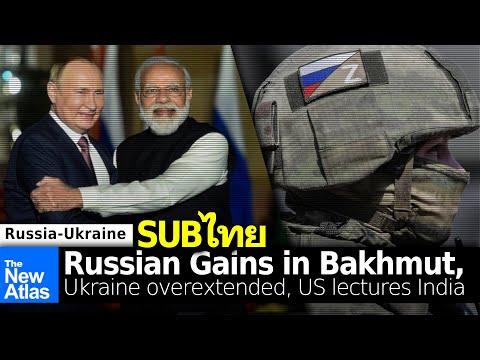
Russian Gains in Bakhmut, Ukraine Overextended, & US Lectures India

 October 17, 2022 (The New Atlas) - Update for Russian military operations against Ukraine for October 17, 2022.  Russian forces are closing...