- Russian forces continue to make incremental progress along the Siversk-Bakhmut defense line even according to pro-Ukrainian sources;
- There is no sign of any Ukrainian offensive around Kherson, even according to the Western media;
- Another US-supplied HIMARS has been destroyed according to the Russian MoD, that is now 8 out of 16 sent to Ukraine destroyed;
- The Pentagon is now struggling to explain why it is unable to supply Ukraine with sufficient weapons needed to execute the ever-pending “Kherson Offensive” yet to materialize;
- Claims made by the Pentagon regarding the effectiveness of various weapon systems sent have been contradicted by recently discovered documents from the US military itself;
- The US Army claims the effectiveness of common US anti-tank weapons like the Javelin and the AT-4 is around 19% among trained US soldiers. This would be much lower among Ukrainian troops;
- The Western media has decided to assign credit to Ukraine for a recent explosion in Crimea despite Kiev denying any involvement;
- Ukraine is shelling Zaporozhzhia Nuclear Power Plant in an attempt to force Russian troops to leave through international pressure;
Showing posts with label Europe. Show all posts
Showing posts with label Europe. Show all posts
Saturday, August 13, 2022
Update on Russian Ops in Ukraine (August 14, 2022)
August 14, 2022 (The New Atlas) - Update on Russian military operations in Ukraine for August 14, 2022.

Saturday, July 30, 2022
Poland’s Position as the “Next Ukraine”
July 30, 2022 (Brian Berletic - New Eastern Outlook) - While Western governments and the Western media continue clinging to the hope of an eventual “victory” for Kiev’s forces in Ukraine, the “frontline” is quietly being moved back to western Ukraine and even Poland just across the border. Recent pledges by NATO as well as arms deliveries this year and next appear to be headed in the direction of using Poland as the next battering ram with which US-led NATO will use against Russia.
More immediately, Poland could serve as a springboard for launching a NATO incursion into Ukraine, not necessarily to confront Russian forces directly, but to establish a “buffer zone” in western Ukraine just as the US and NATO-ally Turkey did in Syria.
Poland has hosted a build-up of US troops since as early as the beginning of February 2022. US state media Radio Free Europe/Radio Liberty in their February 5, 2022 article, “US Soldiers Arriving In Europe To Reinforce NATO Amid Russian Buildup,” noted the movement of US troops to Europe and specifically Poland as well as the transfer of US troops in Germany to Romania which also shares a border with Ukraine.
More recently, a Retuers article, “US to boost military presence in Europe as NATO bolsters its eastern flank,” would note:
The article also mentioned Poland specifically, stating:
It should be kept in mind that similar sentiments had helped reinforce US-NATO involvement in Ukraine since 2014, ultimately precipitating the current crisis rather than strengthening any sense of “safety.”
Poland serves as both the most logical geographic location for this build-up as well as the most logical political location for it. The current Polish government has demonstrated an eagerness to play a central role in Washington’s proxy war with Russia both in terms of support for Ukraine as well as feeding heavily into the Russophobic rhetoric used to justify continued Western involvement politically.
Turkish state media in a recent article titled, “Poland takes delivery of 1st batch of US-made M1 Abrams tanks,” would note Poland’s own military build-up. In addition to hosting a growing number of US troops, Poland is purchasing the latest and most sophisticated weapons the US and its allies have on the market. The article claims:
The article also notes Poland’s acquisition of High Mobility Artillery Rocket Systems (HIMARS), Turkey’s Bayraktar drones, as well as additional main battle tanks from South Korea.
The once vaunted weapon systems produced by the US and its allies have suffered tremendously in recent years as M1 Abrams used by Saudi Arabia found themselves outmatched and destroyed in Yemen and more recently Russian air defenses have eliminated Turkish-built Bayraktar drones from Ukraine’s airspace while Russian long-range weapons have begun hunting and destroying US-built HIMARS on Ukrainian battlefields.
Apparently these weapons systems are not as formidable as advertised. The secret to their success until relatively recently had been Washington’s ability to carefully pick its adversaries, avoiding hostilities with nations or organizations capable of undermining the illusion of military superiority the United States attempts to cultivate.
The loss of M1 Abrams in Yemen by Saudi Arabia became so concerning, US policymakers questioned the wisdom of providing replacements. The Brookings Institution in a 2016 piece titled, “Is selling tanks to Saudi Arabia such a good idea?,” would point out:
Meanwhile in Ukraine, even pro-Western media organizations including Al Jazeera in their article, “What do we know about Ukraine’s use of Turkish Bayraktar drones?,” have admitted the limits of hyped weapons like the Turkish-built Bayrakter. The article notes:
With Retuers reporting the alleged demise of two US-made Ukrainian HIMARS in early July and Newsweek reporting the alleged destruction of an additional HIMARS in mid-July, the most recent “wonder weapon” promoted by Western governments and their media appears just as vulnerable and underwhelming as other advanced Western arms touted recently.
The build-up of all these advanced systems in Poland, while promoted by NATO leadership and the Western media as necessary against “aggression,” represents yet another substitute for the absolute fundamentals that truly underwrite national and regional security.
The Russian Federation has not only demonstrated an understanding of these fundamentals, it has put them into practice. Even Western commentators have begun taking note.
A June 2022 piece published by the Royal United Services Institute (RUSI) titled, “The Return of Industrial Warfare,” would convincingly argue that relatively mundane munitions and military equipment produced in large scale are far more essential to victory on the battlefield than a focus on “efficiency” through sophisticated precision munitions built in relatively small quantities. Basic small arms ammunition and conventional artillery shells were among the examples cited – munitions that are absolutely essential, needed in vast quantities, and are having a far greater impact on the battlefield than the high-tech weapons shipped by the West to Ukraine.
It could also be argued that diplomacy and economic cooperation pursued by the Russian Federation with Europe prior to the events now unfolding in Ukraine reduced the ability and/or desire of at least some European nations to follow Washington down the path toward dangerous escalation.
But above all, Poland and other European nations (if national security is an actual priority) require independent foreign policies – policies that reflect the best interests of each respective state rather than those of an unelected bureaucracy heavily influenced by a small handful of corporate-financier interest not only in Europe, but across the Atlantic in Washington and on Wall Street.
It should be pointed out that among these select few special interests are arms manufacturers who thrive especially when conflict, not peace and stability (or prosperity for everyone else), prevail.
A focus on these latter most factors may make the necessity of focusing heavily on military factors less of a priority.
Also key to regional security is promoting regional stability. Europe’s role in aiding or even just remaining apathetic to US political interference along and far beyond the borders of the European Union created the instability requiring constant military spending in the first place. Whether it is the flow of refugees fleeing decimated nations in the Middle East and North Africa targeted by NATO aggression, or a deteriorating socio-economic crisis following US-sponsored regime change in Eastern Europe, Europe’s inability to address the “causes” of the crises it faces results in ever-growing investments in addressing the urgent “effects” that follow.
Since Poland’s current leadership is focusing on none of the above, while projecting recent policy decisions as the bolstering of security and safety for the Polish people, the Polish government is in fact instead escalating tensions even further on behalf of Washington all while relying on weapons systems and a strategic approach proven right now on the battlefields of Ukraine and elsewhere as wholly inadequate.
Only time will tell if Polish and other European leadership continue down this self-destructive path where they, along with Ukraine, carry the full burden of Washington’s proxy war against Russia, or if they decide to pursue actual security, stability, and prosperity. If they chose the latter they are likely to find they won’t require massive investments into the military means of addressing conflict, because the “enemies” they imagine they would use these means against, would likely be more interested in trade.
Brian Berletic is a Bangkok-based geopolitical researcher and writer, especially for the online magazine “New Eastern Outlook”.
More immediately, Poland could serve as a springboard for launching a NATO incursion into Ukraine, not necessarily to confront Russian forces directly, but to establish a “buffer zone” in western Ukraine just as the US and NATO-ally Turkey did in Syria.
The Build Up Continues
More recently, a Retuers article, “US to boost military presence in Europe as NATO bolsters its eastern flank,” would note:
US President Joe Biden pledged more American troops, warplanes and warships for Europe on Wednesday as NATO agreed the biggest strengthening of its deterrents since the Cold War in response to Russia’s invasion of Ukraine.
The article also mentioned Poland specifically, stating:
The United States will also create a new permanent army headquarters in Poland, which was immediately welcomed by Polish president Andrzej Duda, as Warsaw long sought a permanent US military base on its soil. “It is a fact that strengthens our safety a lot … in the difficult situation which we are in,” Duda said.
It should be kept in mind that similar sentiments had helped reinforce US-NATO involvement in Ukraine since 2014, ultimately precipitating the current crisis rather than strengthening any sense of “safety.”
Poland serves as both the most logical geographic location for this build-up as well as the most logical political location for it. The current Polish government has demonstrated an eagerness to play a central role in Washington’s proxy war with Russia both in terms of support for Ukraine as well as feeding heavily into the Russophobic rhetoric used to justify continued Western involvement politically.
Turkish state media in a recent article titled, “Poland takes delivery of 1st batch of US-made M1 Abrams tanks,” would note Poland’s own military build-up. In addition to hosting a growing number of US troops, Poland is purchasing the latest and most sophisticated weapons the US and its allies have on the market. The article claims:
On April 5, the country signed a contract worth nearly $4.75 billion to buy 250 MA12 SEP battle tanks from the US following a December 2020 agreement with Washington for 32 F-35 jets.
It also revealed that Poland agreed to a contract with the US on the purchase of 116 more used M1 Abrams tanks.
The Abrams tanks will operate near Poland’s eastern border “to deter an aggressor,” Błaszczak stressed, according to PAP.
The article also notes Poland’s acquisition of High Mobility Artillery Rocket Systems (HIMARS), Turkey’s Bayraktar drones, as well as additional main battle tanks from South Korea.
NATO’s Paper Tiger in Eastern Europe
Apparently these weapons systems are not as formidable as advertised. The secret to their success until relatively recently had been Washington’s ability to carefully pick its adversaries, avoiding hostilities with nations or organizations capable of undermining the illusion of military superiority the United States attempts to cultivate.
The loss of M1 Abrams in Yemen by Saudi Arabia became so concerning, US policymakers questioned the wisdom of providing replacements. The Brookings Institution in a 2016 piece titled, “Is selling tanks to Saudi Arabia such a good idea?,” would point out:
The State Department this week notified Congress of an impending sale of 153 M1A2 Abrams main battle tanks and twenty heavy tank recovery vehicles plus assorted ammunition, weapons and other kit to the Saudi army. Buried in the fine print of the notification is the statement that twenty of the Abrams tanks are intended to replace tanks destroyed in combat. The only place Saudi tanks are in combat are along the Saudi–Yemeni border in the Kingdom’s southwest where the Houthi rebels have been surprisingly effective in striking targets inside Saudi Arabia since the start of the war sixteen months ago. It’s probably a good bet that more that just 20 Saudi tanks have been damaged. The Kingdom has an inventory of 400 Abrams.
Meanwhile in Ukraine, even pro-Western media organizations including Al Jazeera in their article, “What do we know about Ukraine’s use of Turkish Bayraktar drones?,” have admitted the limits of hyped weapons like the Turkish-built Bayrakter. The article notes:
…given Russia’s strength of forces, what impact drones might have in Ukraine?
“It will very well depend on Russian air defences. Drones like the TB2 are vulnerable to anti-air defence systems. To be effective, they need to be employed in a savvy way, in coordination with other electronic warfare systems that ‘blind’ enemy radars and through appropriate tactics,” [Mauro Gilli, senior researcher in military technology and international security at ETH Zurich] said.
“However, against capable enemies, these technologies and tactics might not be sufficient. In Libya, Russian forces figured out effective ways to counter Turkish tactics and shoot down their drones. The same [has been] observed in Syria and Nagorno-Karabakh,” he added.
With Retuers reporting the alleged demise of two US-made Ukrainian HIMARS in early July and Newsweek reporting the alleged destruction of an additional HIMARS in mid-July, the most recent “wonder weapon” promoted by Western governments and their media appears just as vulnerable and underwhelming as other advanced Western arms touted recently.
The build-up of all these advanced systems in Poland, while promoted by NATO leadership and the Western media as necessary against “aggression,” represents yet another substitute for the absolute fundamentals that truly underwrite national and regional security.
What Poland Actually Needs for Actual Security
A June 2022 piece published by the Royal United Services Institute (RUSI) titled, “The Return of Industrial Warfare,” would convincingly argue that relatively mundane munitions and military equipment produced in large scale are far more essential to victory on the battlefield than a focus on “efficiency” through sophisticated precision munitions built in relatively small quantities. Basic small arms ammunition and conventional artillery shells were among the examples cited – munitions that are absolutely essential, needed in vast quantities, and are having a far greater impact on the battlefield than the high-tech weapons shipped by the West to Ukraine.
It could also be argued that diplomacy and economic cooperation pursued by the Russian Federation with Europe prior to the events now unfolding in Ukraine reduced the ability and/or desire of at least some European nations to follow Washington down the path toward dangerous escalation.
But above all, Poland and other European nations (if national security is an actual priority) require independent foreign policies – policies that reflect the best interests of each respective state rather than those of an unelected bureaucracy heavily influenced by a small handful of corporate-financier interest not only in Europe, but across the Atlantic in Washington and on Wall Street.
It should be pointed out that among these select few special interests are arms manufacturers who thrive especially when conflict, not peace and stability (or prosperity for everyone else), prevail.
A focus on these latter most factors may make the necessity of focusing heavily on military factors less of a priority.
Also key to regional security is promoting regional stability. Europe’s role in aiding or even just remaining apathetic to US political interference along and far beyond the borders of the European Union created the instability requiring constant military spending in the first place. Whether it is the flow of refugees fleeing decimated nations in the Middle East and North Africa targeted by NATO aggression, or a deteriorating socio-economic crisis following US-sponsored regime change in Eastern Europe, Europe’s inability to address the “causes” of the crises it faces results in ever-growing investments in addressing the urgent “effects” that follow.
Since Poland’s current leadership is focusing on none of the above, while projecting recent policy decisions as the bolstering of security and safety for the Polish people, the Polish government is in fact instead escalating tensions even further on behalf of Washington all while relying on weapons systems and a strategic approach proven right now on the battlefields of Ukraine and elsewhere as wholly inadequate.
Only time will tell if Polish and other European leadership continue down this self-destructive path where they, along with Ukraine, carry the full burden of Washington’s proxy war against Russia, or if they decide to pursue actual security, stability, and prosperity. If they chose the latter they are likely to find they won’t require massive investments into the military means of addressing conflict, because the “enemies” they imagine they would use these means against, would likely be more interested in trade.
Brian Berletic is a Bangkok-based geopolitical researcher and writer, especially for the online magazine “New Eastern Outlook”.
Sunday, April 17, 2022
Russia's Back Isn't "Against the Wall," and WON'T use "Chemical Weapons"
April 17, 2022 (Brian Berletic - NEO) - The US is once again waving around accusations against its adversaries of preparing to use “chemical weapons.” This time, the accused is Russia amid ongoing military operations in Ukraine.
The Guardian in its article, “‘Clear sign’ Putin is weighing up use of chemical weapons in Ukraine, says Biden,” would claim:
Russia’s false accusation that Ukraine has biological and chemical weapons is a “clear sign” that a desperate Vladimir Putin is considering using them himself, Joe Biden has said.
The US president said Putin’s “back is against the wall and now he’s talking about new false flags he’s setting up including, asserting that we in America have biological as well as chemical weapons in Europe – simply not true. I guarantee you,” Biden said at an event on Monday.
The article would also claim:
“They are also suggesting that Ukraine has biological and chemical weapons in Ukraine. That’s a clear sign he’s considering using both of those. He’s already used chemical weapons in the past, and we should be careful of what’s about to come.”
Putin “knows there’ll be severe consequences because of the united Nato front,” he said, without specifying what actions the alliance would take.
However, US President Joe Biden did not explain “how” Russian President Vladimir Putin’s back was “against the wall,” or explain why Russia would use chemical weapons if Russia was also aware that “there’ll be severe consequences.”
President Biden’s latest claims fall within a now established pattern of US foreign policy using false claims regarding “weapons of mass destruction” (WMDs) to create a pretext for otherwise unjustified and indefensible acts of military aggression.
The US has used this tactic in the lead up to the 2003 US-led invasion of Iraq. Claims that Iraq had WMDs were later revealed as a deliberate lie to sell to the public what was otherwise a war of aggression aimed at regime change.
At the time, President Putin challenged US claims. The BBC in a 2002 article titled, “President Putin's doubts over Iraq,” would note:
Mr Putin remains unconvinced. He still sees no need for a new resolution.
And today he dismissed Mr Blair's dossier of evidence against Saddam as propaganda.
Russia has not in its possession any trustworthy data, Mr Putin said, that could support the existence of nuclear weapons or any weapons of mass destruction in Iraq.
He had not received from his partners such information as yet.
And by 2004, the Guardian in its article, “There were no weapons of mass destruction in Iraq,” would report:
1,625 UN and US inspectors spent two years searching 1,700 sites at a cost of more than $1bn. Yesterday they delivered their verdict.
Saddam Hussein destroyed his last weapons of mass destruction more than a decade ago and his capacity to build new ones had been dwindling for years by the time of the Iraq invasion, according to a comprehensive US report released yesterday.
By 2012, when the US-sponsored regime change war in neighboring Syria stalled, the US once again began accusing adversaries of using WMDs - and “chemical weapons” more specifically. The attacks were clearly staged by US-sponsored militants, often just on the eve of a major victory for Syrian forces, and carried out specifically to serve as a pretext for more direct US military intervention.
By 2014, through a combination of citing “chemical weapons” and the spread of the so-called “Islamic State” (ISIS), the US did eventually invade and occupy eastern Syria. By 2015, Russia also intervened, but at the invitation of the Syrian government, thus checkmating US attempts to replicate its WMD-predicated regime change war in literally the very next nation over from Iraq on the map.
By 2018, despite dubious and clearly politically-motivated “investigations” carried out by the Organization for the Prohibition of Chemical Weapons (OPCW), it would be admitted even by them that anti-government militants in Syria had been confirmed to have carried out at least some of the chemical attacks assigned to the Syrian government, according to Reuters.
Other instances the OPCW blamed on the Syrian government involved sites the OPCW never accessed or directly investigated including the 2017 incident at Khan Sheikhoun. Their conclusions were drawn by examining “evidence” provided to them by the very same circles of militants they themselves admit had carried out chemical attacks elsewhere.
As was explained at the time, and has been reiterated by even mainstream Western analysts today in regards to recent claims that Russia is preparing to use “chemical weapons,” chemical weapons are extremely ineffective and are in fact far less effective than even ordinary conventional weapons.
In a 2013 Independent article by Robert Fisk titled, “They may be fighting for Syria, not Assad. They may also be winning,” a Syrian intelligence officer, when asked if they were using chemical weapons, was quoted as saying:
Why should we use chemical weapons when our Mig aircraft and their bombs cause infinitely more destruction?
Far from a baseless claim made by a random Syrian intelligence officer, the effectiveness of chemical weapons, or lack thereof, has been the subject of serious study since the inception of such weapons.
A 1990 US Marine Corps study of the 1980’s Iran-Iraq War, under “Appendix B - Chemicals,” would explain in detail:
Chemical weapons require quite particular weather and geographic conditions for optimum effectiveness. Given the relative nonpersistence of all agents employed during this war, including mustard, there was only a brief window of employment opportunity both daily and seasonally, when the agents could be used.
The report continued (emphasis added):
We are uncertain as to the relative effectiveness of nerve agents since those which were employed are by nature much less persistent than mustard. In order to gain killing concentrations of these agents, pre-dawn attacks are best, conducted in areas where the morning breezes are likely to blow away from friendly positions. Chemical weapons have a low kill ratio. Just as in WWI, during which the ratio of deaths to injured from chemicals was 2-3 percent, that figure appears to be borne out again in this war although reliable data on casualties are very difficult to obtain. We deem it remarkable that the death rate should hold at such a low level even with the introduction of nerve agents. If those rates are correct, as they well may be, this further reinforces the position that we must not think of chemical weapons as "a poor man's nuclear weapon." While such weapons have great psychological potential, they are not killers or destroyers on a scale with nuclear or biological weapons.
In other words, chemical weapons require very specific conditions to be effective, require high concentrations in order to have any impact on the battlefield, and still fall far short of producing the amount of death and destruction conventional weapons are capable of producing - a fact that has only become more poignant since the report was written in 1990.
Precision guided munitions, more effective unguided munitions, and systems used to deliver them both have evolved by leaps and bounds. No matter what “innovations” Western policymakers imagine or claim have been secretly made in the realm of chemical weaponry, their dispersal and dissipation in the air is a matter of physics that has remained a constant from WW1 to the Iran-Iraq War in the 1980’s and persists to this day.
This fact is so well-established it is often even accounted for when otherwise irrationally accusing Russia of preparing to use chemical weapons today in Ukraine.
The Harvard Gazette in a March 23, 2022 article titled, “Russia’s remaining weapons are horrific and confounding,” would admit:
From a purely military perspective, there are no military targets that nuclear, chemical, or biological weapons could destroy that Russia can’t destroy with its airpower and rockets. The main purpose of using them would probably be to try to shock the Ukrainians into surrender.
Yet, even trying to “shock the Ukrainians into surrender” could also be done more effectively and with a much lower political price with conventional weapons. The article also admits that nothing is known about what chemical weapons if any Russia even possesses - making these accusations even more absurd.
When all of this information is considered together we are left with claims made by verified serial liars who have an established track record of lying about adversaries “using” chemical weapons - chemical weapons the West’s own experts admit fall far short in terms of effectiveness on the battlefield compared to even the crudest of conventional weapons.
The West also admits that “Putin” knows “there’ll be severe consequences” and the use of chemical weapons will be one of the few ways the US and the rest of NATO may attempt to justify a more direct intervention in Ukraine and thus derail Russian objectives.
There is literally no reason whatsoever for Russia to employ these weapons even if they had them - since the West has provided no evidence they even do.
In 2017, even the New York Times in its article, “Russia Destroys Chemical Weapons, and Faults U.S. for Not Doing So,” would admit:
President Vladimir V. Putin of Russia presided over the destruction of his country’s last declared chemical weapons on Wednesday, describing the elimination as a “historic event” and complaining that the United States has failed to purge its own chemical arsenal.
While critics and skeptics may claim Russia still could possess undeclared chemical weapons, it should be noted that the US itself has failed to eliminate its own declared stockpiles.
Putin’s Back is Not “Against the Wall,” Ukraine’s is
The irrational narrative goes that Russian President Vladimir Putin is so desperate to win an otherwise “stalled” military operation in Ukraine that he would risk using chemical weapons to regain momentum.
It has already been established, however, that such weapons will not provide any additional advantage on the battlefield Russia’s still very extensive supply of conventional weapons already lend it.
In fact, it is the US Department of Defense itself that has - one month into Russia’s military operations - admitted that most of Russia’s combat power allotted to operations in Ukraine remain at Russia’s disposal.
A Defense Department briefing held on March 21, 2022 would include in its transcript a senior defense official’s response to questions regarding Russia’s combat power one month into its operations in Ukraine, revealing:
I would say that today, we assess Russian combat power at just below 90 percent. And again, you have to remember, yes, they're expending an awful lot, but they also built up an awful lot since the early fall, and they just have a lot available to them.
The official would reiterate, noting:
…as we said way back in the fall, that Mr. Putin had arranged an oppressive alignment of combined-arms capability that he still has the vast majority available to him.
Other US Department of Defense briefings held around the one-month mark would note that no major attempt has been made yet to reinforce Russian operations inside Ukraine, nor have there been any major moves to resupply depots prepared ahead of the operations which began in late February 2022.
Russia has the vast majority of its military power available to it, and the sluggish nature of its operations can be easily accounted for along two lines of reasoning.
First, Russia’s operations in Ukraine are being carried out on a scale no other military operation in modern warfare has been conducted on. Ukraine has almost double the population Iraq had in 2003 when US forces invaded. Ukraine is also approximately 38% larger in terms of land area than Iraq.
Second, Russia’s stated and observed method of moving into and across Ukraine is systematic and methodical. Just as Russia assisted the Syrian Arab Army in doing for the last 7 years in Syria when taking back major population centers, Russia is now doing likewise in Ukraine.
This process includes the encirclement of major population centers to cut off fighters from reinforcements and additional ammunition, weapons, and other supplies, the establishment of corridors to evacuate the civilian population, and then the incremental seizure of territory from armed militants with intermittent ceasefires and negotiations for various factions to surrender and evacuate the area before fighting continues, until the entire population center is secured and order reestablished.
Russia had successfully assisted Syria in taking back virtually every major populated center in Syria with the exception of Idlib to the north and US-occupied Syrian territory east of the Euphrates River. Russia did this with much more complex logistical lines stretched out much further than what is being used in Ukraine today.
To imagine the same military that achieved such effective results in Syria is now “bungling” operations in Ukraine is wishful thinking at best. Western “experts” who predicted Russia’s military starving to death “in three days” for the last month predicate such predictions on tactical vignettes provided almost exclusively through war propaganda produced by Ukraine’s military and central government. These predictions also imagine that any actual shortcomings in Russia’s planning and execution will be left unaddressed and across the theater of operations for days, weeks, or even months. This inability to think in “four dimensions” and account for Russia observing and addressing shortcomings and thus changing the course of any given prediction before reaching “deadlines” has led to a long string of embarrassing and unfulfilled “predictions” made by supposed Western military experts.
The amount of military power the US itself admits Russia still has at its disposal, taken together with Russia’s already observable competence in retaking populated centers methodically in Syria, coupled together with the true nature of chemical weapons and their inefficiency on the battlefield only further removes the possibility of Russia employing chemical weapons for any reason in Ukraine.
If chemical weapons are used, it will be by those whose backs are truly against the wall - a Ukrainian regime and its US-NATO-armed forces being encircled in every major population center in the country - with the exception of Mariupol and Kherson which have both already been secured.
Time is on Russia’s side and short of any major Western military intervention, will succeed in whatever its actual objectives are in Ukraine. The necessity of accusing Russia of preparing to use chemical weapons is a move of familiar desperation and duplicity regularly employed by the West specifically because Russia will otherwise be successful in Ukraine.
Brian Berletic is a Bangkok-based geopolitical researcher and writer, especially for the online magazine “New Eastern Outlook”.
Tuesday, June 8, 2021
Is the "3 Seas Initiative" the West's Answer to China's Belt and Road?
June 9, 2021 (Brian Berletic - NEO) - To counter not only China's Belt and Road Initiative (BRI) but also Russia's growing ties with Western Europe, an "alternative" infrastructure drive is being proposed that if and when completed, Washington, London, and Brussels hopes will further contain Russia and cut China off from European markets.
...a joint endeavor by 12 eastern members of the European Union to update the physical and digital links between the Baltic, Adriatic and Black Seas.
The op-ed argues that the initiative is the only way to fight off "Russian bullying and Chinese meddling."
But upon closer scrutiny - even the selling points made by the author - Andreas Kluth - reads instead like a thinly veiled attempt to bully and meddle in Europe - and at the expense of the obvious opportunities trade and ties with Russia and China will bring.
Kluth's argument includes blaming the Soviet Union's neglect of Eastern European nations as the reason they lack modern infrastructure today, claiming:
Though economically vibrant, most of this region still lags the rest of the bloc in infrastructure. Travel by road and rail takes two to four times longer on average than in the rest of the EU.
What’s missing in particular is good highways, railway tracks and gas pipes running north and south. This is a legacy of the Cold War. The Soviet hegemons made sure that Russian gas, tanks and troops could easily move east-west, but cared not a hoot about other connections among the countries they occupied.
Yet the Soviet Union collapsed in 1991 - 30 years ago. If Eastern Europe currently still lacks modern infrastructure - it would be more appropriate to state that it is Brussels who "cares not" about making improvements.
The infrastructure proposed is also curious. The op-ed claims:
Projects include, for example, a port in Croatia that could welcome ships carrying liquefied natural gas — from the U.S., for example — and the pipelines that would bring this gas north to partner countries. Poland already has an LNG terminal.
This is not necessary infrastructure though. Europe already has access to hydrocarbons in the form of Russian energy moved into the region through existing pipelines and at costs much cheaper than LNG shipped across the Atlantic from the United States will ever be.
The inclusion of this "example" reveals Kluth's hand and the true nature of this argument - this isn't about stopping imagined "Russian bullying," this is about imposing very real American bullying.
In other words, expensive infrastructure would be built specifically to put in place energy imports that would cost more and come with far more strings attached politically than Russian energy. These strings would include - and the op-ed itself mentions this specifically - cutting off relations with both Moscow and Beijing.

And regarding Beijing - Kluth accuses China of seeking political favor in return for infrastructure investments and construction projects - citing Hungary as an example of a partner nation "compromised" by its relationship with Beijing. Kluth claims that Hungary has blocked EU condemnation of alleged "human rights abuses" by China - never considering that the accusations themselves may have been politically motivated in the first place by opponents of Beijing.
Kluth - after describing the Three Seas Initiative as a means of escaping "bullying and meddling" - makes clear that US and EU investment in the projects should themselves come with political strings attached - noting:
...the EU should also be clear about its expectations. First, all involved, including Hungary, must acknowledge the geopolitical subtext and unambiguously declare their allegiance to Brussels, foregoing dalliances with Beijing. Second, the initiative mustn’t become the germ of an eastern bloc that defines itself in opposition to the rest of the EU.
While Russian "bullying" and Chinese "meddling" remain squarely in the realm of politically-motivated accusations - Kluth is openly declaring Washington's and Brussels' intentions to invest in a neglected Eastern Europe are predicated on acquiring unflinching obedience and the full surrender of national sovereignty - a proposition made without any hint of intentional irony.
Three Seas Initiative: About Primacy, Not Progress
US foreign policy has been and continues to be predicated on maintaining global primacy. Any nation, anywhere on Earth that challenges Washington's ability to act upon the global stage with absolute impunity is designated an enemy and thus targeted through a combination of political, economic, and even military coercion.
Two nations that have found themselves on this list for decades are Russia and China.
Both Russia's re-emergence after the collapse of the Soviet Union as a major global power and China's rise both regionally in Asia and globally - have demonstrably inhibited Washington's worst impulses.
While Washington describes both Russia and China as threats to global peace and stability - it was Russia's intervention in Syria that prevented the nation from suffering a similar fate as Libya or Iraq at America's hands.
It has been China's incremental rise that has created viable alternatives for nations across Asia just now working their way out from under the shadow of America's Indo-Pacific "primacy" - a notion still included openly as part of US foreign policy - demonstrated in a "framework" paper published as recently as the Trump administration.
Notions of "Russian bullying" and "Chinese meddling" are geopolitical projections made by Western policymakers in a bid to justify a continued campaign of coercion - and not just against Russia, China, and nations along their peripheries - but also against allied nations like Germany who seek to diversify their ties between East and West - US sanctions targeting German companies involved in the Nord Stream 2 pipeline project with Russia being only the latest example.
Perhaps the ultimate irony of all is that as Washington and Brussels attempt to dangle the promise of modern infrastructure over the heads of Eastern Europe - Kluth of Bloomberg himself admits that China has already come through in the case of Hungary - and Russia has been reliably pumping cheap energy into Eastern and Western Europe since before the collapse of the Soviet Union - and of course - ever since.
Once again - while pointing the accusing finger elsewhere - the US and its EU partners reveal themselves as the central threat to peace and prosperity. In reality, Chinese infrastructure projects coupled with US-EU investments, and cheap energy from Russia would be most beneficial to the nations of both Eastern and Western Europe - but clearly what is in the continent's best interests run at cross-purposes to Washington's and thus while Russia and China have never demanded exclusive economic ties with Europe - Washington is.
Brian Berletic is a Bangkok-based geopolitical researcher and writer, especially for the online magazine “New Eastern Outlook”.
Saturday, March 6, 2021
US Continues Crusade Against Nord Stream 2
March 6, 2021 (Brian Berletic - NEO) - Despite the partisan political theater taking place in Washington - in terms of foreign policy - virtually nothing has changed with a new US president taking office. Even the rhetoric of the new administration is hardly discernible from that of its predecessor.

From US tensions with China and Iran to continued pressure on Russia - the US continues to pursue a singularly belligerent foreign policy as part of a continued effort to maintain a US-led "international order" and to reassert US hegemony everywhere on Earth it is challenged.
This includes in Western Europe where circles of political and economic interests have begun to stray from and even run contra to US interests.
The best example of this is Germany's participation in the Nord Stream 2 pipeline project - a joint effort between Russia and Germany to expand the flow of hydrocarbons directly into Western Europe - bypassing potential regions of instability in Eastern Europe targeted by the US specifically to impede Russian-European cooperation.
Bliken Echos Mike Pompeo
The new US Secretary of State Antony Blinken during his confirmation hearing before the US Senate found himself in almost unanimous agreement with US Senators - Republican or Democrat - on the necessity to maintain or even expand US belligerence worldwide.
Regarding Nord Stream 2 in particular, when asked by US Senator Ted Cruz about the new administration's commitment to blocking the Russian-German pipeline, Blinken would respond:
[The] president-elect strongly agrees with you that Nord Stream 2 is a bad idea. He's been very clear about that.
I'm determined to do whatever we can to prevent that completion the last hundred yards [of the pipeline]. I very much agree.
When asked if the new administration would "stand up to German pressure" against stopping the project, Blinken would respond:
I can tell you I know that [Biden] would have us use every persuasive tool that we have to convince our friends and partners including Germany not to move forward with it.
According to Senator Cruz' own official US Senate website he would describe Nord Stream 2 as:
...a project that if completed would reward Russia's aggressive expansionism and economic blackmail, hold our European allies' energy security hostage to Russia, and undermine America's national security interests.
Yet, if any of that was actually true, why would Germany agree to participate in the project in the first place? Why would Germany voluntarily sign up for "economic blackmail" by Russia or deliberately endanger its own "energy security?"
How is the US in a better position to assess and respond to threats to European energy security better than Europe itself can? And is the fact that the US seeks to sell Europe its own "freedom gas" not an immense, glaring conflict of interests?
US Freeing Europe From Freedom to Choose
As the US regularly does - it creates a rhetorical smokescreen behind which it advances its agenda - oftentimes an agenda that stands in direct contradiction to its rhetorical arguments - with its policy toward blocking Nord Stream 2 no exception.
The US is itself endangering European energy security by cutting off cheap and readily available hydrocarbons from Russia and forcing Europe to buy more expensive hydrocarbons from the US - mainly derived from the politically and environmentally controversial process of fracking. Because the process of extracting and transporting hydrocarbons from the US to Europe through this process is more elaborate it is also more expensive than Russian hydrocarbons.
Thus the "energy security" offered to Europe by the US as an alternative to well-established flow of Russian hydrocarbons faces opposition politically, environmentally, and even economically.
It is the threat of sanctions and pressure from the US that forms a very real example of "economic blackmail."
In fact - the only truthful component of Washington's objections to Nord Stream 2's completion is that it threatens "America's national security interests." But these are not to be confused with the actual defense of the United States - but rather the defense of America's power and influence abroad - power and influence that is both unwarranted and increasingly unwelcome.
Germany's Move
German state media - Deutsche Welle (DW) - in an article titled, "Nord Stream 2: German foundation fights possible US sanctions," would describe Germany's efforts to blunt the impact of US sanctions.
The article would note:
Earlier this month, the state government of Mecklenburg-Western Pomerania established a public foundation that could take over potentially sanctionable activity because the foundation "does not have to fear sanctions," a spokesperson for the state's Energy Ministry told DW.
"The foundation could offer the possibility of acquiring necessary parts and machinery for pipeline construction and, as necessary, make them available to the participating companies," the spokesperson, Renate Gundlach, said in a statement. "The goal is to secure these highly specialized items, which only a few companies in the world produce before they would be potentially no longer available to acquire because of sanctions."
Because US sanctions are only - at the moment - targeting German companies and not the German government itself - the creation of a foundation to protect private companies targeted by sanctions would allow companies to side-step US sanctions.
In order to counter this, the US would be forced to target the German government directly - a move that would reek of desperation, weakness, and likely prompt a continued, irreversible deterioration in ties between the US and Europe. And while we were told that previously strained US-European ties were the result of the "Trump administration," this escalation would need to take place under the newly inaugurated Biden administration.
This would finally lay to rest the notions of agency in Washington and fully reveal US foreign policy as driven by large corporate-financier interests - including those seeking to cash in on selling Europe American-made "freedom gas."
The US has for years portrayed nations like Russia, China, Iran, and others as rogue nations - justifying everything from economic sanctions and political pressure, to proxy warfare and threats of total war. However, it seems that now even Europe is finding itself on the receiving end of US "soft" and now "hard" power - revealing the US and its exceptionalism as the problem - not the growing list of nations refusing to submit to its agenda and "follow" as it "leads."
Ironically, in addition to the Nord Stream 2 pipeline itself - America's increased belligerence against both Russia and Germany has provided Moscow and its Western European neighbors more common ground to work on - circumventing US sanctions.
Brian Berletic is a Bangkok-based geopolitical researcher and writer, especially for the online magazine “New Eastern Outlook”.
Tuesday, January 5, 2021
Nord Stream 2: Potential Flashpoint as Pipeline Nears Completion
January 6, 2021 (Brian Berletic - LD) - Nord Stream 2 is a pipeline project extending from Russia to Germany that - when completed - will provide a secure means of exporting Russian natural gas to Western Europe - circumventing a now volatile Ukraine and other potential conflict zones, all while tying Russia and Europe together further through mutually beneficial economic activity.
I explain the most recent developments regarding the Nord Stream 2 pipeline and why this project is critical to keep an eye on.
RELATED: Nord Stream 2: Washington to "Free" Europe From Freedom to Decide for Itself
Its completion will be a victory for multipolarism and help draw Western Europe further out of Washington's orbit. It will also be severe blow to Washington's and Wall Street's unipolar international order - a prospect it appears the US is willing to anything to avoid.
Brian Berletic, formally known under the pen name "Tony Cartalucci" is a geopolitical researcher, writer, and video producer (YouTube here and BitChute here) based in Bangkok, Thailand. He is a regular contributor to New Eastern Outlook and more recently, 21st Century Wire. You can support his work via Patreon here.
Tuesday, November 24, 2020
US Walks Away From Another Treaty, Closer to Confrontation with Russia
November 25, 2020 (Gunnar Ulson - NEO) - The US has signaled a desire to withdraw from yet another agreement created specifically to reduce the likelihood of a military confrontation between the US and NATO versus Russia.

The US State Department's own Voice of America in an article titled, "US Officially Withdraws from Open Skies Agreement," would report:
The United States formally withdrew on Sunday from the Open Skies Treaty, an 18-year-old arms control and verification agreement that Washington repeatedly accused Moscow of violating.
The withdrawal is the latest blow to the system of international arms control that U.S. President Donald Trump has repeatedly scorned, complaining that Washington was being either deceived or unfairly restrained in its military capabilities.
Even the VOA article admits there is no evidence regarding US accusations that Russia has violated the agreement.
The Open Skies Treaty put into effect in 2002 made provisions for short-notice unarmed observation flights by both sides over each other's territory to help assure both sides that neither was secretly preparing forces for attack or amassing troops in sensitive areas.
For Russia, this would mean amassing troops within its own territory but close to its borders with Western Europe.
For the US, this would mean amassing troops thousands of miles from its own shores in European nations hosting them which now includes nations directly on Russia's borders, circumstances already decidedly in favor of potential American, not Russian aggression.
Despite the treaty ultimately being designed to ensure European security from a potential Russian attack, European allies of Washington including Germany have reacted negatively to Washington's withdrawal from it.
Germany's Deutsche Welle (DW) in an article titled, "US officially withdraws from Open Skies transparency pact," would note:
German Foreign Minister Heiko Maas said Germany regrets the US decision and that Berlin still regarded the agreement as "an important part of the arms control architecture that contributes to mutual trust and thus security in the northern hemisphere."
Thus, one of the key nations the treaty is designed primarily to protect still stands by it, regretting Washington's decision to withdraw from it and even indirectly suggesting that Washington's actions threaten trust and security in the northern hemisphere.
Washington's withdrawal from Open Skies comes after a series of other arms control and security agreements between the US, NATO and Russia have been abandoned by the US.
This includes Intermediate-Range Nuclear Forces (INF) Treaty, abandoned by the US under similarly dubious circumstances.
As a result the US began arming European allies with missile systems previously prohibited under the treaty reaping billions in profits for US defense contractors and US-based arms manufacturer Lockheed Martin in particular.
Growing military confrontation and the threat of potential war as the US continues withdrawing from additional agreements and treaties is creating a deteriorating security environment that favors one of America's remaining profitable export sectors, arms manufacturing.
It also allows the US to continue its military encirclement of not only Russia, but also China under similarly dubious claims of the threats Washington claims both nations represent to a world where the US itself is undermining security treaties designed specifically to maintain peace and stability.
In a much wider arc, it is the shift of economic power from West to East that has prompted increasingly aggressive moves by the US to reassert itself globally.
However, nothing about Washington's increasingly aggressive posture seems likely to correct the economic fundamentals driving America's decline as a global power and until such fundamentals are seriously addressed back home in America, its decline abroad will likely continue.
For Russia and China who both face growing US aggression along their borders, the need to work together as well as cultivate better ties with neighboring nations like Germany in Russia's case or Southeast Asia in China's case is growing in importance and already paying dividends in blunting US "containment" measures.
It is entirely ironic that as the US accuses its adversaries of posing a danger to global peace and security, it is the US' own actions that are in fact endangering both. The US' abandoning of key treaties meant to ensure trust and security across Eurasia opens the door for new treaties agreed upon between Russia, China and the other nations of Eurasia, excluding America, and thus isolating America geopolitically to North America where some might say American power should ultimately and solely reside.
Ulson Gunnar, a New York-based geopolitical analyst and writer especially for the online magazine “New Eastern Outlook”.
Sunday, September 20, 2020
NATO's Slow-Motion Blitzkrieg Eastward
September 20, 2020 (Gunnar Ulson - NEO) - When the US announced it would be reducing the number of its troops stationed in Germany many hoped in vain it would be the beginning of an overall reduction of US forces in Europe and a deescalation of tensions between the US, NATO and the Russian Federation.

Many others, however, easily predicted these forces would simply be moved elsewhere in Europe and most likely eastward even closer to Russia's borders and, as a result, increasing tensions.
AP reported in its article, "Pompeo inks deal for US troop move from Germany to Poland," that:
NATO's creation and use as a balance of power during the Cold War could be argued, but since the collapse and eventual dissolution of the Soviet Union in 1991, NATO has not only continued to expand in membership including nations sitting directly on Russia's borders, it has expanded in scope, participating in wars of aggression stretching from Africa to Asia.
If it were ever a tool to maintain a balance of power between East and West, it has since transformed into a bludgeon to fully exploit a perceived absence of it in its favor.
From Libya to Iraq to Syria to Afghanistan, NATO members have destroyed one nation after another from the turn of the century and continue doing so to this day.
A 2011 article in The Atlantic titled, "The Arab Spring: 'A Virus That Will Attack Moscow and Beijing'," quoted US Senator John McCain as saying:
In hindsight we can also see the swath of absolute devastation left in the wake of this "product of Western design," with turmoil consuming North Africa, the Middle East and Central Asia.
After threatening Russia (and China) that this "product of Western design" was ultimately aimed at them, McCain would eventually tour the pile of rubble that once was Libya as well as visit the fringes of Syria's still active battlefields.
Can anyone honestly decouple threats like those of McCain against Moscow and Beijing and the visible destruction created as a result of Western military aggression all along Russia's and China's peripheries?
History Repeating Itself
At the beginning of World War II Nazi Germany used an offensive form of warfare against Russia known as blitzkrieg. It first amassed troops along the border with Russia and then attempted to deliver a swift, focused blow aimed at Moscow to overwhelm Russian forces before they could mobilize and react.
Like many other invasions of Russia throughout history, Germany's invasion failed and blitzkrieg, while successful against France, Belgium and Poland and even initially successful against Russia, was found to be ill-suited for the depth and distances required to conquer Russia's sheer geographical size.
Is it hyperbole to claim history is repeating itself with the US amassing forces along Russia's borders today while it burns the planet down along Russia's borders and threatens Moscow that it is next in line?
It doesn't seem like hyperbole at all.
It seems like a slow-motion version of Nazi Germany's blitzkrieg, but instead of attempting to plow over Russia before winter comes as the Nazis attempted in June of 1941, it is instead methodically dissecting Russia's allies abroad, smothering it along its borders, undermining and attempting to isolate it economically while attempting to foment the same sort of political subversion that kicked-off the Arab Spring in 2011 within Russia's borders.

Policy circles in Washington and Brussels like to refer to its rivalry with Russia and China as a "Great Power Game." Considering what the West has done to lesser pawns in this game, nations like Libya, Syria, Iraq, Afghanistan and Yemen, to those in Moscow or Beijing it doesn't feel like a game.
It feels existential.
Russia now faces an increase of US troops sitting on its borders. The transfer of 1,000 more US troops to Poland means 1,000 more US troops hovering over Russia's Kaliningrad Oblast which sits on the northern Polish border.
It remains to be seen where other troops leaving Germany will be stationed but it is almost a certainty they will not be going back to the United States, and instead, will be heading further east.
The US and NATO attempt to portray Russia as the villain of this story for bolstering troops along its western borders in response. But these are Russian troops, inside of Russia and Russian troops facing off against the growing presence of US troops just on the other side.
The US has crossed an ocean and a continent to find itself on Russia's doorstep. These are also US troops that have laid waste to several nations including and especially former Soviet allies and until their destruction, allies of the Russian Federation.
How else should Russia interpret all of this? How else should the rest of the world interpret this?
AP and others in the Western media refuse to state the obvious, but NATO's existence since the fall of the Soviet Union has been a multi-decade, multi-trillion dollar slow-motion blitzkrieg that has already destroyed entire nations, is destroying many more now and poses as the most pressing threat to global peace and stability today.
When US Secretary of State Mike Pompeo claims Russia and China pose "threats" to the world, there remains the inescapable fact that the US and NATO are the only nations in the 21st century invading and destroying other nations, creating conflict consuming entire regions of the planet and building up troops along the borders of the few nations left outside Western domination.
Until Russia and China do likewise, it is clear the only threat the US and NATO really face is reaching the limits of their abuses, or eventually even having to pay for them.
Gunnar Ulson, a New York-based geopolitical analyst and writer especially for the online magazine “New Eastern Outlook”.

Many others, however, easily predicted these forces would simply be moved elsewhere in Europe and most likely eastward even closer to Russia's borders and, as a result, increasing tensions.
AP reported in its article, "Pompeo inks deal for US troop move from Germany to Poland," that:
Some 4,500 U.S. troops are currently based in Poland, but about 1,000 more are to be added, under a bilateral decision announced last year. Last month, in line with President Donald Trump’s demand to reduce troop numbers in Germany, the Pentagon announced that some 12,000 troops would be withdrawn from Germany with about 5,600 moving to other countries in Europe, including Poland.The article would add, in an attempt to explain the presence of US troops in Europe and their creep ever eastward, that:
Pompeo has used his Europe trip to warn the region’s young democracies about threats posed by Russia and China and has received a warm welcome.What threats would those be?
NATO's creation and use as a balance of power during the Cold War could be argued, but since the collapse and eventual dissolution of the Soviet Union in 1991, NATO has not only continued to expand in membership including nations sitting directly on Russia's borders, it has expanded in scope, participating in wars of aggression stretching from Africa to Asia.
If it were ever a tool to maintain a balance of power between East and West, it has since transformed into a bludgeon to fully exploit a perceived absence of it in its favor.
From Libya to Iraq to Syria to Afghanistan, NATO members have destroyed one nation after another from the turn of the century and continue doing so to this day.
A 2011 article in The Atlantic titled, "The Arab Spring: 'A Virus That Will Attack Moscow and Beijing'," quoted US Senator John McCain as saying:
"A year ago, Ben-Ali and Gaddafi were not in power. Assad won't be in power this time next year. This Arab Spring is a virus that will attack Moscow and Beijing."The article's author would then note:
Senator McCain's framing reflects a triumphalism bouncing around at this conference. It sees the Arab Spring as a product of Western design -- and potentially as a tool to take on other non-democratic governments.
At an earlier session, Senator Udall said that those who believed that the Arab Spring was an organic revolution from within these countries were wrong -- and that the West and NATO in particular had been primary drivers of results in Libya -- and that the West had helped animate and move affairs in Egypt. Udall provocatively added Syria to that list as well.Without a doubt, and even according to US newspapers like the New York Times, the Arab Spring was most certainly "a product of Western design" and in hindsight it cannot be disputed that the US and NATO in particular had been "primary drivers of results in Libya" with the alliance having used direct military force to topple the Libyan government.
In hindsight we can also see the swath of absolute devastation left in the wake of this "product of Western design," with turmoil consuming North Africa, the Middle East and Central Asia.
After threatening Russia (and China) that this "product of Western design" was ultimately aimed at them, McCain would eventually tour the pile of rubble that once was Libya as well as visit the fringes of Syria's still active battlefields.
Can anyone honestly decouple threats like those of McCain against Moscow and Beijing and the visible destruction created as a result of Western military aggression all along Russia's and China's peripheries?
History Repeating Itself
At the beginning of World War II Nazi Germany used an offensive form of warfare against Russia known as blitzkrieg. It first amassed troops along the border with Russia and then attempted to deliver a swift, focused blow aimed at Moscow to overwhelm Russian forces before they could mobilize and react.
Like many other invasions of Russia throughout history, Germany's invasion failed and blitzkrieg, while successful against France, Belgium and Poland and even initially successful against Russia, was found to be ill-suited for the depth and distances required to conquer Russia's sheer geographical size.
Is it hyperbole to claim history is repeating itself with the US amassing forces along Russia's borders today while it burns the planet down along Russia's borders and threatens Moscow that it is next in line?
It doesn't seem like hyperbole at all.
It seems like a slow-motion version of Nazi Germany's blitzkrieg, but instead of attempting to plow over Russia before winter comes as the Nazis attempted in June of 1941, it is instead methodically dissecting Russia's allies abroad, smothering it along its borders, undermining and attempting to isolate it economically while attempting to foment the same sort of political subversion that kicked-off the Arab Spring in 2011 within Russia's borders.

Policy circles in Washington and Brussels like to refer to its rivalry with Russia and China as a "Great Power Game." Considering what the West has done to lesser pawns in this game, nations like Libya, Syria, Iraq, Afghanistan and Yemen, to those in Moscow or Beijing it doesn't feel like a game.
It feels existential.
Russia now faces an increase of US troops sitting on its borders. The transfer of 1,000 more US troops to Poland means 1,000 more US troops hovering over Russia's Kaliningrad Oblast which sits on the northern Polish border.
It remains to be seen where other troops leaving Germany will be stationed but it is almost a certainty they will not be going back to the United States, and instead, will be heading further east.
The US and NATO attempt to portray Russia as the villain of this story for bolstering troops along its western borders in response. But these are Russian troops, inside of Russia and Russian troops facing off against the growing presence of US troops just on the other side.
The US has crossed an ocean and a continent to find itself on Russia's doorstep. These are also US troops that have laid waste to several nations including and especially former Soviet allies and until their destruction, allies of the Russian Federation.
How else should Russia interpret all of this? How else should the rest of the world interpret this?
AP and others in the Western media refuse to state the obvious, but NATO's existence since the fall of the Soviet Union has been a multi-decade, multi-trillion dollar slow-motion blitzkrieg that has already destroyed entire nations, is destroying many more now and poses as the most pressing threat to global peace and stability today.
When US Secretary of State Mike Pompeo claims Russia and China pose "threats" to the world, there remains the inescapable fact that the US and NATO are the only nations in the 21st century invading and destroying other nations, creating conflict consuming entire regions of the planet and building up troops along the borders of the few nations left outside Western domination.
Until Russia and China do likewise, it is clear the only threat the US and NATO really face is reaching the limits of their abuses, or eventually even having to pay for them.
Gunnar Ulson, a New York-based geopolitical analyst and writer especially for the online magazine “New Eastern Outlook”.
Saturday, September 5, 2020
Navalny Poisoning - The Real Target is Russian-German Nord Stream 2 Pipeline
US-NATO continue building "momentum" behind Navalny incident - hope to end Nord Stream 2 pipeline before facts emerge, the pipeline is completed, and as all other options have so-far failed.
September 6, 2020 (Tony Cartalucci - LD) - Alexei Navalny is the ideal opposition figure for any incumbent government - he is ineffective, unpopular, and transparently compromised by malign foreign interests.

According to a poll carried out by the Lavada Center - a polling organization funded by the US government itself via the National Endowment for Democracy (NED) - a mere 9% of all Russians look favorably on him and his work, with most Russians unaware of who he even is.
For Moscow - Navalny's continued existence is not only not a threat, he occupies space where a real threat might otherwise emerge.
For the United States and its NATO partners who have dumped millions of dollars and political capital into Navalny's dead-end opposition in Russia - Navalny's continued existence is an underperforming investment at best.

"Coincidentally" just as the German-Russian Nord Stream 2 pipeline nears completion - a pipeline project that will expand Russia's hydrocarbon exports, increase revenue, and provide cheap energy to Europe in a business deal that would also help draw Europe and Russia closer diplomatically - Navalny was "poisoned."
He wasn't just "poisoned." He was allegedly poisoned with nerve agents called "Novichoks" alleged to be available only in Russia. Navalny was rushed by a shadowy NGO with opaque funding called "Cinema for Peace" to Germany - of all places.
Delivered right to the heart of what is surely one of Russia's most important economic and diplomatic projects at the moment - it is the perfect excuse for the US and NATO to pressure Germany to abandon Nord Stream 2 - an objective Washington has struggled and failed to achieve for years.
The US and NATO wasted no time accusing Russia even with no evidence presented that Russia was responsible - not to mention lacking any conceivable motive for the alleged "assassination" attempt of such an unpopular opposition figure at such a crucial time for Russia, its economy, and its ties with Western Europe and Germany in particular.
German state media, Deutsche Welle (DW), in an article titled, "Navalny, Novichok and Nord Stream 2 — Germany stuck between a rock and a pipeline," indirectly lays out not only the real motive behind Navalny's alleged poisoning, but the most likely culprit as well.
The article admits just how close to completion Nord Stream 2 is, noting (emphasis added):

The DW article then admits:

This is the most compelling reason why the Kremlin would not have ordered it - especially so close to completing Nord Stream 2.
It must also be remembered that Navalny was flown directly to Germany after the alleged attack.
Germany was the one place the US and NATO needed Navalny to be the most - and in a condition of poor health the US and NATO needed him to be in. With Nord Stream 2 over 90% complete - there is little time left to threaten, coerce, and pressure Germany to otherwise abandon the project.
The alleged presence of "Novichok" nerve agents - had the attack been the work of the Kremlin - would have been a smoking gun and a virtual calling card left - all but guaranteeing immense pressure from across the West and in particular - pressure placed on Germany to cancel the Nord Stream 2 pipeline.
The DW article covers what the US has already done to pressure Germany, noting (emphasis added):
Since Moscow has absolutely nothing to gain from this - it is the least likely suspect.
Since it not only fits into the US and NATO's openly declared agenda of coercing Germany into cancelling the Nord Stream 2 project, it also fits a pattern of staged attacks and fabricated claims used by the US and NATO to advance their collective foreign policy - they are the most likely suspects.

Consider the much worse and absolutely verified crimes against humanity the US and NATO are guilty of - with the 2003 invasion of Iraq and the 2011-onward military interventions in Libya and Syria as just two examples. Poisoning Navalny - a failed investment as a living, breathing opposition figure and turning him into a martyr - is a relatively small act of false-flag violence to create a difficult impasse for the German government regarding Nord Stream 2.
The fact that the US and NATO are rushing to conclusions without evidence - as they've done many times before when pushing now verified lies - only further incriminates both as the most likey suspects in Navalny's poisoning.
For Navalny himself - his fate - if he was actually poisoned - is tragic. The very people he worked for and whose agenda he served seem to find him more useful dying than healthy in terms of advancing Western foreign policy against Russia.
There are too many "coincidences" surrounding this incident:
September 6, 2020 (Tony Cartalucci - LD) - Alexei Navalny is the ideal opposition figure for any incumbent government - he is ineffective, unpopular, and transparently compromised by malign foreign interests.

According to a poll carried out by the Lavada Center - a polling organization funded by the US government itself via the National Endowment for Democracy (NED) - a mere 9% of all Russians look favorably on him and his work, with most Russians unaware of who he even is.
Germany was the one place the US and NATO needed Navalny to be the most - and in a condition of poor health the US and NATO needed him to be in.His continued existence and his monopoly over Russia's equally unpopular opposition ensures that an effective opposition never takes root in grounds choked by his presence.
For Moscow - Navalny's continued existence is not only not a threat, he occupies space where a real threat might otherwise emerge.
For the United States and its NATO partners who have dumped millions of dollars and political capital into Navalny's dead-end opposition in Russia - Navalny's continued existence is an underperforming investment at best.

"Coincidentally" just as the German-Russian Nord Stream 2 pipeline nears completion - a pipeline project that will expand Russia's hydrocarbon exports, increase revenue, and provide cheap energy to Europe in a business deal that would also help draw Europe and Russia closer diplomatically - Navalny was "poisoned."
He wasn't just "poisoned." He was allegedly poisoned with nerve agents called "Novichoks" alleged to be available only in Russia. Navalny was rushed by a shadowy NGO with opaque funding called "Cinema for Peace" to Germany - of all places.
Delivered right to the heart of what is surely one of Russia's most important economic and diplomatic projects at the moment - it is the perfect excuse for the US and NATO to pressure Germany to abandon Nord Stream 2 - an objective Washington has struggled and failed to achieve for years.
The US and NATO wasted no time accusing Russia even with no evidence presented that Russia was responsible - not to mention lacking any conceivable motive for the alleged "assassination" attempt of such an unpopular opposition figure at such a crucial time for Russia, its economy, and its ties with Western Europe and Germany in particular.
German state media, Deutsche Welle (DW), in an article titled, "Navalny, Novichok and Nord Stream 2 — Germany stuck between a rock and a pipeline," indirectly lays out not only the real motive behind Navalny's alleged poisoning, but the most likely culprit as well.
The article admits just how close to completion Nord Stream 2 is, noting (emphasis added):
Many are looking to Germany, whose Nord Stream 2 pipeline is a prominent example of selective cooperation with Russia despite concerns about the country's approach to human rights both domestically and internationally.
The Nord Stream 2 project, which is more than 90% complete, aims to double Russia's supply of direct natural gas to Germany. Running under the Baltic Sea, the pipeline bypasses Eastern European states, sending gas from Russia's Narva Bay to Lubmin, a coastal town adjacent to Merkel's constituency in Mecklenburg-Western Pomerania.It's noted that the pipeline bypasses Eastern Europe where the US has repeatedly toppled governments and installed client regimes hostile to Russia - complicating Russia's delivery of hydrocarbons to Western Europe - Ukraine being a recent example.

The DW article then admits:
Critics do not view Nord Stream 2 as purely a business affair, instead calling it a major win for Russia's image and standing at the international level. The Navalny poisoning, which draws strong parallels to the 2018 Novichok attack on a former Russian double agent that the United Kingdom has accused the Kremlin of orchestrating, further complicates Germany's efforts to keep politics out of Nord Stream 2.
"After the poisoning of Navalny we need a strong European answer, which Putin understands: The EU should jointly decide to stop Nord Stream 2," tweeted Norbert Röttgen, an outspoken Russia critic in Merkel's conservative party.
His voice carries particular weight, as Röttgen chairs the Bundestag's Foreign Affairs Committee and he is currently running for the party's leadership.It doesn't take an expert in geopolitics to have understood that an attempt on Navalny's life would have provided a mountain of political ammunition for the US and NATO in its ongoing attempts to sabotage Nord Stream 2 and prevent "a win for Russia's image and standing at the international level."

This is the most compelling reason why the Kremlin would not have ordered it - especially so close to completing Nord Stream 2.
It must also be remembered that Navalny was flown directly to Germany after the alleged attack.
Germany was the one place the US and NATO needed Navalny to be the most - and in a condition of poor health the US and NATO needed him to be in. With Nord Stream 2 over 90% complete - there is little time left to threaten, coerce, and pressure Germany to otherwise abandon the project.
The alleged presence of "Novichok" nerve agents - had the attack been the work of the Kremlin - would have been a smoking gun and a virtual calling card left - all but guaranteeing immense pressure from across the West and in particular - pressure placed on Germany to cancel the Nord Stream 2 pipeline.
The DW article covers what the US has already done to pressure Germany, noting (emphasis added):
The Trump administration wants to sell Germany its own gas, which critics say is more expensive than gas from Russia. Sanctions have bipartisan support in Washington, and the US has already imposed them against companies laying pipe in the Baltic Sea, prompting the Swiss-Dutch company Allseas to pull out of the project in 2019. More sanctions are awaiting the US president's signature.Then DW quoted Sarah Pagung - a specialist on German-Russian relations for the German Council on Foreign Relations. The article would note her saying (emphasis added):
"We can't rule [the canceling of Nord Stream 2] out as an option, but it's unlikely," Pagung told DW, although she said Germany could use the Navalny poisoning as an "opportunity" to shift its position on the pipeline without appearing to be caving to US pressure.DW all but spells out the true motive of Navalny's alleged poisoning and his "serendipitous" delivery to Germany for treatment - to serve as a catalyst for the cancellation of Nord Stream 2.
Since Moscow has absolutely nothing to gain from this - it is the least likely suspect.
Since it not only fits into the US and NATO's openly declared agenda of coercing Germany into cancelling the Nord Stream 2 project, it also fits a pattern of staged attacks and fabricated claims used by the US and NATO to advance their collective foreign policy - they are the most likely suspects.

Consider the much worse and absolutely verified crimes against humanity the US and NATO are guilty of - with the 2003 invasion of Iraq and the 2011-onward military interventions in Libya and Syria as just two examples. Poisoning Navalny - a failed investment as a living, breathing opposition figure and turning him into a martyr - is a relatively small act of false-flag violence to create a difficult impasse for the German government regarding Nord Stream 2.
The fact that the US and NATO are rushing to conclusions without evidence - as they've done many times before when pushing now verified lies - only further incriminates both as the most likey suspects in Navalny's poisoning.
For Navalny himself - his fate - if he was actually poisoned - is tragic. The very people he worked for and whose agenda he served seem to find him more useful dying than healthy in terms of advancing Western foreign policy against Russia.
There are too many "coincidences" surrounding this incident:
- The attack itself at such a sensitive time for Russia, its economy, and its ties with Germany in particular;
- The fact that Navalny was flown by a shadowy NGO to Germany itself;
- The fact that the US has been openly trying to sabotage the German-Russian Nord Stream 2 pipeline all along and;
- The fact that the "attack" was allegedly carried out in such a clumsy, ineffective, and incriminating way specifically to implicate Russia.
For a US and NATO who have sold the world entire wars based on "evidence" and "accusations" of everything from nonexistent "weapons of mass destruction" in Iraq to lies about viagra-fuelled rape squads in Libya - one more lie about an unpopular Russian opposition figure poisoned in Russia, picked up by a dubious NGO, and placed down right in the middle of German-Russian relations and the Nord Stream 2 pipeline the US and NATO are desperate to stop - fits a disturbing but all-too-predictable pattern.
The question is why are people still falling for it? Will Germany fall for it, or at the very least, cave - costing itself economic opportunities in exchange for a deeper and more costly role in US-NATO aggression against Russia? Only time will tell.
Subscribe to:
Comments (Atom)
Russian Gains in Bakhmut, Ukraine Overextended, & US Lectures India
October 17, 2022 (The New Atlas) - Update for Russian military operations against Ukraine for October 17, 2022. Russian forces are closing...
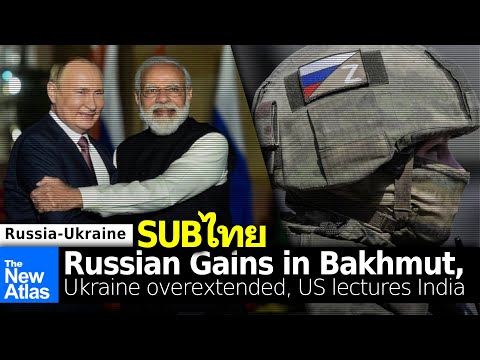
-
October 17, 2022 (The New Atlas) - Update for Russian military operations against Ukraine for October 17, 2022. Russian forces are closing...
-
In this important interview from 2011, internationally acclaimed activist and documentary filmmaker Keith Harmon Snow explains what he calls...
-
 US government-funded network that aids sedition around the globe wrote a 2016 report detailing the exact strategy anti-government protesters...

