Showing posts with label EU. Show all posts

Tuesday, June 8, 2021

Is the "3 Seas Initiative" the West's Answer to China's Belt and Road?

June 9, 2021 (Brian Berletic - NEO) - To counter not only China's Belt and Road Initiative (BRI) but also Russia's growing ties with Western Europe, an "alternative" infrastructure drive is being proposed that if and when completed, Washington, London, and Brussels hopes will further contain Russia and cut China off from European markets. 


Called the "Three Seas Initiative," it is described in a Bloomberg op-ed titled, "This Is How Europe Can Push Back Against China and Russia," as:

...a joint endeavor by 12 eastern members of the European Union to update the physical and digital links between the Baltic, Adriatic and Black Seas.

The op-ed argues that the initiative is the only way to fight off "Russian bullying and Chinese meddling." 

But upon closer scrutiny - even the selling points made by the author - Andreas Kluth - reads instead like a thinly veiled attempt to bully and meddle in Europe - and at the expense of the obvious opportunities trade and ties with Russia and China will bring. 

Kluth's argument includes blaming the Soviet Union's neglect of Eastern European nations as the reason they lack modern infrastructure today, claiming: 

Though economically vibrant, most of this region still lags the rest of the bloc in infrastructure. Travel by road and rail takes two to four times longer on average than in the rest of the EU. 

What’s missing in particular is good highways, railway tracks and gas pipes running north and south. This is a legacy of the Cold War. The Soviet hegemons made sure that Russian gas, tanks and troops could easily move east-west, but cared not a hoot about other connections among the countries they occupied.

Yet the Soviet Union collapsed in 1991 - 30 years ago. If Eastern Europe currently still lacks modern infrastructure - it would be more appropriate to state that it is Brussels who "cares not" about making improvements. 

The infrastructure proposed is also curious. The op-ed claims: 

Projects include, for example, a port in Croatia that could welcome ships carrying liquefied natural gas — from the U.S., for example — and the pipelines that would bring this gas north to partner countries. Poland already has an LNG terminal.

This is not necessary infrastructure though. Europe already has access to hydrocarbons in the form of Russian energy moved into the region through existing pipelines and at costs much cheaper than LNG shipped across the Atlantic from the United States will ever be.

The inclusion of this "example" reveals Kluth's hand and the true nature of this argument - this isn't about stopping imagined "Russian bullying," this is about imposing very real American bullying.  

In other words, expensive infrastructure would be built specifically to put in place energy imports that would cost more and come with far more strings attached politically than Russian energy. These strings would include - and the op-ed itself mentions this specifically - cutting off relations with both Moscow and Beijing. 

And regarding Beijing - Kluth accuses China of seeking political favor in return for infrastructure investments and construction projects - citing Hungary as an example of a partner nation "compromised" by its relationship with Beijing. Kluth claims that Hungary has blocked EU condemnation of alleged "human rights abuses" by China - never considering that the accusations themselves may have been politically motivated in the first place by opponents of Beijing. 

Kluth - after describing the Three Seas Initiative as a means of escaping "bullying and meddling" - makes clear that US and EU investment in the projects should themselves come with political strings attached - noting: 

...the EU should also be clear about its expectations. First, all involved, including Hungary, must acknowledge the geopolitical subtext and unambiguously declare their allegiance to Brussels, foregoing dalliances with Beijing. Second, the initiative mustn’t become the germ of an eastern bloc that defines itself in opposition to the rest of the EU.

While Russian "bullying" and Chinese "meddling" remain squarely in the realm of politically-motivated accusations - Kluth is openly declaring Washington's and Brussels' intentions to invest in a neglected Eastern Europe are predicated on acquiring unflinching obedience and the full surrender of national sovereignty - a proposition made without any hint of intentional irony. 

Three Seas Initiative: About Primacy, Not Progress 

US foreign policy has been and continues to be predicated on maintaining global primacy. Any nation, anywhere on Earth that challenges Washington's ability to act upon the global stage with absolute impunity is designated an enemy and thus targeted through a combination of political, economic, and even military coercion. 

Two nations that have found themselves on this list for decades are Russia and China. 

Both Russia's re-emergence after the collapse of the Soviet Union as a major global power and China's rise both regionally in Asia and globally - have demonstrably inhibited Washington's worst impulses. 

While Washington describes both Russia and China as threats to global peace and stability - it was Russia's intervention in Syria that prevented the nation from suffering a similar fate as Libya or Iraq at America's hands. 

It has been China's incremental rise that has created viable alternatives for nations across Asia just now working their way out from under the shadow of America's Indo-Pacific "primacy" - a notion still included openly as part of US foreign policy - demonstrated in a "framework" paper published as recently as the Trump administration. 

Notions of "Russian bullying" and "Chinese meddling" are geopolitical projections made by Western policymakers in a bid to justify a continued campaign of coercion - and not just against Russia, China, and nations along their peripheries - but also against allied nations like Germany who seek to diversify their ties between East and West - US sanctions targeting German companies involved in the Nord Stream 2 pipeline project with Russia being only the latest example. 

Perhaps the ultimate irony of all is that as Washington and Brussels attempt to dangle the promise of modern infrastructure over the heads of Eastern Europe - Kluth of Bloomberg himself admits that China has already come through in the case of Hungary - and Russia has been reliably pumping cheap energy into Eastern and Western Europe since before the collapse of the Soviet Union - and of course - ever since. 

Once again - while pointing the accusing finger elsewhere - the US and its EU partners reveal themselves as the central threat to peace and prosperity. In reality, Chinese infrastructure projects coupled with US-EU investments, and cheap energy from Russia would be most beneficial to the nations of both Eastern and Western Europe - but clearly what is in the continent's best interests run at cross-purposes to Washington's and thus while Russia and China have never demanded exclusive economic ties with Europe - Washington is. 

Brian Berletic is a Bangkok-based geopolitical researcher and writer, especially for the online magazine “New Eastern Outlook”.

Tuesday, January 5, 2021

Nord Stream 2: Potential Flashpoint as Pipeline Nears Completion

January 6, 2021 (Brian Berletic - LD) - Nord Stream 2 is a pipeline project extending from Russia to Germany that - when completed - will provide a secure means of exporting Russian natural gas to Western Europe - circumventing a now volatile Ukraine and other potential conflict zones, all while tying Russia and Europe together further through mutually beneficial economic activity.


The project has faced significant hurdles - mainly in the form of US sanctions aimed at pressuring Russia's European partners into backing out of the deal. The recent alleged "poisoning" of Alexei Navalny also appears to be an engineered provocation aimed at driving a wedge between Russia and Germany as the project nears completion. 

I explain the most recent developments regarding the Nord Stream 2 pipeline and why this project is critical to keep an eye on. 

RELATED: Nord Stream 2: Washington to "Free" Europe From Freedom to Decide for Itself

Its completion will be a victory for multipolarism and help draw Western Europe further out of Washington's orbit. It will also be severe blow to Washington's and Wall Street's unipolar international order - a prospect it appears the US is willing to anything to avoid. 

Brian Berletic, formally known under the pen name "Tony Cartalucci" is a geopolitical researcher, writer, and video producer (YouTube here and BitChute here) based in Bangkok, Thailand. He is a regular contributor to New Eastern Outlook and more recently, 21st Century Wire. You can support his work via Patreon here.

Tuesday, November 24, 2020

US Walks Away From Another Treaty, Closer to Confrontation with Russia

November 25, 2020 (Gunnar Ulson - NEO) - The US has signaled a desire to withdraw from yet another agreement created specifically to reduce the likelihood of a military confrontation between the US and NATO versus Russia. 


The US State Department's own Voice of America in an article titled, "US Officially Withdraws from Open Skies Agreement," would report: 

The United States formally withdrew on Sunday from the Open Skies Treaty, an 18-year-old arms control and verification agreement that Washington repeatedly accused Moscow of violating.

The withdrawal is the latest blow to the system of international arms control that U.S. President Donald Trump has repeatedly scorned, complaining that Washington was being either deceived or unfairly restrained in its military capabilities.

Even the VOA article admits there is no evidence regarding US accusations that Russia has violated the agreement.

The Open Skies Treaty put into effect in 2002 made provisions for short-notice unarmed observation flights by both sides over each other's territory to help assure both sides that neither was secretly preparing forces for attack or amassing troops in sensitive areas. 

For Russia, this would mean amassing troops within its own territory but close to its borders with Western Europe. 

For the US, this would mean amassing troops thousands of miles from its own shores in European nations hosting them which now includes nations directly on Russia's borders, circumstances already decidedly in favor of potential American, not Russian aggression. 

Despite the treaty ultimately being designed to ensure European security from a potential Russian attack, European allies of Washington including Germany have reacted negatively to Washington's withdrawal from it. 

Germany's Deutsche Welle (DW) in an article titled, "US officially withdraws from Open Skies transparency pact," would note: 

German Foreign Minister Heiko Maas said Germany regrets the US decision and that Berlin still regarded the agreement as "an important part of the arms control architecture that contributes to mutual trust and thus security in the northern hemisphere."

Thus, one of the key nations the treaty is designed primarily to protect still stands by it, regretting Washington's decision to withdraw from it and even indirectly suggesting that Washington's actions threaten trust and security in the northern hemisphere. 

Washington's withdrawal from Open Skies comes after a series of other arms control and security agreements between the US, NATO and Russia have been abandoned by the US. 

This includes Intermediate-Range Nuclear Forces (INF) Treaty, abandoned by the US under similarly dubious circumstances. 

As a result the US began arming European allies with missile systems previously prohibited under the treaty reaping billions in profits for US defense contractors and US-based arms manufacturer Lockheed Martin in particular. 

Growing military confrontation and the threat of potential war as the US continues withdrawing from additional agreements and treaties is creating a deteriorating security environment that  favors one of America's remaining profitable export sectors, arms manufacturing. 

It also allows the US to continue its military encirclement of not only Russia, but also China under similarly dubious claims of the threats Washington claims both nations represent to a world where the US itself is undermining security treaties designed specifically to maintain peace and stability. 

In a much wider arc, it is the shift of economic power from West to East that has prompted increasingly aggressive moves by the US to reassert itself globally. 

However, nothing about Washington's increasingly aggressive posture seems likely to correct the economic fundamentals driving America's decline as a global power and until such fundamentals are seriously addressed back home in America, its decline abroad will likely continue. 

For Russia and China who both face growing US aggression along their borders, the need to work together as well as cultivate better ties with neighboring nations like Germany in Russia's case or Southeast Asia in China's case is growing in importance and already paying dividends in blunting US "containment" measures. 

It is entirely ironic that as the US accuses its adversaries of posing a danger to global peace and security, it is the US' own actions that are in fact endangering both. The US' abandoning of key treaties meant to ensure trust and security across Eurasia opens the door for new treaties agreed upon between Russia, China and the other nations of Eurasia, excluding America, and thus isolating America geopolitically to North America where some might say American power should ultimately and solely reside. 

Ulson Gunnar, a New York-based geopolitical analyst and writer especially for the online magazine “New Eastern Outlook”.

Friday, October 23, 2020

Europe Helps US Destroy Libya, Now Blames/Sanctions Russia

October 24, 2020 (Tony Cartalucci - NEO) - The EU has leveled sanctions against Russia for - among other things - "meddling" in Libya's ongoing civil war.

AFP in its article, "EU sanctions senior Putin aides over Navalny, Libya," would claim: 

The EU said Wagner had committed "multiple and repeated breaches" of a UN arms embargo on Libya, where Russia has backed warlord Khalifa Haftar in his uprising against the internationally-recognised government.

The UK - despite leaving the EU - has also said it would uphold the sanctions. 

The EU's attempt to high-road Russia, however, raises an important point - that it was the EU alongside the US who destroyed Libya's government in 2011 in the first place. 

The 2011 Western military intervention led to the civil war now currently consuming the nation and its people. And if Russia really is supplying weapons to Libyan groups in Libya - they are fighting groups who are being supplied arms in violation of the same UN arms embargo by other nations - namely the EU and the US.  

The US and Europe Destroyed Libya in the First Place 

Libya's ongoing chaos is a direct result of a 2011 US-led military intervention which included forces from several European nations including the UK. After destroying much of the nation's infrastructure and ousting the Libyan government led by Muammar Qaddafi - Libya was plunged into perpetual infighting as the country was divided by competing warlords and terrorist organizations flush with weapons the US and Europe provided them. 

The US-led military intervention eventually impacted Washington's European allies directly when a tidal wave of refugees flooded Europe from Africa to not only flee the war in Libya itself but also because Libya - once a safe haven for Africans from across the continent - was no longer hospitable. Arms the US and Europe provided militants and terrorists in Libya were also proliferated across the entirety of North Africa fuelling conflicts across the region. 

The US and Europe have since cynically used the consequences of their own military intervention as a pretext to remain perpetually involved in Libya's ongoing conflict - transparently exposing the self-serving politically-motivated nature of attempts to accuse Russia of "meddling."  

Despite Europe's direct and continued role in Libya's destruction - it has followed Washington's lead in blaming Russia - but obviously for no real concern over Libya's future which Europe itself helped destroy - and instead rather to aid Washington in its increasingly confrontational propaganda, economic, and hybrid war with Russia.

Europe One Step Forward, Two Steps Back in Breaking With Washington 

Europe has recently found itself locked in a foreign policy cycle " taking one step forward, and two steps back." Attempts to ignore US demands to shun both Russia and China have been received positively internationally providing hope that at least some in the West may desire a more constructive role upon the global stage. 

However sanctions aimed at Russia regarding Libya coupled with Europe's unrepentant role in the US-led war which destroyed Libya in the first place is a stark reminder of just how far the West still must go to reach even the most basic standards of maintaining equitable relations with the rest of the world. 

It remains to be seen whether these sanctions are followed up by a growing dedication to Washington's expanding and increasingly dangerous anti-Russian as well as anti-Chinese campaign - or is a means of relieving pressure the US is placing on its own European allies for their increased, apparent desire to do business with both Russia and China. 

Regardless of what current circles of power in Europe intend on doing - supporting the US further or eventually pivoting East - the shifting balance of power hinged on the rise of Eurasia is and will continue rolling back the West's style of exploitation and coercion and ensure that either current circles of Western power learn to work with rather than above the rest of the world - or new circles willing to do so will rise among Western political and economic circles to replace them.

Tony Cartalucci, Bangkok-based geopolitical researcher and writer, especially for the online magazine “New Eastern Outlook”. 

Sunday, September 20, 2020

NATO's Slow-Motion Blitzkrieg Eastward

September 20, 2020 (Gunnar Ulson - NEO) - When the US announced it would be reducing the number of its troops stationed in Germany many hoped in vain it would be the beginning of an overall reduction of US forces in Europe and a deescalation of tensions between the US, NATO and the Russian Federation.


Many others, however, easily predicted these forces would simply be moved elsewhere in Europe and most likely eastward even closer to Russia's borders and, as a result, increasing tensions.

AP reported in its article, "Pompeo inks deal for US troop move from Germany to Poland," that:
Some 4,500 U.S. troops are currently based in Poland, but about 1,000 more are to be added, under a bilateral decision announced last year. Last month, in line with President Donald Trump’s demand to reduce troop numbers in Germany, the Pentagon announced that some 12,000 troops would be withdrawn from Germany with about 5,600 moving to other countries in Europe, including Poland.
The article would add, in an attempt to explain the presence of US troops in Europe and their creep ever eastward, that:
Pompeo has used his Europe trip to warn the region’s young democracies about threats posed by Russia and China and has received a warm welcome.
What threats would those be?

NATO's creation and use as a balance of power during the Cold War could be argued, but since the collapse and eventual dissolution of the Soviet Union in 1991, NATO has not only continued to expand in membership including nations sitting directly on Russia's borders, it has expanded in scope, participating in wars of aggression stretching from Africa to Asia.

If it were ever a tool to maintain a balance of power between East and West, it has since transformed into a bludgeon to fully exploit a perceived absence of it in its favor.

From Libya to Iraq to Syria to Afghanistan, NATO members have destroyed one nation after another from the turn of the century and continue doing so to this day.

A 2011 article in The Atlantic titled, "The Arab Spring: 'A Virus That Will Attack Moscow and Beijing'," quoted US Senator John McCain as saying:

"A year ago, Ben-Ali and Gaddafi were not in power. Assad won't be in power this time next year. This Arab Spring is a virus that will attack Moscow and Beijing."
The article's author would then note:
Senator McCain's framing reflects a triumphalism bouncing around at this conference.  It sees the Arab Spring as a product of Western design -- and potentially as a tool to take on other non-democratic governments. 
At an earlier session, Senator Udall said that those who believed that the Arab Spring was an organic revolution from within these countries were wrong -- and that the West and NATO in particular had been primary drivers of results in Libya -- and that the West had helped animate and move affairs in Egypt.  Udall provocatively added Syria to that list as well.
Without a doubt, and even according to US newspapers like the New York Times, the Arab Spring was most certainly "a product of Western design" and in hindsight it cannot be disputed that the US and NATO in particular had been "primary drivers of results in Libya" with the alliance having used direct military force to topple the Libyan government.

In hindsight we can also see the swath of absolute devastation left in the wake of this "product of Western design," with turmoil consuming North Africa, the Middle East and Central Asia.

After threatening Russia (and China) that this "product of Western design" was ultimately aimed at them, McCain would eventually tour the pile of rubble that once was Libya as well as visit the fringes of Syria's still active battlefields. 

Can anyone honestly decouple threats like those of McCain against Moscow and Beijing and the visible destruction created as a result of Western military aggression all along Russia's and China's peripheries?

History Repeating Itself 

At the beginning of World War II Nazi Germany used an offensive form of warfare against Russia known as blitzkrieg. It first amassed troops along the border with Russia and then attempted to deliver a swift, focused blow aimed at Moscow to overwhelm Russian forces before they could mobilize and react.

Like many other invasions of Russia throughout history, Germany's invasion failed and blitzkrieg, while successful against France, Belgium and Poland and even initially successful against Russia, was found to be ill-suited for the depth and distances required to conquer Russia's sheer geographical size.

Is it hyperbole to claim history is repeating itself with the US amassing forces along Russia's borders today while it burns the planet down along Russia's borders and threatens Moscow that it is next in line?

It doesn't seem like hyperbole at all.

It seems like a slow-motion version of Nazi Germany's blitzkrieg, but instead of attempting to plow over Russia before winter comes as the Nazis attempted in June of 1941, it is instead methodically dissecting Russia's allies abroad, smothering it along its borders, undermining and attempting to isolate it economically while attempting to foment the same sort of political subversion that kicked-off the Arab Spring in 2011 within Russia's borders.


Policy circles in Washington and Brussels like to refer to its rivalry with Russia and China as a "Great Power Game." Considering what the West has done to lesser pawns in this game, nations like Libya, Syria, Iraq, Afghanistan and Yemen, to those in Moscow or Beijing it doesn't feel like a game.

It feels existential.

Russia now faces an increase of US troops sitting on its borders. The transfer of 1,000 more US troops to Poland means 1,000 more US troops hovering over Russia's Kaliningrad Oblast which sits on the northern Polish border.

It remains to be seen where other troops leaving Germany will be stationed but it is almost a certainty they will not be going back to the United States, and instead, will be heading further east.

The US and NATO attempt to portray Russia as the villain of this story for bolstering troops along its western borders in response. But these are Russian troops, inside of Russia and Russian troops facing off against the growing presence of US troops just on the other side.

The US has crossed an ocean and a continent to find itself on Russia's doorstep. These are also US troops that have laid waste to several nations including and especially former Soviet allies and until their destruction, allies of the Russian Federation.

How else should Russia interpret all of this? How else should the rest of the world interpret this?

AP and others in the Western media refuse to state the obvious, but NATO's existence since the fall of the Soviet Union has been a multi-decade, multi-trillion dollar slow-motion blitzkrieg that has already destroyed entire nations, is destroying many more now and poses as the most pressing threat to global peace and stability today.

When US Secretary of State Mike Pompeo claims Russia and China pose "threats" to the world, there remains the inescapable fact that the US and NATO are the only nations in the 21st century invading and destroying other nations, creating conflict consuming entire regions of the planet and building up troops along the borders of the few nations left outside Western domination.

Until Russia and China do likewise, it is clear the only threat the US and NATO really face is reaching the limits of their abuses, or eventually even having to pay for them.

Gunnar Ulson, a New York-based geopolitical analyst and writer especially for the online magazine “New Eastern Outlook”. 

Saturday, September 5, 2020

Navalny Poisoning - The Real Target is Russian-German Nord Stream 2 Pipeline

US-NATO continue building "momentum" behind Navalny incident - hope to end Nord Stream 2 pipeline before facts emerge, the pipeline is completed, and as all other options have so-far failed.  

September 6, 2020 (Tony Cartalucci - LD) - Alexei Navalny is the ideal opposition figure for any incumbent government - he is ineffective, unpopular, and transparently compromised by malign foreign interests.


According to a poll carried out by the Lavada Center - a polling organization funded by the US government itself  via the National Endowment for Democracy (NED) - a mere 9% of all Russians look favorably on him and his work, with most Russians unaware of who he even is.
Germany was the one place the US and NATO needed Navalny to be the most - and in a condition of poor health the US and NATO needed him to be in. 
His continued existence and his monopoly over Russia's equally unpopular opposition ensures that an effective opposition never takes root in grounds choked by his presence.

For Moscow - Navalny's continued existence is not only not a threat, he occupies space where a real threat might otherwise emerge.

For the United States and its NATO partners who have dumped millions of dollars and political capital into Navalny's dead-end opposition in Russia - Navalny's continued existence is an underperforming investment at best.


"Coincidentally" just as the German-Russian Nord Stream 2 pipeline nears completion - a pipeline project that will expand Russia's hydrocarbon exports, increase revenue, and provide cheap energy to Europe in a business deal that would also help draw Europe and Russia closer diplomatically - Navalny was "poisoned."

He wasn't just "poisoned." He was allegedly poisoned with nerve agents called "Novichoks" alleged to be available only in Russia. Navalny was rushed by a shadowy NGO with opaque funding called "Cinema for Peace" to Germany - of all places.

Delivered right to the heart of what is surely one of Russia's most important economic and diplomatic projects at the moment - it is the perfect excuse for the US and NATO to pressure Germany to abandon Nord Stream 2 - an objective Washington has struggled and failed to achieve for years.

The US and NATO wasted no time accusing Russia even with no evidence presented that Russia was responsible - not to mention lacking any conceivable motive for the alleged "assassination" attempt of such an unpopular opposition figure at such a crucial time for Russia, its economy, and its ties with Western Europe and Germany in particular.


German state media, Deutsche Welle (DW), in an article titled, "Navalny, Novichok and Nord Stream 2 — Germany stuck between a rock and a pipeline," indirectly lays out not only the real motive behind Navalny's alleged poisoning, but the most likely culprit as well.

The article admits just how close to completion Nord Stream 2 is, noting (emphasis added):
Many are looking to Germany, whose Nord Stream 2 pipeline is a prominent example of selective cooperation with Russia despite concerns about the country's approach to human rights both domestically and internationally.
The Nord Stream 2 project, which is more than 90% complete, aims to double Russia's supply of direct natural gas to Germany. Running under the Baltic Sea, the pipeline bypasses Eastern European states, sending gas from Russia's Narva Bay to Lubmin, a coastal town adjacent to Merkel's constituency in Mecklenburg-Western Pomerania.
It's noted that the pipeline bypasses Eastern Europe where the US has repeatedly toppled governments and installed client regimes hostile to Russia - complicating Russia's delivery of hydrocarbons to Western Europe - Ukraine being a recent example.


The DW article then admits:
Critics do not view Nord Stream 2 as purely a business affair, instead calling it a major win for Russia's image and standing at the international level. The Navalny poisoning, which draws strong parallels to the 2018 Novichok attack on a former Russian double agent that the United Kingdom has accused the Kremlin of orchestrating, further complicates Germany's efforts to keep politics out of Nord Stream 2.

"After the poisoning of Navalny we need a strong European answer, which Putin understands: The EU should jointly decide to stop Nord Stream 2," tweeted Norbert Röttgen, an outspoken Russia critic in Merkel's conservative party.  
His voice carries particular weight, as Röttgen chairs the Bundestag's Foreign Affairs Committee and he is currently running for the party's leadership.
It doesn't take an expert in geopolitics to have understood that an attempt on Navalny's life would have provided a mountain of political ammunition for the US and NATO in its ongoing attempts to sabotage Nord Stream 2 and prevent "a win for Russia's image and standing at the international level."


This is the most compelling reason why the Kremlin would not have ordered it - especially so close to completing Nord Stream 2.

It must also be remembered that Navalny was flown directly to Germany after the alleged attack.

Germany was the one place the US and NATO needed Navalny to be the most - and in a condition of poor health the US and NATO needed him to be in. With Nord Stream 2 over 90% complete - there is little time left to threaten, coerce, and pressure Germany to otherwise abandon the project.

The alleged presence of "Novichok" nerve agents - had the attack been the work of the Kremlin - would have been a smoking gun and a virtual calling card left - all but guaranteeing immense pressure from across the West and in particular - pressure placed on Germany to cancel the Nord Stream 2 pipeline.

The DW article covers what the US has already done to pressure Germany, noting (emphasis added):
 The Trump administration wants to sell Germany its own gas, which critics say is more expensive than gas from Russia. Sanctions have bipartisan support in Washington, and the US has already imposed them against companies laying pipe in the Baltic Sea, prompting the Swiss-Dutch company Allseas to pull out of the project in 2019. More sanctions are awaiting the US president's signature.
Then DW quoted Sarah Pagung - a specialist on German-Russian relations for the German Council on Foreign Relations. The article would note her saying (emphasis added):
"We can't rule [the canceling of Nord Stream 2] out as an option, but it's unlikely," Pagung told DW, although she said Germany could use the Navalny poisoning as an "opportunity" to shift its position on the pipeline without appearing to be caving to US pressure. 
DW all but spells out the true motive of Navalny's alleged poisoning and his "serendipitous" delivery to Germany for treatment - to serve as a catalyst for the cancellation of Nord Stream 2.

Since Moscow has absolutely nothing to gain from this - it is the least likely suspect.

Since it not only fits into the US and NATO's openly declared agenda of coercing Germany into cancelling the Nord Stream 2 project, it also fits a pattern of staged attacks and fabricated claims used by the US and NATO to advance their collective foreign policy - they are the most likely suspects.


Consider the much worse and absolutely verified crimes against humanity the US and NATO are guilty of - with the 2003 invasion of Iraq and the 2011-onward military interventions in Libya and Syria as just two examples. Poisoning Navalny - a failed investment as a living, breathing opposition figure and turning him into a martyr - is a relatively small act of false-flag violence to create a difficult impasse for the German government regarding Nord Stream 2.

The fact that the US and NATO are rushing to conclusions without evidence - as they've done many times before when pushing now verified lies - only further incriminates both as the most likey suspects in Navalny's poisoning.

For Navalny himself - his fate - if he was actually poisoned - is tragic. The very people he worked for and whose agenda he served seem to find him more useful dying than healthy in terms of advancing Western foreign policy against Russia.

There are too many "coincidences" surrounding this incident:

  • The attack itself at such a sensitive time for Russia, its economy, and its ties with Germany in particular;
  • The fact that Navalny was flown by a shadowy NGO to Germany itself;
  • The fact that the US has been openly trying to sabotage the German-Russian Nord Stream 2 pipeline all along and;
  • The fact that the "attack" was allegedly carried out in such a clumsy, ineffective, and incriminating way specifically to implicate Russia.
For a US and NATO who have sold the world entire wars based on "evidence" and "accusations" of everything from nonexistent "weapons of mass destruction" in Iraq to lies about viagra-fuelled rape squads in Libya - one more lie about an unpopular Russian opposition figure poisoned in Russia, picked up by a dubious NGO, and placed down right in the middle of German-Russian relations and the Nord Stream 2 pipeline the US and NATO are desperate to stop - fits a disturbing but all-too-predictable pattern.  

The question is why are people still falling for it? Will Germany fall for it, or at the very least, cave - costing itself economic opportunities in exchange for a deeper and more costly role in US-NATO aggression against Russia? Only time will tell. 

Wednesday, August 26, 2020

Why is the US-NATO Eager for Regime Change in Belarus?

Regime change in Belarus would help extend NATO's presence on Russia's border by over 700 miles.  

August 27, 2020 (Tony Cartalucci - LD) - Belarus borders Russia and despite differences it has had with Russia over the years, the current government represents a much better alternative than a client regime installed by Washington and NATO.


US and EU-backed regime change in Belarus would extend NATO's presence along Russia's borders by over 700 miles in addition to the over 590 mile-long presence NATO-members like Poland, Estonia, Lithuania, and Latvia already make up (this includes borders shared with the Russian oblast of Kaliningrad).

It would also bring NATO troops within almost 240 miles of Moscow, just within cruising range of US-built M1A2 main battle tanks.


Watching NATO's enlargement following the dissolution of the Soviet Union from the 1990's onward makes it a no-brainer as to what motivates US and NATO meddling in Belarusian politics. It is all aimed toward regime change and the shaping of Belarus into an extension of ongoing efforts to smother Russia.

It is the natural continuation of what could be best described as a slow-motion blitzkrieg, where US and NATO methodically dissect Russia's allies abroad, smother its borders, strangle its economy, and foment unrest within Russia itself.

Belarus depends on Russia economically with a significant amount of its imports and exports coming from and going to Russia. Regime change there, made to look like an immense effort to "save" the people of Belarus, would mean the cutting of these economic ties and would leave a vacuum that would take years to fill. Just like in Ukraine following US-NATO led regime change there, economic collapse would be a guarantee.

For Russia, Belarus is among its top 10 trading partners and while Russia could probably find ways of compensating for the loss of trade with Belarus should a Western-backed client regime take power, it would be yet another cut among many inflicted by the West on its besieged economy.

US Meddling in Belarus is Real, Admitted and Ongoing for Decades 

Why would the opposition in Belarus choose economic collapse, the use of their territory to extend NATO's looming presence on Russia's borders and transform the nation into a potential battleground like neighboring Ukraine?

The fact that the opposition is funded by the US and thus making decisions best suited to Washington's interests rather than Belarus' helps explain why.

The US National Endowment for Democracy (NED), an organization well-known for its involvement in fostering regime change around the globe, funds a total of 35 (admitted) programs in Belarus. The specific individuals and organizations in Belarus the NED is funding are not disclosed on the NED's website. 

US funding Belarus' opposition is nothing new.


As early as 2001 articles in Western newspapers like the CS Monitor's "US spends millions to bolster Belarus opposition," would reveal:
Whatever the outcome, the election is revealing a remarkably high level of US and Western involvement on the side of pro-democracy activists, which has embroiled the American ambassador and senior Western officials in a political firestorm.
The 2001 article also notes:
Washington spent $24 million in Belarus last year, and US officials say the figure is slightly higher this year. That amounts to a small fortune in this impoverished nation wedged between NATO's eastern flank and Russia.
The article then attempts to defend the US' verified role in manipulating Belarus' elections. This includes a defense mounted by then US ambassador to Belarus, Michael Kozak himself.

Some might even say the arguments made sound reasonable until we recall Washington's own reaction to the mere accusations of Russian involvement in US elections in 2016.

If unfounded claims of Russian interference in US elections illicited sanctions leveled against Russia, why would the US believe carrying out a verified campaign of political interference in Belarus is somehow "ok?"

CS Monitor's 2001 article could just as likely have been written yesterday, except for the fact that the US has since raised the issue of election interference in 2016, exposing what is supreme hypocrisy that would be much more difficult to defend.

Of course election interference is never ok, no matter who does it. True democracy is rooted in the notion of self-determination which becomes increasingly impossible the greater outside interference becomes.

The US' attempts to have it both ways, to use allegations of interference in its own political processes as an excuse to level yet more sanctions against Russia, while defending its own interference in Belarus' elections - and the political processes of many other nations around the globe - only further undermines the credibility of its so-called "rules based international order" and those attempting to still defend it.

Not only is the US' interference in Belarus wrong for all of these reasons, if successful in effecting regime change, it will only further ratchet up tensions with Russia and further endanger global peace and stability as a result.

Whatever narratives and excuses being made by the Western media to justify US-NATO interference in Belarus and whatever "dangers" they claim the current government there poses, we have seen throughout the 21st century irrefutable evidence, from Afghanistan and Iraq to Libya, Syria, and Ukraine, that the greatest danger and the very worst calamities follow rather than precede US-led interventions. 

Tuesday, August 25, 2020

"Poisoned" Kremlin Critic Flown to Germany as German-Russian Nord Stream 2 Nears Completion

The perfectly timed poisoning of unpopular, ineffective Russian opposition figure Alexey Navalny and the involvement of Germany comes as Washington sought to place maximum pressure on Berlin to cancel the German-Russian Nord Stream 2 pipeline. 

August 25, 2020 (Tony Cartalucci - LD) - Russian opposition figure Alexey Navalny - according to German doctors - was allegedly poisoned but is expected to survive. If Navalny was poisoned and the goal was to assassinate him, it was a poorly conceived, poorly executed, and most of all - poorly timed plan. 


Navalny's sudden reappearance across the Western media comes just at the height of US attempts to place maximum pressure on Germany to cancel a pipeline - Nord Stream 2 - it is jointly constructing with Russia. The pipeline would move Russian hydrocarbons into Western Europe directly, bypassing Ukraine now fully destabilized by US and NATO intervention. 


Just last week German state media DW in an article titled, "US senators threaten Germany's port town of Sassnitz over Nord Stream 2 gas project," would highlight the nature of US pressure, reporting that: 
Three US senators are threatening the ferry port on the island of Rügen with "crushing" sanctions to prevent the controversial Nord Stream 2 pipeline. Fearing financial ruin, the people of Sassnitz are defiant.
This latest threat from the US against their own German "allies" comes after a long, concerted campaign to pressure Germany into cancelling the joint pipeline with Russia. 

Earlier this year, the New York Times in an article titled, "A Russian Gas Pipeline Increases Tension Between the U.S. and Europe," would report: 
...the State Department moved to potentially impose economic penalties on investors and other business participants in the project, an expansion of existing sanctions.

The new measures were “a clear warning to companies” that “aiding and abetting Russia’s malign influence projects will not be tolerated,” Secretary of State Mike Pompeo told reporters. “Get out now, or risk the consequences.”
The New York Times would note that growing US pressure faced condemnation from European leaders who accused Washington of interference in their sovereign affairs and specifically in regards to European energy policy. 

The pipeline is already well over 90% completed. 

Perfectly Timed Political Stunt 

The New York Times in a more recent article titled, "Aleksei Navalny, Putin Critic in a Coma, Was Poisoned, German Doctors Say," deliberately trumps up the incident. 


Indeed Navalny is in a coma, but according to the German hospital currently treating him in an official statement, it was a medically induced coma. The statement read: 

Since his admission at the weekend, Alexei Navalny has been receiving treatment at Charité – Universitätsmedizin Berlin. The patient is being treated in intensive care and remains in medically induced coma. While his condition is serious, it is not currently life-threatening.
The New York Times in its article notes how unpopular and ineffective Navalny has been as an opposition figure in Russia over the years, admitting that: 
Mr. Navalny’s needling criticism of Mr. Putin has never posed a serious electoral threat to the Russian leader, and Mr. Putin remains popular with many Russians.
It should be noted that Navalny himself and the anemic opposition he leads is a product of the US State Department with virtually ever organization and individual in it the recipient of US government money channeled through Washington's notorious regime change arm, the National Endowment for Democracy (NED).  

Navalny's US Backing 


Alexey Navalny was a Yale World Fellow - with the Fellowship recently releasing a statement in solidarity with Navalny after this latest incident - and in his profile it states (emphasis added):
Navalny spearheads legal challenges on behalf of minority shareholders in large Russian companies, including Gazprom, Bank VTB, Sberbank, Rosneft, Transneft, and Surgutneftegaz, through the Union of Minority Shareholders. He has successfully forced companies to disclose more information to their shareholders and has sued individual managers at several major corporations for allegedly corrupt practices. Navalny is also co-founder of the Democratic Alternative movement and was vice-chairman of the Moscow branch of the political party YABLOKO. In 2010, he launched RosPil, a public project funded by unprecedented fundraising in Russia. In 2011, Navalny started RosYama, which combats fraud in the road construction sector.
The Democratic Alternative, also written DA!, is a US NED-fund recipient, implicating Navalny as an agent of US-funded sedition. The US State Department itself reveals this as they list DA! among many of the "youth movements" they support operating in Russia:
DA!: Mariya Gaydar, daughter of former Prime Minister Yegor Gaydar, leads DA! (Democratic Alternative). She is ardent in her promotion of democracy, but realistic about the obstacles she faces. Gaydar said that DA! is focused on non-partisan activities designed to raise political awareness. She has received funding from the National Endowment for Democracy, a fact she does not publicize for fear of appearing compromised by an American connection.
That this funding is nowhere on NED's official website and is admittedly withheld from public knowledge by the funding's recipients indicates that full disclosures are intentionally not being made and that clandestine US funding is most likely much more widespread across Russia's "opposition" as well as for individuals like Navalny himself.  

Navalny was involved directly in founding a movement funded by the US government and to this day has the very people who funded DA! defending him throughout the Western media. 

The mention of co-founder Mariya Gaydar is also revealing, as she has long collaborated, and occasionally has been arrested with, Ilya Yashin, yet another leader of a NED-funded Russian "activist" opposition group.

Ilya Yashin leads the Moscow branch of the People's Freedom Party and is a leading member of the "Strategy 31" campaign whose ranks are filled with activists trained and coordinated by US NED-funded NGOs. Deleted from the official NED.org website was Strategy 31's US funding which read:

Moscow Group of Assistance in the Implementation of the Helsinki Accords $50,000 
To draw greater attention to the issue of freedom of assembly in Russia and to the “Strategy 31” movement, which seeks to protect this fundamental right. The organization will train a network of regional activists and coordinate their activities through mini-seminars and field visits, and conduct an information cam­paign through press conferences, posters, and educational handouts pertaining to freedom of assembly, to be distributed to the general public by regional partners.
Also deleted was a NED "Democracy Digest" article titled "Strategy 31: A sign of civil society's resilience." In it, the "Moscow Helsinki Group" is explicitly stated as leading Strategy 31 marches and that the group is a "long-time grantee of the National Endowment of Democracy."

Martyrdom to Boost a Fading Brand

It is documented fact that Navalny was funded by and specifically to serve US interests through the NED and a variety of other US-based programs and fellowships and clearly promoted throughout the entirety of the Western corporate media. 


His inability to catalyze the sort of disruptive opposition the West seeks to create within Russia to undermine and eventually overthrow the nation's current political order represents a poor return on investment. 

Navalny's fading brand is admitted openly even by his most eager supporters in the Western media - most recently in the above mentioned New York Times article describing his alleged poisoning.

German-Russian relations are particularly important for both nations at the moment - and perhaps more so for Moscow which seeks ways to circumvent full spectrum economic warfare waged against it by the United States. 

The completion and use of Nord Stream 2 with its German partners would do much to cement Russian-European ties, perhaps even irreversibly short-circuiting US efforts to sabotage them. 

The notion that the Kremlin would order Navalny's assassination at this time defies common sense and logic. 

The fact that a Western NGO with opaque funding called "Cinema for Peace" organized Navalny's transportation out of Russia and to Germany specifically at this critical time for German-Russian relations - according to an article published by the US State Department's Voice of America - the one European nation whose ties with Russia are under greatest scrutiny at the moment by the Western media - appears more than coincidental.  

An investigation and forthcoming facts may help better shape the full truth around this most recent incident - but at the moment - especially for "activists" backed by a palpably desperate US - they must consider who would benefit most from their harm or demise - the nations they are ineffectively opposing, or the nations who have invested millions into their cause and have not gotten the results they desire.

Then these "activists" must determine whether they are worth more to their disappointed foreign sponsors as living, ineffective, and unpopular opposition figures, or worth more by being potentially impactful - if even for a moment - as martyrs. 

Wednesday, June 3, 2020

The COVID-19 Chronicles: Western Europe

June 4, 2020 (Gunnar Ulson - NEO) - Western Europe (we'll define as France, Germany, Spain, Belgium, Portugal, and Austria) shows how regions of the world with existing socioeconomic problems have seen Coronavirus Disease 2019 (COVID-19) simply amplify them while in other regions where fundamentals have been stronger (China and ASEAN), have simply been temporarily setback.


Even within nations, this is also the case, where sectors and industries performing well have merely been set back while others already struggling long before COVID-19 showed up have been dealt a severe blow.

Health Impact 

Just looking at the reported number of cases and the reported number of deaths tells us that even deep in the heart of the European Union there is some disparity, whether it is via how testing is done, statistics are gathered and reported, the state of healthcare in each respective nation or some sort of demographic factor being responsible.

Germany and France, for example, had nearly the same number of reported COVID-19 cases, yet France had many, many more reported deaths.

France: 182,942 cases, 28,432 deaths
Germany: 180,789 cases, 8,428 deaths
Spain: 282,480 cases, 26,837 deaths
Belgium: 57,342 cases, 9,312 deaths
Portugal: 30,788 cases, 1,330 deaths
Austria: 16,539 cases, 641 deaths

Fears of overburdened healthcare infrastructure stemmed from predictions and models of a pathogen that would spread faster and have a greater impact on public health than COVID-19 actually did.

As testing continues to expand, the number of infected appears to have been vastly larger than previously reported meaning that the mortality rate of COVID-19 is thus much lower.


Measures

Western Europe quickly enacted restrictions on movement both within their borders and beyond them. Non-essential activity was restricted, public venues closed including sporting events and schools, regulations regarding the use of masks when out in public put into place and even local elections becoming a subject of debate on whether they'd move forward or not.

In France, municipal elections were held despite the outbreak. They were completed just before widespread public restrictions were put into place.

Much like the rest of the world, the damage done in Western Europe stems from the measures put in place, grinding business to a halt, and the socioeconomic impact it had rather than on any damage caused by the pathogen itself upon the public.

Socioeconomic Impact 

The European Union has already seen its fair share of socioeconomic chaos brought on by the 2008-2009 economic crisis it was just barely recovering from before COVID-19 hit, and a series of other events marking Western Europe's decline upon the global stage.

With restrictions grinding to a halt what economic activity was taking place across Europe, nations now face recessions.

Germany, according to the Guardian, is now in recession, marked by two consecutive quarters of losses on economic growth. Interestingly enough however, is that the first quarter of downturn occured before the impact of COVID-19. Thus the pathogen and the region's response to it only helped compound economic troubles.

France is suffering from similar economic woes, both before and now certainly after COVID-19.

France24 in an article titled, "Covid-19: French economic activity down 33 percent, Insee says," would note:
Economic activity in France picked up slightly over the last two weeks as the country prepares to emerge from a coronavirus lockdown, but it remains a third below normal levels, the INSEE official statistics agency said on Thursday.
The article also noted the impact on unemployment and measures the French government has attempted to take in order to address it:
The government has rolled out a 110 billion euro ($118.9 billion) package of crisis measures to see companies through the lockdown and heavily subsidise furloughs for more than one out of two private sector workers to avoid a wave of permanent layoffs.

Even with massive use of the furlough scheme, the French economy shed 453,800 workers in the first quarter as companies did not renew temporary workers contracts en masse, INSEE said on Thursday.
It is a scenario playing out all across Europe.

Nations already suffering because of weak economic fundamentals are going to find it exceptionally difficult to recover from the impact of measures put in place during the COVID-19 outbreak.

Nations like France engaged in military adventurism overseas in aid of US hegemony, will find themselves needing to explain to the public now more than ever why money can still be found to fund aggression overseas but not on building up the nation at home.

Other nations in Western Europe still paying into NATO and its growing militaristic posture versus Russia will have to explain why the funding to do so isn't being redirected toward more essential, domestic concerns.

Governments tempted to favor expensive shale oil from the United States over cheaper gas from Russia will have to explain why political motivations are winning out over socioeconomic reconstruction post-COVID-19.

While the Western media likes to talk about the "new normal" that will emerge in the wake of COVID-19 it appears there are few rays of hope for Western Europe. What this "new normal" will most likely mean is that in the future (perhaps for COVID-20 or COVID-21) any street protests or growing discontent that develops as Western Europe continues to sink economically can be swept off the streets with "lockdowns" and "quarantines" while many Europeans will find themselves more dependent on government programs, as independent employment becomes more difficult to find.

Some Western European leaders may be tempted to follow America's lead in scapegoating COVID-19 to explain national and regional ills, or even shift the blame to China, but the truth is Western Europe was already suffering before COVID-19, suffered more during COVID-19 and will continue suffering until Western Europe's economic fundamentals themselves are addressed rather than covered up or explained away.

Gunnar Ulson, a New York-based geopolitical analyst and writer especially for the online magazine “New Eastern Outlook”.  

Thursday, April 9, 2020

As Russia Sends Aid, US and NATO Sneer and Smear

Once again NATO reveals itself as the architect of its own decline, missing a golden opportunity to help instead of hinder and harass. 

April 9, 2020 (Gunnar Ulson - NEO) - When Russian military planes and trucks arrived in Italy to provide relief for communities hit by the Covid-19 outbreak, the Italian government, elected into power by the Italian people, was thankful for the assistance offered by Moscow.


Named officials within the Italian government, including the foreign minister, the minister of defense and the governor of Apulia, Michele Emiliano, publically expressed thanks to Russia for the aid.

But finding any mention of this across the Western media is difficult, often buried deep within articles aimed entirely at smearing Russia for sending aid and depicting Italians as victims of a publicity stunt.

Reuters, in a smear piece published by the New York Times and aimed at vilifying Moscow, still had to admit regarding Russian aid that Italians were grateful, noting:
"There are no new geopolitical scenarios to trace, there is a country that needs help and other countries that are helping us," Foreign Minister Luigi Di Maio was quoted as saying by Italy's Il Corriere della Sera newspaper on Thursday.
Despite Italy being capable of speaking for itself and bringing up any suspicions (if they had any), the West decided to step in and speak for Italy instead.

Sneering and Smearing 

Western headlines are flooded with scorn for both Russia and the aid they sent, completely indifferent to how Italians themselves perceived the gesture.

Articles like Bloomberg's "Italy Questions Russians Over Their Goodwill Virus Gestures," admit several paragraphs in that officially, Italy was grateful for the aid, noting:
“Our country can only be grateful” for the solidarity of many countries, including Russia, the Italian defense and foreign ministries said in a joint statement Friday.
Yet claims that "Italy questions Russia" suggest the entire nation is suspicious of the aid. Upon reading Bloomberg's article, the only source cited is a single article in the Italian newspaper "La Stampa." It is hard to believe an article in "La Stampa" constitutes all of "Italy."

According to the pro-Western Moscow Times in their article, "80% of Russia’s Coronavirus Aid to Italy ‘Useless’ – La Stampa," also entirely based on the La Stampa article, its admits La Stampa's information came from an "unnamed source." 

Other articles, like the BBC's "Coronavirus: What does ‘from Russia with love’ really mean?," Foreign Policy's "Beware of Bad Samaritans," and Forbes' "From Russia With Love? Putin’s Medical Supplies Gift To Coronavirus-Hit Italy Raises Questions," all used similarly disingenuous tactics to depict the Russian aid as somehow sinister and unwanted.


The Guardian in its article, "Coronavirus: Russia sends plane full of medical supplies to US," explains:
Critics likely to claim Moscow will exploit goodwill gesture as public relations coup. 
France 24 in headline alone makes Western criticism even clearer, claiming, "Flying aid to virus-hit Italy, Moscow flexes soft power."

So by sending aid to Italy, Russia is somehow supposedly flexing its "soft power."

So How is the West Using Its Soft Power? 

The West faced a collective decision. They could have used their own, very substantial soft power to one-up Russia by sending even more aid to Italy and other regions of the globe impacted by the spread of Covid-19.

Instead, they mobilized the entirety of their soft power to sneer and smear Russia's efforts with Western-funded media fronts writing entire articles doing just that.

The West's attempts to depict the Russian media reporting on the aid as also somehow sinister rather than simply telling the world what Russia is doing is also particularly surreal.

The Western media itself spends the summation of its own time and energy promoting what their respective governments are doing abroad which usually involves illegal invasions, wars, occupations and interventions... not sending aid.

A Missed Opportunity 

Because certain special interests in the West fear some Western governments growing closer to nations like Russia and China in the spirit of cooperation and mutual benefits and derailing the Washington-led "international order" that has prevailed post World War 2, resources have been committed to attacking any development that could spur this process further.

But because these resources have been invested into attacking, even when attacking is not the best option, that is all the West appears capable of doing.

The answer to Russian aid to Italy was Western aid to Italy. The benefit would have been a flood of resources sent to where it was needed and everyone involved enjoying the benefits of lending a helping hand to those who would be grateful in return.

Instead, the West appears to be throwing rocks at a time when others are coming together to help, and throwing those rocks at those who are helping.

Rather than teaching the Italians never to deal with Russia again, it is likely this process is going to remind Italians as to why they've diversified their foreign relations outside the West in the first place.

Gunnar Ulson, a New York-based geopolitical analyst and writer especially for the online magazine “New Eastern Outlook”. 

Wednesday, February 12, 2020

London Attack: West's Terrorists Bite the Hand that Feeds (Again)

The latest incident in London was so entirely preventable that it is difficult to describe it as anything less than deliberate.

February 13, 2020 (Tony Cartalucci - NEO) - In yet another headline-grabbing terror attack - an armed man in south London left several injured - some seriously - with the suspect himself killed at the scene by police.


Entirely predictable was the fact that the suspect named as Sudesh Amman - was a known terrorist - having been previously arrested, tried, and imprisoned for terror-related offenses, only to be inexplicably released early.

The London Telegraph in its article, "Streatham attack knifeman named as Sudesh Amman who had a previous terror conviction," would report regarding his earlier conviction that:
Alexis Boon, then head of the Metropolitan Police Counter Terrorism Command, said at the time of his conviction that Amman had a “fierce interest in violence and martyrdom”.

He explained: “His fascination with dying in the name of terrorism was clear in a notepad we recovered from his home. Amman had scrawled his ‘life goals’ in the notepad and top of the list, above family activities, was dying a martyr and going to ‘Jannah’ - the afterlife.
Also predictable was the fact that this known terrorist would once again menace the public - being only the most recent example in a string of headline-grabbing terror attacks carried out by similar suspects similarly known to police and intelligence organizations, but otherwise inexplicably allowed to menace the public.

Major terror attacks in France and Belgium were likewise carried out by suspects entirely known to local police and regional intelligence organizations.

Not only are these suspects known to Western authorities, but they are also affiliated with Western-sponsored terrorist organizations most notably Al Qaeda, its various franchises, and the so-called Islamic State in Iraq and Syria (ISIS) which have for nearly a decade served as proxies in Western-engineered regime change wars aimed at Libya, Syria, Iraq, Yemen, Iran, and beyond.

The latest incident in London was so entirely preventable that it is difficult to describe it as anything less than deliberate.

It is only a matter of time before politicians begin spinning and exploiting the incident - using it to shape policy both foreign and domestic - allowing analysts to better understand why such an entirely preventable act of violence was allowed to unfold nonetheless.

From London to Paris: The West's Self-Perpetuated Terror 

As seen in nearly every terror attack in recent years both in Europe and North America including high-profile incidents like the "Charlie Hebdo shooting" and the Garland, Texas attack, the alleged suspects all have one common thread - they were all already under the watch of security agencies for years, some even imprisoned one or more times for terror-related and/or other violent offenses, some even having traveled overseas to fight alongside Western-backed terrorists in Libya, Syria, Iraq, Yemen, and beyond.

The Guardian in an article titled, "France passes new surveillance law in wake of Charlie Hebdo attack," admitted then that the French government alone had over 1,400 people under watch, including hundreds of terrorists who have recently returned from fighting alongside Western-backed terrorists in Syria, Iraq, and Yemen. 

Among these monitored potential risks were in fact the suspects behind the "Charlie Hebdo shooting."

Slate Magazine would report in their article, "The Details of Paris Suspect Cherif Kouachi’s 2008 Terrorism Conviction," that: 

Kouachi was arrested in January 2005, accused of planning to join jihadists in Iraq. He was said to have fallen under the sway of Farid Benyettou, a young "self-taught preacher" who advocated violence, but had not actually yet traveled to Iraq or committed any acts of terror. Lawyers at the time said he had not received weapons training and "had begun having second thoughts," going so far as to express "relief" that he'd been apprehended.
Kourachi and his brother would be reported to have traveled to the Middle East to receive training from Al Qaeda, then to have fought in Syria in a war backed in part by France, before returning home and carrying out their grisly terror attack, all while being tracked by French intelligence.

If Kouachi previously could be arrested for "association with wrongdoers with the intention of committing a terrorist act," why wasn't he arrested immediately upon his return to France for having subsequently received and employed military training by a terrorist organization?

CNN would report in an article titled, "France tells U.S. Paris suspect trained with al Qaeda in Yemen," that: 

Western intelligence officials are scrambling to learn more about possible travel of the two Paris terror attack suspects, brothers Said and Cherif Kouachi, with new information suggesting one of the brothers recently spent time in Yemen associating with al Qaeda in that country, U.S. officials briefed on the matter told CNN. Additional information from a French source close to the French security services puts one of the brothers in Syria.
The problem that led up to the "Charlie Hebdo shooting" - or any high-profile attack since - was clearly not a lack of intelligence or surveillance. 


French security agencies then more than adequately identified the "Charlie Hebdo shooting" perpetrators as potential threats and tracked them for years beforehand. More recently, British authorities were more than well aware of the danger Sudesh Amman posed to society. 

The problem is instead what appears to be a deliberate effort to keep these terrorists roaming freely among society. Free to join Western-backed mercenary forces abroad to fight in the West's various proxy wars, and free to commit heinous acts of terror at home, both serving the singular agenda of expanding Western hegemony abroad while preserving the primacy of select special interests at home through divide and conquer politics and the use of fear as a political weapon.


Whichever side of the political divide the general public finds themselves on regarding terrorism at home and the West's endless wars abroad there should be common ground everyone can meet on regarding what is either unforgivable negligence and incompetence or equally unforgivable, deliberate efforts to perpetuate a deadly terrorist threat.

In either case, attacks like those in France and Belgium or this more recent event in the UK are exploited - used to paralyze the public with fear and coerce them to accept growing constraints on their freedom at home and growing expenditures in blood and treasure for wars abroad.

Terrorists are indeed a threat to the peace and stability of society. So are those interests that perpetuate them either by actively supporting them, or passively allowing them to carry out violence. For the British government - it is guilty of both - and in the case of this recent attack in London - it really doesn't matter whether it was police negligence or a deliberate act of violence facilitated covertly by the state - it could have and should have been prevented. Now the public must ask why it was not.

Tony Cartalucci, Bangkok-based geopolitical researcher and writer, especially for the online magazine “New Eastern Outlook”. 

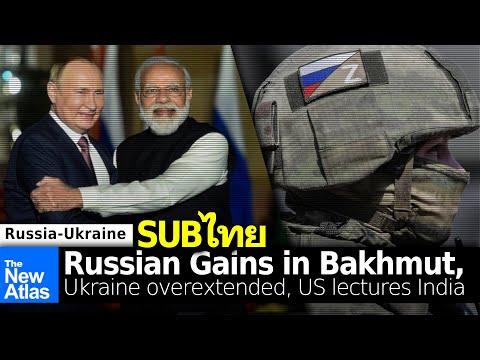
Russian Gains in Bakhmut, Ukraine Overextended, & US Lectures India

 October 17, 2022 (The New Atlas) - Update for Russian military operations against Ukraine for October 17, 2022.  Russian forces are closing...