Showing posts with label NileBowie. Show all posts

Wednesday, April 30, 2014

America: A Pacific power?

April 30, 2014 (Nile Bowie - RT) - As Washington pursues its rebalancing strategy, Obama’s historic four-nation tour of the Asia-Pacific has subtly altered the region’s security dynamics.

"The United States is a Pacific power, and we are here to stay," declared President Obama during his speech to the Australian parliament in 2011, following his announcement to deploy 2,500 marines to northern Australia to help protect American interests across Asia.
Trans-Pacific Partnership (TPP) Ministerial meeting in Singapore February  (Reuters / Edgar Su)
Trans-Pacific Partnership (TPP) Ministerial meeting in Singapore February (Reuters / Edgar Su)
As Washington remains embroiled in domestic economic issues and conflicts throughout the Middle East and elsewhere, the Obama administration has come under great scrutiny for not living up to the promise of rebalancing to the Asia-Pacific, the world’s most economically-dynamic region. The US president’s recent trip to the region was the most significant and tangible development to occur since the rebalancing policy was unveiled.
Obama’s trip had two primary dimensions: deepening the role of the US military throughout the Asia-Pacific, and shoring up support for the faltering Trans-Pacific Partnership (TPP) agreement, an all-encompassing trade deal led by Washington that would embolden transnational corporate power at great public expense.
As the Obama administration moves ahead on plans to relocate some 60 percent of its navy into the region, Washington's current Asia doctrine is grounded in the notion that no other power can be allowed to reach parity with the United States. Washington’s strategy to pivot toward the Asia-Pacific is adorned with the language of pragmatism and neutrality, and despite repeated denials, the Obama administration’s actions are quite transparently aimed at capping the influence of a rapidly developing China.
Washington has inserted itself into complicated, long-standing historical and territorial disputes under the guise of neutrality, which risks potentially setting the stage for an irreparable strategic blunder: antagonizing two major world powers simultaneously at a time when relations between the US and Russia are already deteriorating over the crisis in Ukraine.
President Obama’s milestone four-nation tour of the Asia-Pacific may have laid the foundations for the region’s local territorial disputes to grow into an increasing tense superpower stand-off.

Japan refuses to yield on trade


The US president’s visit to Japan comes at a time when the right-leaning administration of Shinzo Abe has taken controversial positions on historical and territorial issues that have inflamed relations with China and South Korea, which view the incumbent Japanese government as being openly unrepentant for past atrocities.
U.S. President Barack Obama (L) attends a news conference with Japanese Prime Minister Shinzo Abe at the Akasaka guesthouse in Tokyo April 24, 2014. (Reuters / Junko Kimura-Matsumoto / Pool)


The White House previously expressed reservations toward Abe’s calls to consider revising official apologies over Japan’s wartime conduct, and his controversial visit to the Yasukuni shrine that honors Japan’s WWII war dead, including over a dozen convicted Class-A war criminals. Abe made a ritual offering to the Yasukuni Shrine shortly before Obama’s arrival in Tokyo, followed by 146 Japanese lawmakers who visited the shrine en masse one day later, putting the US president in an awkward situation.
These provocative gestures did little to derail Obama’s support for Japan’s position in its tense territorial dispute with China over a chain of uninhabited islands in the East China Sea. In an interview with Japan’s Yomiuri Shimbun newspaper, Obama affirmed that the disputed islands fell within the scope of Article 5 of the US-Japan Treaty of Mutual Cooperation and Security, meaning that Washington would be obliged to back Japan in the event of a military confrontation over the islands with Beijing, which views the islands as an integral part of its territory.
Obama also enthusiastically pledged support for Abe’s moves to amend Japan’s post-war pacifist constitution, which has traditionally limited Japan’s armed forces from going beyond a self-defense role.
In the interest of expanding the US-Japan alliance to counter the growing clout of China, the US president has given Japanese rightists a green light to pursue militarization policies that will undoubtedly fuel regional antagonism. Rather than taking a neutral position and steering Tokyo toward a de-escalation with Beijing, Obama has effectively sent Abe the message that he can challenge China’s bottom line without serious repercussions, encouraging Japan to continue its inflexible position. Obama may have hoped that in exchange for backing Japan’s stance on territorial disputes and constitutional reform, Abe would have reciprocated by yielding on thorny trade issues, but he was wrong.
Obama allegedly put his chopsticks down halfway through his informal sushi dinner with Abe and jumped straight into discussions about trade. The White House is anxious to seal the TPP trade deal, but is unwilling to give significant concessions, forcing all countries to meet rigid criteria. Abe risks losing support from his conservative voter base by reducing tariffs on areas such as rice, sugar, beef, pork and dairy that would adversely affect Japanese farmers. Obama was expecting to come to a final agreement with Abe, but trade negotiators claim that there is still “considerable distance” between the US and Japan on key issues in the deal.
Trade talks are not expected to recommence anytime soon, and Obama was forced to reject suggestions that the deal is in danger over his failure to persuade Abe into making painful concessions.

Dialogue with Pyongyang ruled out?

Obama’s trip to South Korea came as the country was still reeling from the tragic sinking of the Sewol ferry, which killed scores of youngsters. Security topped the agenda as reports of increased activity at North Korea’s Punggye-ri nuclear test site wrought condemnation from Seoul. President Park Geun-hye adopted a hardline stance, calling for the rejection of dialogue with Pyongyang over the nuclear issue if the North conducts a fourth nuclear test as expected.
U.S. President Barack Obama walks in to deliver remarks at Yongsan Garrison in Seoul, South Korea, April 26, 2014. (Reuters / Larry Downing)

Pyongyang proposed a framework for better relations with the South at the start of this year and urged its willingness to meet for negotiations on the nuclear issue without any preconditions. The attempted thaw in relations culminated in reunions of separated families in February, amid Pyongyang’s calls for Seoul to cancel its planned joint military drills with the US.
Given the circumstances, South Korean authorities could have toned down this year’s drills as a gesture of reciprocity following Pyongyang’s moves to host family reunions. Seoul’s response was to hold the largest amphibian landing exercise with the US in over two decades, followed by large-scale war exercises. The lack of sincere measures to cool ties with Pyongyang is evident in the actions of Seoul and Washington, who are quick to accuse the North of provocations while flexing military muscles on its doorstep, ratcheting up anxiety and insecurity.
Park and the Obama administration refuse to open dialogue with Pyongyang unless it agrees to denuclearization as a precondition, despite pressure from China that preconditions be relaxed to allow the recommencement of the Six-Party talks.
During a joint press conference, Park announced that plans to transfer operational command of South Korea’s military in time of war, or OPCON, from the US to South Korea would be further delayed, giving the Pentagon de-facto control over South Korea’s military forces beyond December 2015.
Washington has also encouraged Seoul to strengthen missile defense cooperation – which Park agreed to do – while deepening trilateral cooperation between the US, Japan, and South Korea. During his trip, Obama called for more sanctions against North Korea and spoke of America’s capacity for military might, creating every indication that Washington’s antagonistic ‘strategic patience’ policy against Pyongyang will remain unchanged.

Malaysia’s delicate balancing act

Western media have billed Obama’s trip to Malaysia – the first visit by a US president in nearly five decades – as being quite successful. Malaysia was the only Muslim-majority country on the president’s four-nation tour, and the only country not to have an existing security treaty with the United States.
Washington and Kuala Lumpur have always enjoyed strong trade relations, but political relations were known to be tense during the 22-year tenure of former PM Mahathir Mohamad, who took strong positions against US foreign policy. Prime Minister Najib Razak, a British-educated economist who assumed office in 2009 as a reformer, has been much friendlier to the US.
The New York Times described Malaysian leadership’s change of attitude as an evolution from “deep suspicion, verging on contempt, to a cautious desire for cooperation.” Suspicious attitudes toward the US are still commonplace among certain factions within the ruling party and the conservative religious establishment. Several far-right Malay rights groups share the same misgivings, lashing out at Obama following statements he made on racial equality in the country.
U.S. President Barack Obama speaks at the Young Southeast Asian Leaders Initiative Town Hall at University of Malaya in Kuala Lumpur April 27, 2014. (Reuters / Larry Downing)


Trade and security topped the agenda during Obama’s visit, and although progress was made in both areas, it’s likely that the US delegation was hoping for a firmer stance on issues such as territorial disputes in the South China Sea. Malaysia is China’s largest trading partner within the ASEAN bloc, and of all the countries in the region who have territorial disputes with Beijing, the approach taken by Kuala Lumpur has been the most low-key and non-adversarial. Sino-Malaysian ties were upgraded to a ‘comprehensive strategic partnership’ level during Chinese President Xi Jinping’s visit to Kuala Lumpur in October 2013, while Najib and Obama agreed to upgrade ties to a ‘comprehensive partnership’ at a joint news conference following their talks on Sunday.
In the joint statement prepared by the two sides, Najib called for the full implementation of the Declaration on the Conduct of Parties regarding the South China Sea disputes, which Chinese state-media welcomed, saying that Malaysia showed a balanced attitude to avoid confrontation with China.

In an interview with Malaysian newspaper The Star, Obama alluded to his administration’s commitment to ensuring the “freedom of navigation in critical waterways,” which can be understood as a euphemism for policing the Straits of Malacca, one of China’s most critical supply routes responsible for transporting much of the oil and raw materials needed by Beijing to maintain high economic growth. Malaysia allows American warships to dock at ports throughout the country, but does not host any US military bases, and does not seek a hostile relationship with Beijing.
It is unclear how deep Malaysia’s commitment to security cooperation with the US will go, although the Obama administration has pledged to assist in the development of Malaysia’s maritime enforcement capacity, setting the stage for deeper military-to-military cooperation. In the economic sphere, there were no breakthroughs on the TPP trade deal, with both sides admitting that significant differences still remain.
Najib, however, made clear that the overall benefits of the TPP would far outweigh the disadvantages of the pact; he mentioned his commitment to getting acceptance from Malaysian people, but offered no specifics on how public acceptance of the trade deal would be measured. Mahathir, who still exerts a degree of influence on traditionalists within the ruling party, commented that Malaysia should not be pressured to agree to the terms stipulated by the TPP. The former PM has routinely called for the trade deal to be dropped, and a large segment of Malaysian civil society and activists are also opposed to the deal.
As a country that has put much emphasis on a non-confrontational foreign policy, Malaysia is well suited to leverage its good ties with Washington and Beijing to promote a conciliatory solution to territorial issues. Malaysia finds itself somewhere between being a warm friend to the Obama administration but not yet a staunch US ally with deep security ties.

Philippines signs 10-year defense agreement

To coincide with the last stop of his four-nation tour, Washington and Manila inked a controversial defense agreement to allow greater numbers of US soldiers to remain in the country on a rotational basis.
The reopening of foreign bases is prohibited by the 1987 Constitution, but the latest defense pact – negotiated largely in secret, and fast-tracked into law under the auspices of an executive agreement without ratification by the Philippine Congress – gives the US government de facto basing access in the country.
US President Barack Obama delivers remarks to US and Philippine troops at Fort Bonifacio in Manila on April 29, 2014. (AFP Photo / Noel Celis)

The US maintained large military bases in northern regions of the Philippines until the Philippines congress voted to close them down in 1991, but American forces were allowed to return in 1999 under a temporary stay agreement that saw US troops conduct joint training with the Philippines military. The new agreement is far broader, allowing the US military to establish permanent facilities within Philippine military facilities, also paving the way for American military technology to be sold to the Philippines.
Philippines President Benigno Aquino’s rationale for expanding the US presence in his country is to provide the Philippines with a powerful deterrent in the midst of Manila’s bitter territorial row with Beijing, as both countries lay claim to the Scarborough Shoal and Second Thomas Shoal in the potentially oil- and gas-rich South China Sea. The Philippines and its neighbors undoubtedly have firm and legitimate grievances in the interest of protecting their sovereignty and territorial integrity.
It should be recognized that the disputed features falls within the Philippine’s 200-nautical mile exclusive economic zone as recognized by the UN Convention on the Law of the Sea; China has resisted applying the procedures stipulated by the law to the many reefs and islands that lie much closer to the Philippines than to China. Manila has argued that Beijing has an obligation to respect the Philippines' rights to exercise control over areas that fall within its 200-nautical mile exclusive economic zone.
China claims that its sovereignty over the disputed areas can be supported by abundant historical and legal evidence, which also support Beijing’s maritime rights over three-quarters of the South China Sea. Beijing has consistently called for settling territorial issues through direct bilateral negotiations. Earlier this year, it offered the Philippines mutual disengagement from the contested area, trade and investment benefits, and postponement of the plans to declare an air defense identification zone over the South China Sea. The Philippines leadership rejected the proposal, and unilaterally filed a case with the tribunal that arbitrates maritime disputes under the UN Convention on the Law of the Sea.
China has resolved territorial disputes with 12 of the 14 countries with which it shares land borders, and the immense complexities of these maritime territorial disputes require levelheaded dialogue and a commitment from negotiations by both sides.
The Philippines leadership may have legitimate grievances, but is clearly not committed to seeking a resolution through dialogue, resorting to hyperbolic name-calling. In an interview with the New York Times, Aquino compared China to Nazi Germany, causing immense harm to bilateral relations with Beijing.
Much like the Obama administration’s position on Japan’s territorial disputes, there is now a concern that backing by the US military can encourage Manila to take a provocative and reckless stance.
Washington has entered the regional fold claiming to be a neutral party and mediating force, yet it supports the territorial claims of its allies and uses them as a justification to maximize its own interests, transforming a regional dispute into a potential super-power conflict, reducing the possibility for any peaceful settlement.
The recent security developments will deepen Manila’s historic dependency on the United States, reinforcing its colonial subordination to the strategic, military and regional priorities of American hegemony.
The statements, views and opinions expressed in this column are solely those of the author and do not necessarily represent those of RT.

Wednesday, March 5, 2014

​US hypocrisy over ‘Russian aggression’ in Ukraine

March 5, 2014 (Nile Bowie for RT) - As divisions deepen between the eastern and western regions of Ukraine, the backers of the putsch regime in Kiev portray Russia as a reckless aggressor to absolve their own responsibility for engineering the crisis.


A woman and a young boy walk past pro-Russian self-defence activists standing guard in front of the Crimean Cabinet of the Ministers in Simferopol on March 2, 2014. (AFP Photo / Genya Savilov)

While denunciations of Moscow have streamed out of western capitals in recent days over the standoff in Crimea, it should be understood that the political crisis currently unfolding in Ukraine could have been wholly avoided. In attempts to defuse unrest and maintain legal and societal order, ousted President Yanukovich offered remarkable concessions in his proposal to install opposition leaders in top posts in a reshaped government, which was rejected. Russia expressed readiness to engage in tripartite negotiations with Ukraine and the European Union with the hope that both Moscow and Brussels could play a positive role in Ukraine’s economic recovery, but the EU was unwilling to accept such a proposal. The February-21 agreement was mediated by Russia, France, Germany and Poland and aimed to end the bloodshed in Kiev by reducing presidential powers and establishing a framework for a national unity government, in addition to electoral reform, constitutional changes, and early elections.

There was clearly no shortage of opportunities to ease the polarization of the Ukrainian state through an inclusive political solution, and yet the opposition failed to uphold its responsibilities, resulting in the ouster of Ukraine’s democratically elected leader to the detriment of the country’s political, economic, and societal stability.
As the new self-appointed authorities in Kiev dictate terms and push legislation through a rump parliament, the reluctance of western capitals to address the clearly dubious legitimacy of the new regime suggests that the US and EU condone what is effectively a coup d’état with no constitutional validity.
The leaked phone call between Assistant Secretary of State Victoria Nuland and the US Ambassador to Ukraine, Geoffrey Pyatt, is a testament to Washington’s proclivity for foreign meddling and its brazen disregard of Ukraine’s sovereignty. It is no coincidence that Arseniy Yatsenyuk – handpicked by Nuland for the role of prime minister – now occupies that position in Kiev’s new leadership, and much like the reckless agitation strategies employed by the US elsewhere, extremist groups were manipulated to allow the nominal moderates to seize power on Washington’s behalf.
A new dawn for the far right

In order to maintain enough momentum to oust Yanukovich, Ukraine’s opposition leaders relied on allies in the radical camp such as fascist groups like Svoboda, Trizub, and the Right Sector. These organizations espouse ethnic hatred against Jews and Russians and promote neo-Nazi ideals. The foot soldiers of these movements laid the groundwork for the putsch by occupying the Maidan [Independence Square], storming government offices, and attacking riot police with Molotov cocktails, firearms, and other lethal weapons.
Members of these far-right groups have been integrated in so-called ‘self-defense forces’ that now patrol Kiev and other major cities, and have been seen wearing symbols that include the Celtic cross, which has replaced the swastika for many modern white-power groups, the wolf-hook SS insignia, and other occult symbols associated with the Third Reich. In his capacity as prime minister, Yatsenyuk has relinquished control of Ukraine’s national security forces to the heads of these radical organizations, who have openly used threatening and bigoted language to incite ethnic hostility, in addition to calls for Russians and Jews to be either destroyed or expelled from Ukraine.
Dmytro Yarosh, a leader of the Right Sector movement, addresses during a rally in central Independence Square in Kiev February 21, 2014. (Reuters / David Mdzinarishvili)


The political ascent of radical forces that represent a minority of Ukrainian public opinion has alarmed minority communities, indicated by Ukrainian Rabbi Moshe Reuven Azman’s calls for Kiev's Jews to flee the country in light of recent political developments. Regions in the east and southeast of Ukraine, where many ethnic Russians and Russian speakers reside, are experiencing the Maidan protests in reverse, as protestors plant Russian flags atop government buildings in rejection of the new leadership in Kiev.
Since seizing power, the putsch regime in Kiev has attempted to pass laws against the official use of Russian and other languages throughout the country, fueling social unrest and secessionist sentiment in some quarters that culturally and linguistically identify themselves as Russian. Fast-moving developments in Kiev and actions taken by the new regime have enflamed the crisis, and any Russian intervention should be seen against the backdrop of eastern and southeastern Ukraine’s rejection of an unconstitutional transfer of power that directly threatens the integrity of the state.
Russia as a stabilizing force

Thursday, January 23, 2014

No basis for US spinning Geneva communiqué to demand Assad’s resignation

Preconditions placed on attending the Geneva 2 conference insisted on by the United States are detrimental to building a conducive environment for ending the fighting in Syria.

Despite months of effort by diplomats and the international community, the long-awaited Geneva 2 peace conference is in disarray. The opposition Syrian National Coalition (SNC) – an exiled umbrella organization supported by Western and Gulf states that represents a negligible segment of rebel groups on the ground – has agreed to attend the talks under heavy pressure from their backers. Division runs deep for many within the group who oppose the decision to attend Geneva 2, and the SNC’s presence at the talks are still in question.

UN Secretary-General Ban Ki-moon’s decision to extend an invitation to Iran prompted the SNC to threaten pulling out of the talks if the UN’s invitation to Tehran is not rescinded. Even if the peace talks proceed, the unpleasant prospect that nothing tangible will emerge from them due to irreconcilable differences between the two sides looks like the most plausible outcome.

One of the key obstacles facing the negotiations is the SNC’s lack of legitimacy and its capriciousness, and that its members are mostly exiled Syrian dissidents who are not seen as credible by the fighters on the ground, primarily among Islamist groups that dominate the battlefield. The belief that the SNC can accomplish something meaningful at the negotiating table is cast deeper into doubt by critical assessments from dissenting former members of the group.

Read the full story on RT.com

Nile Bowie is a Malaysia-based political analyst and a columnist with Russia Today. He can be reached at nilebowie@gmail.com.

Saturday, January 19, 2013

Conflict in the Congo: Geopolitics of Plunder

January 20, 2013 (excerpt from Nile Bowie's Congo’s M23 conflict: Rebellion or Resource War?) - It must be recognized that Kagame controls a vastly wealthy and mineral-rich area of eastern Congo – an area that has long been integrated into Rwanda’s economy – with total complicity from the United States. As Washington prepares to escalate its military presence throughout the African continent with AFRICOM, the United States Africa Command, what long-term objectives does Uncle Sam have in the Congo, considered the world’s most resource-rich nation? Washington is crusading against China's export restrictions on minerals that are crucial components in the production of consumer electronics such as flat-screen televisions, smart phones, laptop batteries, and a host of other products. The US sees these Chinese export policies as a means of Beijing attempting to monopolize the mineral and rare earth market.

In a 2010 white paper entitled “Critical Raw Materials for the EU,” the European Commission cites the immediate need for reserve supplies of tantalum, cobalt, niobium, and tungsten among others; the US Department of Energy 2010 white paper “Critical Mineral Strategy” also acknowledged the strategic importance of these key components. In 1980, Pentagon documents acknowledged shortages of cobalt, titanium, chromium, tantalum, beryllium, and nickel. The US Congressional Budget Office’s 1982 report “Cobalt: Policy Options for a Strategic Mineral” notes that cobalt alloys are critical to the aerospace and weapons industries and that 64 per cent of the world’s cobalt reserves lay in the Katanga Copper Belt, running from southeastern Congo into northern Zambia.

Additionally, the sole piece of legislation authored by President Obama during his time as a Senator was SB 2125, the“Democratic Republic of the Congo Relief, Security, and Democracy Promotion Act of 2006”. In the legislation, Obama acknowledges Congo as a long-term interest to the United States and further alludes to the threat of Hutu militias as an apparent pretext for continued interference in the region; Section 201(6) of the bill specifically calls for the protection of natural resources in the eastern DRC. The United States does not like the fact that President Kabila in Kinshasa has become very comfortable with Beijing, and worries that Congo will drift into Chinese economic orbit. Under the current regime in Congo, Chinese commercial activities have significantly increased not only in the mining sector, but also considerably in the telecommunications field.

In 2000, the Chinese ZTE Corporation finalized a $12.6 million deal with the Congolese government to establish the first Sino-Congolese telecommunications company; furthermore, the DRC exported $1.4 billion worth of cobalt between 2007 and 2008. The majority of Congolese raw materials like cobalt, copper ore and a variety of hardwoodsare exported to China for further processing and 90 per cent of the processing plants in resource rich southeastern Katanga province are owned by Chinese nationals. In 2008, a consortium of Chinese companies were granted the rights to mining operations in Katanga in exchange for US$6 billion in infrastructure investments, including the construction of two hospitals, four universities and a hydroelectric power project. In 2009, the International Monetary Fund (IMF) demanded renegotiation of the deal, arguing that the agreement between China and the DRC violated the foreign debt relief program for so-called HIPC (Highly Indebted Poor Countries) nations. The IMF successfully blocked the deal in May 2009, calling for a more feasibility study of the DRCs mineral concessions. An article published by Shamus Cooke of Workers Action explains:

“This act instantly transformed Kabila from an unreliable friend to an enemy. The US and China have been madly scrambling for Africa’s immense wealth of raw materials, and Kabila’s new alliance with China was too much for the US to bear. Kabila further inflamed his former allies by demanding that the international corporations exploiting the Congo’s precious metals have their super-profit contracts re-negotiated, so that the country might actually receive some benefit from its riches.”
During a diplomatic tour of Africa in 2011, US Secretary of State Hilary Clinton herself has irresponsibly insinuatedChina’s guilt in perpetuating a creeping “new colonialism.” China annually invests an estimated $5.5 billion in Africa, with only 29 per cent of direct investment in the mining sector in 2009 – while more than half was directed toward domestic manufacturing, finance, and construction industries. China has further committed $10 billion in concessional loans to Africa between 2009 and 2012. As Africa’s largest trading partner, China imports 1.5 million barrels of oil from Africa per day, accounting for approximately 30 per cent of its total imports. Over the past decade, 750,000 Chinese nationals have settled in Africa; China’s deepening economic engagement in Africa and its crucial role in developing the mineral sector, telecommunications industry and much needed infrastructural projects is creating "deep nervousness" in the West, according to David Shinn, the former US ambassador to Burkina Faso and Ethiopia.
....

Read the entire article on Nile Bowie's blog here

Saturday, January 5, 2013

War on Syria: Gateway to WWIII

January 5, 2013 (Corbett Report/Global Research)


....

The book, "War on Syria: Gateway to WWIII," can be found, for free in .pdf format, here. For the latest Land Destroyer Report headlines on Syria, see here.  

Thursday, December 27, 2012

US Attempting Regime Change in Malaysia: Fact or fiction?

­December 27, 2012 (RT - Nile Bowie) - As the South-East Asian nation of Malaysia prepares for general elections, distrust of the political opposition and accusations of foreign interference have been major talking points in the political frequencies emanating from Kuala Lumpur.

­The United Malays National Organization (UMNO) leads the country’s ruling coalition, Barisan Nasional, and has maintained power since Malaysian independence in 1957.

One of Malaysia’s most recognizable figures is former Prime Minister Dr. Mahathir Mohamad, who has been credited with ushering in large-scale economic growth and overseeing the nation’s transition from an exporter of palm oil, tin, and other raw materials, into an industrialized economy that manufactures automobiles and electronic goods.

The opposition coalition, Pakatan Rakyat, is headed by Anwar Ibrahim, who once held the post of Deputy Prime Minister in Mahathir’s administration, but was sacked over major disagreements on how to steer Malaysia’s economy during the 1997 Asian financial crisis.

Today, the political climate in Malaysia is highly polarized and a sense of unpredictability looms over the nation. Malaysia’s current leader, Prime Minister Najib Razak, has pursued a reform-minded agenda by repealing authoritarian legislation of the past and dramatically loosening controls on expression and political pluralism introduced under Mahathir’s tenure.

Najib has rolled back Malaysia’s Internal Security Act, which allowed for indefinite detention without trial, and has liberalized rules regarding the publication of books and newspapers. During Malaysia’s 2008 general elections, the ruling Barisan Nasional coalition experienced its worst result in decades, with the opposition Pakatan Rakyat coalition winning 82 parliamentary seats. For the first time, the ruling party was deprived of its two-thirds parliamentary majority, which is required to pass amendments to Malaysia’s Federal Constitution.

In the run-up to elections scheduled to take place before an April 2013 deadline, figures from all sides of the political spectrum are asking questions about the opposition’s links to foreign-funders in Washington.
The question of foreign-funding

Malaysia’s former PM Dr. Mahathir Mohamad has long captured the ire of officials from Washington and Tel Aviv, and though he’s retired, he has channeled his energies into the Perdana Global Peace Foundation, which recently hosted an international conference in Kuala Lumpur calling for a new investigation into the events of 9/11 and has sought to investigate war crimes committed in Gaza, Iraq and Afghanistan.

Mahathir has been an ardent critic of Israel and organizations such as AIPAC, and has recently accused US-based organizations the National Endowment for Democracy (NED) and the Open Society Institute (OSI) of holding a concealed intention to influence Malaysia’s domestic politics through the funding of local NGOs and groups directly linked to Anwar Ibrahim’s Pakatan Rakyat opposition coalition.

In an article the former prime minister published in the New Straits Times, a leading mainstream newspaper, Mahathir accuses financier George Soros and his organization, the Open Society Institute, of “promoting democracy” in Eastern Europe to pave the way for colonization by global finance capital.

Mahathir acknowledges how OSI pumped millions into opposition movements and independent media in Hungary, Ukraine and Georgia under the guise of strengthening civil society, only to have like-minded individuals nominated by Soros’s own foundation come to power in those countries.

The former prime minister has also pointed to how Egypt (prior to Mohamad Morsi taking power) has cracked down on NGOs affiliated with NED, namely groups such as the National Democratic Institute, the International Republican Institute (IRI) and Freedom House, which are all recipients of funding from the US State Department.

In Malaysia, high-profile NGOs and media outlets have admittedly received funding from OSI and satellite organizations of NED. Premesh Chandran, the CEO of the nation’s most prominent alternative media outlet, Malaysiakini, is a grantee of George Soros’s Open Society Foundations and launched the news organization with a $100,000 grant from the Bangkok-based Southeast Asian Press Alliance (SEAPA), another organization with dubious affiliations to the US State Department.

Malaysiakini has come under pressure from local journalists for the lack of transparency in its financial management and hesitance in revealing the value of its shares. Additionally, Suaram, an NGO promoting human rights, has borne heavy criticism over its funding and organizational structure. The Companies Commission of Malaysia launched investigations into Suara Inisiatif Sdn Bhd, a private company linked to Suaram, and found it to be a conduit for money being used to channel funds from NED.

Suaram has been instrumental in legitimizing allegations of a possible cover-up of the murder of a Mongolian fashion model, Altantuya Shaaribuu, who was living in Malaysia in 2006 and associated with government officials that have been linked to a kickback scandal involving the government’s purchase of submarines from France. Senator Ezam Mohd Nor, himself a recipient of Suaram’s Human Rights Award, has accused the organization of employing poor research methods and attempting to disparage the government:
“Malaysians have the right to feel suspicious about them. They have been making personal allegations against the Prime Minister [Najib Razak] on the murder of Altantuya and many other cases without proof… their motive is very questionable especially when they are more inclined towards ridiculing and belittling the ruling government.”
The German Embassy in KL has reportedly admitted that it has provided funds to Suaram's project in 2010. Malaysia’s Foreign Minister Anifah Aman followed by making strong statements to the German Ambassador and declared that Germany’s actions could be viewed as interference in the domestic affairs of a sovereign state.

Since 2007, Bersih, an association of NGOs calling itself the Coalition for Clean and Fair Elections, staged three street protests in which thousands of yellow-clad demonstrators took to the streets in Kuala Lumpur demanding electoral reform. After coming under heavy scrutiny for obfuscating funding sources, Bersih coalition leader Ambiga Sreenevasan admitted that her organization receives funding from the National Democratic Institute and the Open Society Institute.

Sreenevasan herself has been the recipient of the US State Department’s Award for International Women of Courage, and was present in Washington DC in 2009 to receive the award directly from the hands of Michelle Obama and Secretary of State Hillary Clinton. While Sreenevasan’s organization claimed to be non-partisan and apolitical, members of Malaysia’s political opposition openly endorsed the movement, and some were even present at the demonstrations.

Anatomy of Malaysia’s political opposition
 
Malaysia is a multi-cultural and multi-religious state, and both the ruling and opposition parties attempt to represent the nation’s three largest ethnic groups. Approximately 60 per cent of Malaysians are either ethnic Malay or other indigenous groups and are mostly listed as Muslim, while another 25 per cent are ethnic Chinese who are predominantly Buddhist, with 7 per cent mostly Hindu Indian-Malaysians.

The United Malays National Organization, the Malaysian Chinese Association, and the Malaysian Indian Congress head Barisan Nasional. The opposition, Pakatan Rakyat, currently controls four state governments and is led by Anwar Ibrahim’s Keadilan Rakyat, the Chinese-led Democratic Action Party (DAP), and staunchly Islamist Malaysian Islamic Party (PAS).

While a large percentage of urbanites with legitimate grievances are quick to acknowledge the government’s shortcomings, many are hesitant to back Anwar Ibrahim due to his connections with neo-conservative thinkers in Washington and general disunity within the opposition. 

Ibrahim maintains close ties with senior US officials and organizations such as the National Endowment for Democracy. In 2005, Ibrahim chaired the Washington-based Foundation for the Future, established and funded by the US Department of State at the behest of Elizabeth Cheney, the daughter of then-Vice President Dick Cheney, thanks in large part to his cozy relationship with Paul Wolfowitz.

While Ibrahim was on trial for allegedly engaging in sodomy with a male aide (of which he was acquitted sometime later), Wolfowitz and former US Vice-President Al Gore authored a joint opinion piece in the Wall Street Journal in support of Ibrahim, while the Washington Post published an editorial calling for consequences that would affect Malaysia’s relations with Washington if Ibrahim was to be found guilty. Ibrahim enraged many when he stated that he would support policy to protect the security of Israel in an interview with the Wall Street Journal; this is particularly controversial in Malaysia, where support for Palestine is largely unanimous.

Malaysian political scientist Dr. Chandra Muzaffar writes: 
“It is obvious that by acknowledging the primacy of Israeli security, Anwar was sending a clear message to the deep state and to Tel Aviv and Washington that he is someone that they could trust. In contrast, the Najib government, in spite of its attempts to get closer to Washington, remains critical of Israeli aggression and intransigence. Najib has described the Israeli government as a ‘serial killer’ and a ‘gangster.’”
Members of Barisan Nasional have addressed Ibrahim’s connections to the National Endowment for Democracy in the Malaysian Parliament, including his participation in NED’s ‘Democracy Award’ event held in Washington DC in 2007. Independent journalists have uncovered letters written by Anwar Ibrahim, two of which were sent to NED President Carl Gershman in Washington DC that discussed sending an international election observer team to Malaysia and general issues related to electoral reform.

A third letter was sent to George Soros, expressing interest in collaborating with an accountability firm headed by Ibrahim. Pakatan Rakyat’s Communications Director, Nik Nazmi Nik Ahmad, verified the authenticity of the documents. This should come as little surprise, as Ibrahim’s economic policies have historically aligned with institutions such as the IMF and World Bank, in contrast to Mahathir, whose protectionist economic policies opposed international financial institutions and allowed Malaysia to navigate and largely resurface from the 1997 Asian financial crisis unscathed.

An issue that concerns secular and non-Muslim Malaysian voters is the role of the Malaysian Islamic Party (PAS) as part of the opposition. In sharp contrast to the moderate brand of Islam preached by UMNO, the organization’s primary objective is the founding of an Islamic state.

The PAS has spoken of working within the framework of Malaysia’s parliamentary democracy, but holds steadfast to implementing sharia law on a national scale, which would lead to confusing implications for Malaysia’s sizable non-Muslim population. The debate around the implementation of Islamic hudud penal code is something that other Pakatan Rakyat coalition members, such as figures in the Chinese-led Democratic Action Party, have been unable to agree on.

The PAS enjoys support from rural Malay Muslims in conservative states such as Kedah, Kelantan and Terengganu in northern Malaysia, though they have very limited appeal to urbanites. While certain individuals in PAS have raised questions about NGOs receiving foreign funding, Mahathir has insinuated that PAS’s leadership has been largely complicit:
“They [foreign interests] want to topple the government through the demonstration and Nik Aziz [Spiritual leader of PAS] said it is permissible to bring down the government in this manner. They want to make Malaysia like Egypt, Tunisia, which were brought down through riots and now Syria…. when the government does not fall, they [Pakatan Rakyat] can appeal to the foreign power to help and bring down, even if it means using fire power.”
 
Protestors form a human chain in the city center of Kuala Lumpur during April 2012 protests in support of the Bersih coalition (Photo by Nile Bowie)
­

Feasibility of ‘regime change’ narrative

It must be acknowledged that the current administration led by Prime Minister Najib Razak has made great strides toward improving relations with Washington. At a meeting with President Barack Obama in 2010, Najib offered Malaysia’s assistance to cooperate with the United States to engage the Muslim world; Najib also expressed willingness to deploy Malaysian aid personnel to Afghanistan, and allegedly agreed on the need to maintain a unified front on Iran's nuclear program.

Najib has employed a Washington-based public relations firm, APCO, to improve Malaysia’s image in the US and has seemingly embraced American economic leadership of the region through his support for the Trans-Pacific Partnership trade agreement. Some would argue that Najib is perhaps the most pro-American leader Malaysia has ever had – a stark contrast to the boldness of Mahathir.

Despite Najib having good rapport with formal Western leaders, it is clear with whom the thank-tank policy architects, Zionist lobbies, and foundation fellows have placed their loyalties.

Sentiment among Malaysia’s youth and “pro-democracy” activists, who constitute a small but vocal minority, tend be entirely dismissive of the ‘regime change’ narrative, viewing it as pre-election diversionary rhetoric of the ruling party. While bogeymen of the Zionist variety are often invoked in Malaysian political discourse, it would be negligent to ignore the effects of Washington-sponsored ‘democracy promotion’ in the global context, which have in recent times cloaked mercenary elements and insurgents in the colors of freedom fighting, and successfully masked geopolitical restructuring and the ushering in of neo-liberal capitalism with the hip and fashionable vigor of ‘people power’ coups.

As the United States continues to militarily increase its presence in the Pacific region in line with its strategic policy-shift to East Asia, policy makers in Washington would like to see compliant heads of state who will act to further American interests in the ASEAN region.

Let’s not ignore the elephant in the room; the real purpose of America’s resurgence of interest in the ASEAN bloc is to fortify the region as a counterweight against Beijing.

The defense ministries of Malaysia and China held a landmark defense and security consultation in September 2012, in addition to frequent bilateral state visits and enhanced economic cooperation. It was the father of the current leader, Malaysia's second Prime Minister Tun Abdul Razak, who made the landmark visit to Beijing to normalize relations in 1974, and under his son Najib, Sino-Malaysian relations and cooperation have never been better.

Following the global economic crisis of 2008, Najib looked to Beijing to revive Malaysia's export oriented economy, emphasizing increased Chinese investment into Malaysia and expanding the base of Sino-Malaysian trade in areas like education and student exchange, finance, infrastructure development, science and technology, yielding lucrative and mutually beneficial results. China has been Malaysia's largest trade partner, with trade figures reaching US$90 billion in 2011; Malaysia is China’s largest trading partner among ASEAN nations.

In asking the question of regime change in Malaysia, Dr. Chandra Muzaffar reflects on Washington’s moves to bolster its military muscle and dominance over the Asia-Pacific region:
“Establishing a military base in Darwin [Australia], resurrecting the US’ military alliance with the Philippines, coaxing Japan to play a more overt military role in the region, instigating Vietnam to confront China over the Spratly Islands, and encouraging India to counterbalance Chinese power, are all part and parcel of the larger US agenda of encircling and containing China. In pursuing this agenda, the US wants reliable allies – not just friends – in Asia. In this regard, Malaysia is important because of its position as a littoral state with sovereign rights over the Straits of Malacca, which is one of China’s most critical supply routes that transports much of the oil and other materials vital for its economic development. Will the containment of China lead to a situation where the hegemon, determined to perpetuate its dominant power, seek to exercise control over the Straits in order to curb China’s ascendancy? Would a trusted ally in Kuala Lumpur facilitate such control? The current Malaysian leadership does not fit the bill.”
'Backwards' and forwards
 Pakatan Rakyat, the main opposition coalition pitted against the ruling party, has yet to offer a fully coherent organizational program, and if the coalition ever came to power, the disunity of its component parties and their inability to agree on fundamental policies would be enough to conjure angrier, disenchanted youth back on to the streets, in larger numbers perhaps.

What is ticklishly ironic about reading op-eds penned by the likes of Wolfowitz and Al Gore, and how they laud Malaysia as a progressive and moderate model Islamic state, is that they concurrently demonize its leadership and dismiss them authoritarian thugs.

Surely, the ruling coalition has its shortcomings; the politicization of race and religion, noted cases of corrupt officials squandering funds, etc. – but far too few, especially those of the middle-class who benefit most from energy subsidies, acknowledge the tremendous economic growth achieved under the current leadership and the success of their populist policies.

Najib’s administration would do well to place greater emphasis on addressing the concerns of Malaysia’s minorities who view affirmative action policies given to Malay ethnicities as disproportionate; income status, not ethnicity, should be a deciding factor in who receives assistance. The current administration appears set to widen populist policies that make necessities affordable through subsidies and continue to assist low-income earners with cash handouts.

Najib has acknowledged the need for broad reforms of Malaysia’s state-owned enterprises over concerns that crony capitalism may deter foreign investment; this should be rolled out concurrently with programs to foster more local entrepreneurship. To put it bluntly, the opposition lacks confidence from the business community and foreign investors; even the likes of JP Morgan have issued statements of concern over an opposition win.

It should be noted that if Islamists ever wielded greater influence in Malaysia under an opposition coalition, one could imagine a sizable exodus of non-Muslim minorities and a subsequent flight of foreign capital, putting the nation’s economy in a fragile and fractured state. And yet, the United States has poured millions into ‘democracy promotion’ efforts to strengthen the influence of NGOs that distort realities and cast doubt over the government’s ability to be a coherent actor.

Malaysia does not have the kind of instability that warrants overt external intervention; backing regime-change efforts may only go so far as supporting dissidents and groups affiliated with Anwar Ibrahim. No matter the result of the upcoming elections, Najib appears to have played ball enough for Washington to remain more or less neutral.

According to Bersih coalition leader Ambiga Sreenevasan, Malaysia’s electoral process is so restrictive that a mass movement like Bersih is required to purge the system of its backwardness. These are curious statements, considering that the opposition gained control of four out of 13 states in 2008, including Selangor, a key economic state with the highest GDP and most developed infrastructure.

In response, Najib has adhered to Bersih’s demands and has called for electoral reform, forming a parliamentary select committee comprising members from both Pakatan Rakyat and Barisan Nasional.

As elections loom, Bersih coalition leader Ambiga Sreenavasan is already dubbing them “the dirtiest elections ever seen” – unsurprising rhetoric from a woman being handed her talking points by the US embassy.


Friday, December 21, 2012

South Korea’s Elections

Hardline Conservatism with a Liberal Smile.

December 21, 2012 (Nile Bowie) - The ever-changing political landscapes of the Korean Peninsula never fail to offer stark contrasts. To the north, a somber December is spent mourning the forefathers of the communist dynasty under the helm of a boy-king and his advisers. To the south, voters have elected the nation’s first female president, the daughter of South Korea’s iconic former leader, Park Chung-hee. While their circumstances and rise to power cannot be more dissimilar, both Kim Jong-un and Park Geun-hye both derive some degree of public support through channeling the nostalgia of their parent’s legacies. In South Korea, one of the world’s most rapidly ageing societies, Park relied heavily on the elderly for her support base, who associate her with the economic prosperity brought in under her father’s rule, in much the same way as northerners regard the times of Kim il-Sung. As the new president prepares to take office in February 2013, many among South Korea’s left leaning youth see Park Geun-hye as an enabler of status quo conservatism veiled behind a thin liberal facade.

Park is widely credited with resuscitating legitimacy back into the ruling Saenuri party, which has garnered record-setting disapproval ratings under incumbent President Lee Myung-bak. Money laundering scandals, tax evasion, and accusations of embezzlement have followed the outgoing President Lee, who has come down hard on dissenters by jailing activists and artists who have criticized his rule. Lee is most responsible for dismantling Seoul’s liberal approach to North Korea as seen through the “Sunshine Policy” of previous administrations, at the cost of nearly reigniting the Korean war after a series of provocative live fire exchanges in disputed territorial waters in 2010 that saw the North shell the South’s Yeonpyeong island, and the sinking of a South Korean naval vessel. Despite running on the conservative ticket, Park has steered clear of openly advocating Lee’s hardline policies toward Pyongyang in her campaign rhetoric. Although an unpredictable North Korea looms just 70km from Seoul, domestic economic issues are the most immediate focus of the South Korean voter.
Leading a “Chaebol Republic”

An odious brand of crony-corporatism has prevailed in the South Korean economy, spearheaded by the chaebol, large-scale conglomerates like Hyundai, LG, and Samsung. While these recognizable brands have indeed brought much wealth and opportunity to the southern half of the peninsula, Koreans on the lower end of the economic food chain feel neglected by the nation’s mega-corporations and the wealthy political elite behind these companies. Prior to taking office, President Lee ran the Hyundai Engineering and Construction conglomerate, and has pardoned the chairs of Samsung and Hyundai Motors from jail time over convictions of fraud. Park’s opponent, the liberal Moon Jae-in of the Democratic United Party, has accused the country’s conglomerate-dominated economic model of being the main contributing factor to economic inequality, in addition to crediting Park’s father with developing the corporatist economic model still prevalent today.

The defeated Moon Jae-in spoke of increasing taxation on the wealthy and providing small businesses with economic protection from the chaebol. President Lee’s passing of a free-trade agreement with the United States enraged many working class people and farmers who fear the flooding of Korean markets with cheap foreign agricultural products. Moon publicly voiced his disapproval of the trade regime and vowed to re-negotiate it; this position resonated well with young leftists, but popular disdain for establishment parties like Moon’s Democratic United Party proved to be a major obstacle for the left. Park, on the other hand, has toed the party line of President Lee by championing economic and diplomatic ties with Washington, while resisting calls for taxing the chaebol in fear of hampering their growth. Park has played more of a centrist role than one would expect from a conservative ticket by advocating college tuition cuts, maternity assistance, free school lunches, and other social welfare programs, but has come under fire for being unable to answer basic questions about minimum wage figures during a debate, prompting tough statements from the Korean Confederation of Trade Unions:
“It is terribly discouraging when a person who wants to become president does not even know the country’s minimum wage, which is a minimal right for survival and the first step toward a welfare state.”
Park’s "Trustpolitik" & Inter-Korean relations

The failures of Lee Myung-bak’s loathed tenure are none more apparent than in the field of inter-Korean relations. As Kim Jong-un consolidates power in Pyongyang and toys with introducing seedlings of economic reform, it is high time for a change in frequency from the Blue House in Seoul toward more amenable relations between the two Koreas. Although Park has publically stood clear of Lee’s tough stance, a closer look at her foreign policy signifies more acquiesce than divergence from the status quo. In a 2011 article published by Park in the Council on Foreign Relation’s Foreign Affairs website titled, “A New Kind of Korea,” the incoming president talks of adopting a policy of "trustpolitik," aimed at developing a minimum level of trust between the two Koreas. Just as it exists under the current leadership of President Lee, the cornerstone of Park’s policy revolves around Pyongyang abandoning its nuclear program and de-weaponizing, or suffering the consequences.

Park is setting herself up to fail, and having herself visited Pyongyang to negotiate with Kim Jong il, one would assume she would be less naïve on the issue of Pyongyang’s nuclear program and the importance it holds to North Koreans. After the death of Kim il-Sung in 1994, his son oversaw general economic mismanagement and a series of natural disasters that led to widespread starvation. To legitimize his tenure, Kim Jong-il introduced Songun politics, a military-first policy aimed at appeasing the military and building up national defenses. The attainment of a “nuclear deterrent” has been trumpeted as a major accomplishment in domestic North Korean propaganda, despite very little concrete evidence known about these weapons, their capability, or the status of Pyongyang’s nuclear program.

It is unrealistic to expect Pyongyang to give up its nuclear program, primarily because achieving the status of a nuclear state (despite whether or not they actually have achieved that status) is Kim Jong-il’s main “accomplishment.” The upper echelons of leadership in the Korean Worker’s Party surely hold dear the lessons of Gaddafi after dismantling Libya’s nuclear program. Pyongyang continues to pursue provocative missile tests and belligerent rhetoric because they view this as a means of ensuring their security, the fact that the Pyongyang power-dynasty has moved into a third generation is proof enough that this policy has worked for them. Park has spoke of taking a middle-of-the-road approach, and buttressed an inter-Korean dialogue with Kim Jong-un. These are goals that represent a more practical shift, but if Park’s policy rests solely on being open to Pyongyang only if they disarm, the incoming administration will find itself mired in President Lee’s legacy of tension. In line with the militarism of her conservative party, Park has spoken of plans to create an East Asian military alliance and appears willing to continue the hardline against Pyongyang:
“Asian states must slow down their accelerating arms buildup, reduce military tensions, and establish a cooperative security regime that would complement existing bilateral agreements and help resolve persistent tensions in the region.”
“South Korea must first demonstrate, through a robust and credible deterrent posture, that it will no longer tolerate North Korea's increasingly violent provocations. It must show Pyongyang that the North will pay a heavy price for its military and nuclear threats. This approach is not new, but in order to change the current situation, it must be enforced more vigorously than in the past.”
In contrast to Park, Moon Jae-in’s Democratic United Party has touted a return to the “Sunshine Policy,” and has advocated restarting unconditional aid to Pyongyang. The conservative political elite in Seoul fails to realize that relations with North Korea can more effectively be cooled not by pursuing hardline policies and provocative military drills, but by bolstering inter-Korean economic ties, tourism, and exchange. Kim Jong-un can only begin to dismantle the military-first policy by offering some alternative whereby he maintains his legitimacy – that could potentially be by increasing economic opportunity, raising standards of living, and developing North Korea’s economy. Seoul would be in a much better position to negotiate if they had a hand in mutually beneficial economic development with the North. Park’s ambitions of creating a “cooperative security regime” with Asian states (presuming North Korea is excluded) will certainly not help convince Pyongyang to disarm. An “Asian NATO” is counterproductive and would only make Pyongyang more unpredictable – as long as Seoul’s ballistic missiles are capable of hitting any part of North Korea, expecting Pyongyang to commit political suicide by disarming is simply not realistic.

Conclusions

The incoming South Korean administration has lots of problems on its hands; managing an ageing population with some of the world’s lowest birth rates, tackling increasing prostitution rates, high suicide rates and other social ills, and coping with an economic slowdown in China, the nation’s biggest export market. South Korea’s economic development has lifted millions out of poverty and into the economic space of high-income earners in the span of a few decades. It would be foolish for Park to pursue the foreign policy of her predecessor and risk bringing about a reignited Korean war and all that would come with it; enormous civilian casualty rates, an unprecedented refugee crisis, and a major handicap on the South Korean economy. All signs point to Park Geun-hye continuing along the same economic trajectory as the incumbent President Lee, perhaps with a greater emphasis on social welfare programs. The next five years will be critical for inter-Korean relations. In attempting to emerge from her father’s shadow, one would hope that she could address the faults in the economic system her father helped create by reducing the income disparity, and also learn from his mistakes by allowing free and open political dissent and total freedom of expression.

Nile Bowie is an independent political commentator and photographer based in Kuala Lumpur, Malaysia. He can be reached at nilebowie@gmail.com

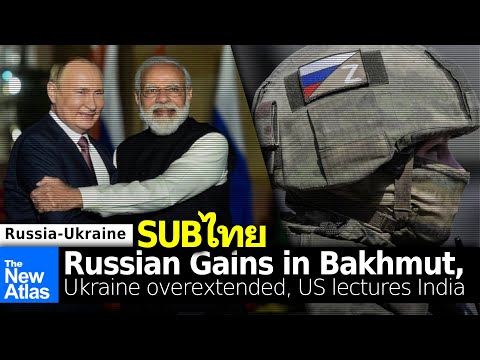
Russian Gains in Bakhmut, Ukraine Overextended, & US Lectures India

 October 17, 2022 (The New Atlas) - Update for Russian military operations against Ukraine for October 17, 2022.  Russian forces are closing...