Showing posts with label SouthKorea. Show all posts

Sunday, February 25, 2018

Sum of all American Fears in Korea: Peace

February 11, 2018 (Tony Cartalucci - NEO) - North Korea has been depicted by the Western media as a dangerous rogue state, plotting the nuclear holocaust of America and holding global peace and stability hostage with its irrational aggression. It is the supposed threat North Korea poses to the world that the United States uses to justify its enduring decades-long military presence on the Korean Peninsula. 


In the recently released 2018 US Department of Defense Nation Defense Strategy, it claims: 

North Korea seeks to guarantee regime survival and increased leverage by seeking a mixture of nuclear, biological, chemical, conventional, and unconventional weapons and a growing ballistic missile capability to gain coercive influence over South Korea, Japan, and the United States.

Yet North Korea's immediate neighbor - South Korea - felt comfortable enough with this "rogue regime" that it not only invited high level diplomats to the PyeongChang 2018 Winter Olympic Games, it had its own athletes compete side-by-side with their North Korean counterparts as a unified team. 

The opening ceremony included a unified parade, song, and chorus group. North Korean leader Kim Jong Un's sister publicly greeted South Korean President Moon Jae-in. Other senior North Korean leaders and diplomats were present and interacted with their South Korean counterparts.

ABC News would report in their article, "Kim Jong Un's sister shakes hands with South Korea's president at Olympics opening ceremony," that: 

After arriving in South Korea with a high-level delegation, the sister of North Korean leader Kim Jong Un publicly shook hands with the neighboring nation's president during tonight's opening ceremony of the 2018 Winter Olympics.
CNN would report that North Korean leader Kim Jong Un would go as far as inviting South Korean President Moon Jae-in to the North Korean capital, Pyongyang. 

Evident is the absurdity of Western political and media claims about the danger North Korea presents to the world, when the very nation it is allegedly still technically at war with - South Korea - invites its leadership to a sporting event their athletes compete as a team together in and whose leaders watch, sitting side-by-side. 

However, CNN's article, "Kim Jong Un invites South Korean President Moon to Pyongyang," would reveal:    
Moon responded to the invitation by suggesting the two countries "should accomplish this by creating the right conditions," adding that talks between North Korea and the United States were also needed, and requested that North Korea be more active in talking with the US, according to Kim Eui-kyeom.
In essence, the president of South Korea requires US permission to conduct what should be South Korea's own bilateral talks with its immediate neighbor to the north. And here is revealed both the root of tensions on the Korean Peninsula - America's involvement - and the sum of all American fears - peace between North and South - especially on their own terms.

For the United States, North Korea has been a convenient pretext to remain deeply embedded on the Korean Peninsula, admittedly part of Washington's strategy - not to deal with a rogue state - but to further encircle and contain China's rise in Asia. The US maintains a significant military presence in Japan for similar purposes and has attempted to reestablish a significant military presence in the Philippines toward this end as well.

Pretext For Permanent US Occupation 


It has been the United States pressuring South Korea to maintain a heavily militarized and belligerent posture versus North Korea, conducting annual military exercises with the United States aimed at provoking North Korea's leadership. 


The Telegraph in its article, "US Navy Seals tasked with North Korea 'decapitation' strike could be part of exercises," would report: 

A unit of US special forces tasked with carrying out “decapitation” operations may be aboard a nuclear-powered submarine docked in the South Korean port of Busan, the nation’s newswire reported on Monday, citing a defence source.

The USS Michigan, an 18,000-metric ton submarine, arrived in Busan on Friday, ahead of a ten day joint US-South Korean drill led by the USS Ronald Reagan aircraft carrier.

The report was part of widespread psychological warfare carried out in concert by Western and South Korean media aimed at provoking North Korea's senior leadership. The Foal Eagle exercises the US special forces were allegedly taking part in included thousands of US troops and simulated airstrikes on North Korean targets.  

The US has penned entire policy papers discussing plans to invade, overthrow, and subjugate North Korea, usually with South Korea playing a supporting role. The influential corporate-funded US policy think tank - the Council on Foreign Relations - in its 2009 "Preparing for Sudden Change in North Korea," paper would claim the need for a US occupation of North Korea should its leadership for whatever reason collapse. It would claim: 
How large a force would be required to bring security and stability to North Korea would depend on the level of acquiescence to foreign intervention. Based on previous experiences elsewhere, the rule of thumb for the number of troops required for successful stability operations in a permissive environment is somewhere between five and ten per thousand people. Because North Korea has a population of approximately twenty-three million, a successful operation could require between 115,000 to 230,000 military personal. In addition, tens of thousands of police might also be needed to support these forces in more basic tasks. Those requirements would place a significant strain on South Korea, particularly in view of the current plan to reduce its army by some 30 percent over the next decade.
Again, even in this 2009 report, South Korea is said to have been preparing to reduce its military by up to 30%, exposing again the perceived threat the US claims North Korea is to the world, and North Korea's immediate neighbor to the south preparing to stand down over a quarter of its military because it knows otherwise. 

South Korea has existed as a subordinate in terms of its own defense since the effective end of the Korean War. The US still maintains wartime operation control, has tens of thousands of troops stationed on the Korean Peninsula and requires South Korea to pay a percentage of the money required to keep them stationed there. The US openly and repeatedly refers to the "US-ROK alliance" that "defends South Korea."

The Straits Times would report in an article titled, "South Korea pays more than 'peanuts' to host US troops: The Korea Herald," that: 


South Korea pays about half of the costs for maintaining the 28,000 American troops, which reached 944.1 billion won (S$1.1 billion) in 2016. The payment has gone up steadily - from 488.2 billion won in 2001 to 680.4 billion won in 2005 and 790.4 billion in 2010.
The article would also add: 
One more thing to note when one counts "defence surplus and deficit" is the fact that South Korea is a major purchaser of US arms, having spent 36.4 trillion won on weapons and military equipment over the past 10 years.
The article finishes by citing China's rise - not the threat of North Korea - as the actual purpose of US troops in both South Korea and Japan. 

It is clear that to remain in Korea and to sell an immense amount of US weapons, the US must manufacturer a threat sufficient to justify both. Containing China's so-far peaceful economic rise is not a sufficient justification - though that is the true purpose for America's presence on the Korean Peninsula. 

In the end, it turns out it was the US itself - through concerted lies and a history of provocations and threats - that has intentionally perpetuated tensions on the Korean Peninsula, not North Korea. It was US Vice President Mike Pence who turned a cold shoulder as leaders from North and South Korea exchanged greetings at this year's Winter Olympic Games. And it will be the United States that intentionally foils any attempt by North and South Korea to build upon the historic meetings that took place during the sporting event. 


The US does not fear a nuclear holocaust on US soil brought about by North Korean intercontinental ballistic missiles, it fears peace on the Korean Peninsula on North and South Korea's own terms and another corner of Asia that shows it to the door. 

Tony Cartalucci, Bangkok-based geopolitical researcher and writer, especially for the online magazine New Eastern Outlook”.

Sunday, August 13, 2017

Continuity of Agenda: Trump's "Fire and Fury" Brewed Under Bush, Obama

August 12, 2017 (Tony Cartalucci - NEO) - The United States has issued a provocative threat to North Korea of "fire and fury." Following it up, the Guardian would report in its article, "Trump on North Korea: maybe 'fire and fury' wasn't tough enough threat," further threats being made:
Donald Trump has issued another provocative warning to North Korea, suggesting that his threat to unleash “fire and fury” on the country was not “tough enough”. 

The US president told reporters that North Korea “better get their act together or they’re going to be in trouble like few nations ever have been in trouble in this world”.
The Guardian never explores precisely what "trouble" was being referred to or the other "few nations" the US was hinting at.


However, the threats come amidst a barrage of familiar talking points, fearmongering, and fabrications that have proceeded all of America's military aggression worldwide - most notably Iraq in which "intelligence" was intentionally fabricated to bait Americans and the world into a devastating war with that cost over 1 million lives, trillions of dollars, and the effects of which are still being felt both in Iraq and throughout the Middle East today.

The Conflict with Korea Didn't Start Under Trump 

The Guardian and others across the Western media fail to place these most recent threats by the US against North Korea into a larger context regarding US-Korean relations, which stretch back to post-World War II and the Korean War which - officially - is only observing a sometimes fragile armistice yet to be fully resolved.

The South Korean government, as noted by The Week's article, "It's time for the U.S. military to leave South Korea," takes full advantage of America's military presence, using its resources to influence Asia regionally instead of tending to its own defense against threats - real or imagined - from its northern neighbor.

More likely, this arrangement is preferred by the US who uses the client regime occupying Seoul as a vector and proxy for US influence and policy throughout Asia, much in the same way it manipulates and interferes in the Middle East through proxies like Saudi Arabia, Qatar, Israel, and Turkey.

In order to justify and perpetuate America's presence not only on the Korean Peninsula, but in Asia itself, the US and its South Korean partners have repeatedly and intentionally encircled and provoked North Korea - not only in terms of rhetoric and in the form of military drills - but through active attempts to infiltrate and overthrow the government.

Ongoing Attempts at Destabilization and Regime Change

The US State Department through fronts posing as charities and nongovernmental organizations (NGOs) have attempted to flood North Korea with media aimed at undermining political stability in the country.


Under a program called "Flashdrives for Freedom," the government and corporate-funded Human Rights Foundation along with Forum280 - a front headed by former members of the US State Department - smuggled 20,000 USB drives into North Korea.


As noted by the Guardian in its article, "Flashdrives for freedom? 20,000 USBs to be smuggled into North Korea," it was not the first program of its kind undertaken by the US government through various fronts.

While mere allegations of nations like Russia or China attempting to influence the political landscape in the US have been labeled as clear and present threats to US national security, the US openly carries out similar operations, worldwide, including against North Korea.

When these nations react, the US cites it as an unprovoked act of aggression - further fueling its subversive actives abroad.  As subversion expands to crippling economic sanctions, the resulting humanitarian crisis is likewise blamed on the targeted nation, opening up new "pretexts" for US intervention abroad.

Activities targeting North Korea have been ongoing for years - predating the Trump administration.

US aspirations to undermine and overthrow North Korea's political order can be cited in a 2009 policy paper published by the Council on Foreign Relations (CFR), a US-based policy think tank representing the collective interests of some of the most powerful corporate-financier interests on Earth.

The 2009 paper titled, "Preparing for Sudden Change in North Korea," would explore the possibility of invading and occupying North Korea if sufficient chaos could be created amid the nation's military and civilian leadership. It would go as far as proposing a 460,000-strong troop deployment and an ambitious socioeconomic and political program to integrate North Korea with the US-dominated client regime in neighboring South Korea.


It is a program that represents a windfall of opportunities not only for South Korean firms, but for Wall Street - who funds the CFR's policymaking activities - as well. It would represent an opportunity to transform North Korea into another strong Asian economy, but one in which trade barriers between Koreans and US firms would be deterred by an immense and permanent US military occupation - not unlike attempts the US made in the wake of the 2003 invasion and occupation of Iraq under the Coalition Provisional Authority (CPA).

For US President Donald Trump, his rhetoric is not the result of an independent conclusion he and his cabinet have drawn regarding legitimate national security threats to the United States, but instead a continuation of long-established objectives preceding his administration and determined by unelected special interests pursuing regime change in North Korea for decades.

Continuity of Agenda

It is clear that since post-World War II, the United States has sought to reestablish its presence and influence throughout Asia, and even expand it.

The Vietnam War fought between the 1950's and 1970's was not only an attempt to maintain Western hegemony over Indochina, but admittedly an attempt to ultimately encircle and contain China. Within the so-called “Pentagon Papers” released in 1969, it was revealed that the conflict was one part of a greater strategy aimed at containing and controlling China.

Three important quotes from these papers reveal this strategy. It states first that:
…the February decision to bomb North Vietnam and the July approval of Phase I deployments make sense only if they are in support of a long-run United States policy to contain China.
It also claims:
China—like Germany in 1917, like Germany in the West and Japan in the East in the late 30′s, and like the USSR in 1947—looms as a major power threatening to undercut our importance and effectiveness in the world and, more remotely but more menacingly, to organize all of Asia against us.
Finally, it outlines the immense regional theater the US was engaged in against China at the time by stating:
...there are three fronts to a long-run effort to contain China (realizing that the USSR “contains” China on the north and northwest): (a) the Japan-Korea front; (b) the India-Pakistan front; and (c) the Southeast Asia front.
The Pentagon Papers in fact provide for us today the context with which to properly view current tensions in Asia Pacific.


The US is still currently and deeply engaged in each and every front described in the Pentagon Papers.

It has military forces occupying Afghanistan, bordering China to the west, is occupying and provoking conflict to China's east along the Japan-Korea front, and is deeply involved in attempts to overthrow and replace political orders across Southeast Asia to create a united front against Beijing.

In Southeast Asia alone, US efforts are most notable in Myanmar where US proxy Aung San Suu Kyi has already assumed power, in Thailand where the US is involved in attempts to overthrow and replace the nation's entire political order with a client regime, and in the Philippines where US-Saudi sponsored terrorists are creating a security crisis exploited by the US to expand its military footprint across the island nation.

Collectively, the US has attempted to manipulate Southeast Asia - first through the South China Sea crisis it has manufactured and attempted to perpetrate - and second through the importation of militants from Syria aimed at threatening and coercing the region as a whole in a similar manner to how the Philippines is being threatened and coerced now. 

The Western media attempts to frame the current crisis the US is creating with North Korea as a battle of egos between US President Donald Trump and North Korean President Kim Jong-un. In reality, the crisis has been brewing for decades - driven not by US presidents but by unelected special interests sponsoring policy think-tanks which in turn generate policy for legislators and talking points for the media.

Understanding this allows observers and activists on all sides to see past politicians and expose the very interests driving the policy they peddle to the public.

Exposing these interests allows people to make more conscientious decisions about how to confront them, including how to divert their money away from these large corporate-financier enterprises and toward local alternatives, taking the power and influence used by Wall Street and Washington to drive Americans to destructive and costly war abroad, and reinvesting it into stronger and more resilient communities back home.

Tony Cartalucci, Bangkok-based geopolitical researcher and writer, especially for the online magazineNew Eastern Outlook”.   

Friday, March 24, 2017

US Presence in Korea Drives Instability

March 25, 2017 (Ulson Gunnar - NEO) - US and European interests continue to portray the government and nation of North Korea as a perpetual security threat to both Asia and the world. Allegations regarding the nation's nuclear weapon and ballistic missile programs are continuously used as justification for not only a continuous US military presence on the Korean Peninsula, but as justification for a wider continued presence across all of Asia-Pacific. 


In reality, what is portrayed as an irrational and provocative posture by the North Korean government, is in fact driven by a very overt, and genuinely provocative posture by the United States and its allies within the South Korean government.

During this year's Foal Eagle joint US-South Korean military exercises, US-European and South Korean media sources intentionally made mention of  preparations for a "decapitation" strike on North Korea. Such an operation would be intended to quickly eliminate North Korean military and civilian leadership to utterly paralyze the state and any possible response to what would most certainly be the subsequent invasion, occupation and subjugation of North Korea.

The Business Insider in an article titled, "SEAL Team 6 is reportedly training for a decapitation strike against North Korea's Kim regime," would report:
The annual Foal Eagle military drills between the US and South Korea will include some heavy hitters this year — the Navy SEAL team that took out Osama bin Laden, Army Special Forces, and F-35s — South Korea's Joon Gang Daily reports. 

South Korean news outlets report that the SEALs, who will join the exercise for the first time, will simulate a "decapitation attack," or a strike to remove North Korea's leadership.
To introduce an element of plausible deniability to South Korean reports, the article would continue by stating:
Pentagon spokesman Cmdr. Gary Ross later told Business Insider that the US military "does not train for decapitation missions" of any kind. 
Yet this is a categorically false statement. Throughout the entirety of the Cold War, US policymakers, military planners and operational preparations focused almost solely on devising methods of "decapitating" the Soviet Union's political and military leadership.

In more recent years, policy papers and the wars inspired by them have lead to documented instances of attempted "decapitation" operations, including the 2011 US-NATO assault on Libya in which the government of Muammar Qaddafi was targeted by airstrikes aimed at crippling the Libyan state and assassinating both members of the Qaddafi family as well as members of the then ruling government.

Similar operations were aimed at Iraq earlier during the 2003 invasion and occupation by US-led forces.

Regarding North Korea more specifically, entire policy papers have been produced by prominent US policy think tanks including the Council on Foreign Relations (CFR) devising plans to decimate North Korea's military and civilian leadership, invade and occupy the nation and confound North Korea's capacity to resist what would inevitably be its integration with its southern neighbor.


A 2009 report titled, "Preparing for Sudden Change in North Korea," lays out policy recommendations regarding regime change in North Korea. It states in its description:

The authors consider the challenges that these scenarios would pose--ranging from securing Pyongyang's nuclear arsenal to providing humanitarian assistance--and analyze the interests of the United States and others. They then provide recommendations for U.S. policy. In particular, they urge Washington to bolster its contingency planning and capabilities in cooperation with South Korea, Japan, and others, and to build a dialogue with China that could address each side's concerns.

Preparations for these documented plans which include provisions for invasion, occupation and the eventual integration of North Korea with South Korea have been ongoing for years with the most recent Foal Eagle exercises being merely their latest, and most blatant manifestation.

The aforementioned Business Insider article would also report:
Yet a decapitation force would fit with a March 1 Wall Street Journal report that the White House is considering military action against the Kim regime. 

The SEALs boarded the USS Carl Vinson aircraft carrier and should arrive in South Korea on Wednesday, Joon Gang Daily reports. 

South Korea has also made efforts toward a decapitation force, and international calls for action have increased in intensity after North Korea's latest missile test, which simulated a saturation attack to defeat US and allied missile defenses.
While US-European and South Korean media platforms continue claiming such preparations are being made in reaction to North Korean military programs, careful analysis of North Korea and South Korea's respective economic and military power reveal immense disparity and North Korea's military capabilities as solely defensive with any first strike against its neighbors almost certainly leading to retaliation and the nation's destruction.

North Korea's nuclear arsenal and its expanding ballistic missile capabilities serve then only to raise the costs of any first strike carried out against it by US and South Korean forces. Claims that preparations by US and South Korean forces to carry out these first strikes are in response to North Korean provocations mirror similar political deceit that surrounded and clouded debate and analysis regarding US aggression in North Africa and the Middle East over the past two decades.

Ultimately, regardless of what political leaders in Washington or Seoul claim, the historical track record of the United States and its allies speaks for itself. Its annual military exercises and its adversarial approach to negotiations and relations with North Korea serve only to further drive tensions on both the peninsula and across the wider Asia-Pacific region.

For the United States, the perpetuation of instability helps justify its otherwise unjustifiable presence in a region literally an ocean away from its own borders. And while Washington cites "North Korean" weapons as a pretext for its continued presence in South Korea, its decades-spanning policy of encircling and attempting to contain neighboring China serves as its actual purpose for remaining involved in Korea's affairs.

Provocative policies coupled with equally provocative military preparations including these most recent exercises openly aimed at North Korea's leadership, guarantee continued instability and thus continued justification for a US presence in the region.

Washington's careful cultivation of tensions on the peninsula serve as just one of many intentionally engineered and perpetuated conflicts across the region. Knowing well that nations targeted by US subversion and provocations will make preparations to defend against them, and possessing the media platforms to portray these preparations as "provocations" in and of themselves, the US has persuaded entire swaths of both its own population and those in regions inflicted by instability it itself drives, that Washington alone possesses the ability to contain such instability with its continued, extraterritorial presence.

In reality, the true solution for establishing peace and prosperity in these inflicted regions is for the US to simply withdraw.

Ulson Gunnar, a New York-based geopolitical analyst and writer especially for the online magazine “New Eastern Outlook”.

Wednesday, October 5, 2016

Who is Driving Tensions on the Korean Peninsula?

October 5, 2016 (Joseph Thomas - NEO) - With North Korea's recent nuclear weapon test, it appears the East Asian state is transitioning from possessing a demonstration capability toward hosting a functional nuclear arsenal. While analysts believe North Korea has yet to miniaturise its nuclear weapons to fit in rocket-launched warheads, the frequency and size of the nation's nuclear tests indicate expanding capabilities in both research and development as well as in fabrication and deployment.


BBC's article, "North Korea's nuclear programme: How advanced is it?," would claim:
North Korea has conducted several tests with nuclear bombs.

However, in order to launch a nuclear attack on its neighbours, it needs to be able to make a nuclear warhead small enough to fit on to a missile.

North Korea claims it has successfully "miniaturised" nuclear warheads - but this has never been independently verified, and some experts have cast doubt on the claims.
And despite Western commentators and their counterparts in South Korea and Japan's claims that North Korea's nuclear weapons programme is a proactive, provocative policy, closer scrutiny reveals that Pyongyang's defence policy may be instead predicated on legitimate fears reflecting and reacting to American and South Korean foreign policy.


An Axe Poised Above Pyongyang 


The International Business Times in an article titled, "As nuclear threat escalates, South Korea has concrete plans to eliminate Kim Jong-un," would report:
South Korean troops are reportedly on standby to "eliminate" North Korea's leader Kim Jong-un, should they feel threatened by their nuclear weapons. 

According to CNN International, South Korean Defence Minister Han Min-koo revealed the information in parliament on 21 September. When asked whether a special forces unit had already been put together to eliminate the North Korean dictator, Han confirmed that such a plan was already in place.
Such an announcement, while at first may appear to be South Korea reacting to what it believes is a legitimate threat, is instead a clearly provocative move meant specifically to escalate tensions on the Korean Peninsula, not assuage them.

Such an operation, to maximise chances for success, would be kept secret, not announced to the world. Additionally, "eradicating" a leader believed by many to serve mainly as a figurehead, with a large network of military and industry leaders surrounding him handing various aspects of North Korean foreign and domestic policy, would accomplish little in negating any actual military threat the nation posed to its southern neighbour.


Instead, a much larger and more involved plan would need to be put in place and prepared vigorously for, one that would entail hundreds of thousands of South Korean and American troops and possibly even other forces brought in under the guise of a UN peacekeeping force to overwhelm and subdue North Korea.

And such a plan does indeed exist.

A 2009 paper published by influential US-based think tank, the Council on Foreign Relations, titled, "Preparing for Sudden Change in North Korea," would enumerate a deeply involved plan for US and South Korean forces to fill any void that may develop in the event that North Korea's government collapses.

While the report itself does not mention US activities underway to induce such a collapse, such activities are indeed ongoing, as they are elsewhere around the world, as are their effects are on display where they have already unfolded, namely Libya, Syria, Iraq, Yemen and Afghanistan.

The plan itself involves subduing any and all resistance from North Korea's military and population with an occupying force nearly a half-million strong, as well as the complete seizure of North Korea's economy and its subsequent integration into South Korea's "market economy."

With such plans in place, with US and South Korean forces clearly practising for them annually and with the US intentionally and persistently attempting to undermine political stability within North Korea itself, what other sort of geopolitical posture should the world expect to see pursued by Pyongyang's leadership besides paranoia and a perpetual war footing?

It is clear that covert and overt threats made by the West and its political proxies in Seoul either directly or through policy either put on paper or into practice indirectly, drives North Korea's reciprocal belligerence.

The United States and its East Asian proxies have a clear material and military advantage over North Korea and could afford more than Pyongyang to make concessions and to redirect energy and resources away from threatening the North Koreans, toward genuine rapprochement.

However, while genuine rapprochement would be in the entire Korean Peninsula's best interests, as well as in China and Japan's, it would negate any further need for the United States' presence on the Peninsula. Thus, as long as Seoul depends on or allows the US to provide regional security, it will entail such security that will ensure America's perpetual presence and influence over the region. With America's dual purpose being to both control the Koreas as well as encircle neighbouring China, there is virtually no reason ever for the United States to foster genuine peace and coexistence on the Peninsula.

The removal, therefore, of American forces from both Korea and Japan would be the first and most crucial step toward real reconciliation and progress in the region, reconciliation and progress that Asia requires but would acquire at the cost of America's regional hegemonic ambitions.

Joseph Thomas is chief editor of Thailand-based geopolitical journal, The New Atlas and contributor to the online magazine “New Eastern Outlook”.

Friday, April 12, 2013

Key to Peace in Korea - Remove US Presence

April 14, 2013 (AltThaiNews-Tony Cartalucci) - On March 26, 2010, the ROKS Cheonan is hit by what appears to be a German-made torpedo, sinks while claiming the lives of 46 South Korean sailors. The world, America at the lead, was quick to point its finger at North Korea before South Korea itself ruled them out as a suspect. North Korea adamantly insisted it was not behind the attack, and despite their paranoid and isolated posture, little beyond insanity could serve as a motive.

Despite evidence adding up otherwise, to no one's surprise a joint "international" investigation by the US, UK, South Korea, Australia, Canada, and Sweden would later conclude that a North Korean submarine was the culprit, leaving even most South Koreans skeptical.

During this period of time, America's position in Asia Pacific was already waning. Endless war in Central Asia and the Middle East, along with a deepening economic crisis in the West allowed other actors to begin eying the seemingly inevitable void soon to be left. Japan under then Prime Minister Yukio Hatoyama, began reasserting itself over unpopular US military installations scattered throughout the nation. China was continuing to expand its economic and diplomatic influence in the region, luring in even America's traditional allies like Australia and Thailand.

The sinking of the ROKS Cheonan then "serendipitously" served as a reminder as to why America claims their troops and influence are needed in the region for "peace and security." The Korean Won tumbled as the US Dollar was temporarily bolstered and Japanese PM Hatoyama not only conceded to US demands regarding US installations, but would also resign over the matter. Literally citing the mysterious, still unsolved sinking of the Cheonan, Washington insisted its need to reassert itself in Asia to counter North Korea, if not for any other reason.

North Korea, either out of shadowy complicity or because of its paranoid predictable nature, became America's greatest ally in many ways.

November 2010, a similar scenario played out after an artillery exchange between North and South Korea which claimed several lives. America was again bolstered in its highly tenuous position not only in Asia as a whole, but on the Korean Peninsula itself, having been rebuffed on the US-Korean FTA and facing the possibility of US banking interests meeting with Tobin taxes in Korean markets.

South Korean leadership now admits they were conducting joint US-Korean live fire exercises close to highly contested waters in the Yellow Sea before the exchange took place. North Korea maintains this incident was intentionally provoked, as was the sinking of the Cheonan, as contrived incidents of opportunity for the waning American empire to reassert itself.

And like the sinking of the Cheonan, America once again renewed the rhetorical lease on its presence in Asia Pacific.
America's "Asia Pivot" 

Fast forward to today, 2013, and the openly declared US policy entitled, the "pivot toward Asia."  Built upon the ultimate goal of encircling and containing China, it hinges on special interests cobbling Southeast Asia into a regional European Union-style bloc to then be used economically, politically, and militarily against China. In fact, in recent island disputes, this ASEAN bloc is already being tested out as a collective proxy to maintain US hegemony in Asia Pacific.

While the "pivot" appears to be "new" US foreign policy, it is deeply rooted in long-conspired hegemonic ambitions. As far back as 1997, America corporate-financier think-tanks had been documenting their intentions to pursue just such a containment policy with the expressed goal of maintaining American dominance across Asia Pacific. Neo-Con policy maker Robert Kagan penned a fairly insightful 1997 piece in the Weekly Standard titled, "What China Knows That We Don't: The Case for a New Strategy of Containment," where he discusses the prospects of an effective containment strategy coupled with the baited hook of luring China into its place amongst the "international order."


  In Kagan's1997 piece, he literally states (emphasis added):
The present world order serves the needs of the United States and its allies, which constructed it. And it is poorly suited to the needs of a Chinese dictatorship trying to maintain power at home and increase its clout abroad. Chinese leaders chafe at the constraints on them and worry that they must change the rules of the international system before the international system changes them.
Here, Kagan openly admits that the "world order," or the "international order," is simply American-run global hegemony, dictated by US interests. These interests, it should be kept in mind, are not those of the American people, but of the immense corporate-financier interests of the Anglo-American establishment. Kagan continues (emphasis added): 
In truth, the debate over whether we should or should not contain China is a bit silly. We are already containing China -- not always consciously and not entirely successfully, but enough to annoy Chinese leaders and be an obstacle to their ambitions. When the Chinese used military maneuvers and ballistic-missile tests last March to intimidate Taiwanese voters, the United States responded by sending the Seventh Fleet. By this show of force, the U.S. demonstrated to Taiwan, Japan, and the rest of our Asian allies that our role as their defender in the region had not diminished as much as they might have feared. Thus, in response to a single Chinese exercise of muscle, the links of containment became visible and were tightened.
The new China hands insist that the United States needs to explain to the Chinese that its goal is merely, as [Robert] Zoellick writes, to avoid "the domination of East Asia by any power or group of powers hostile to the United States." Our treaties with Japan, South Korea, the Philippines, Thailand, and Australia, and our naval and military forces in the region, aim only at regional stability, not aggressive encirclement.
But the Chinese understand U.S. interests perfectly well, perhaps better than we do. While they welcome the U.S. presence as a check on Japan, the nation they fear most, they can see clearly that America's military and diplomatic efforts in the region severely limit their own ability to become the region's hegemon. According to Thomas J. Christensen, who spent several months interviewing Chinese military and civilian government analysts, Chinese leaders worry that they will "play Gulliver to Southeast Asia's Lilliputians, with the United States supplying the rope and stakes."
Indeed, the United States blocks Chinese ambitions merely by supporting what we like to call "international norms" of behavior. Christensen points out that Chinese strategic thinkers consider "complaints about China's violations of international norms" to be part of "an integrated Western strategy, led by Washington, to prevent China from becoming a great power.
What Kagan is talking about is maintaining American preeminence across all of Asia and producing a strategy of tension to divide and limit the power of any single player vis-a-vis Wall Street and London's hegemony. Kagan would continue (emphasis added):
The changes in the external and internal behavior of the Soviet Union in the late 1980s resulted at least in part from an American strategy that might be called "integration through containment and pressure for change."
Such a strategy needs to be applied to China today. As long as China maintains its present form of government, it cannot be peacefully integrated into the international order. For China's current leaders, it is too risky to play by our rules -- yet our unwillingness to force them to play by our rules is too risky for the health of the international order. The United States cannot and should not be willing to upset the international order in the mistaken belief that accommodation is the best way to avoid a confrontation with China.
We should hold the line instead and work for political change in Beijing. That means strengthening our military capabilities in the region, improving our security ties with friends and allies, and making clear that we will respond, with force if necessary, when China uses military intimidation or aggression to achieve its regional ambitions. It also means not trading with the Chinese military or doing business with firms the military owns or operates. And it means imposing stiff sanctions when we catch China engaging in nuclear proliferation.
A successful containment strategy will require increasing, not decreasing, our overall defense capabilities. Eyre Crowe warned in 1907 that "the more we talk of the necessity of economising on our armaments, the more firmly will the Germans believe that we are tiring of the struggle, and that they will win by going on." Today, the perception of our military decline is already shaping Chinese calculations. In 1992, an internal Chinese government document said that America's "strength is in relative decline and that there are limits to what it can do." This perception needs to be dispelled as quickly as possible.
Clearly, however, this "perception" of US military decline has only been heightened as the Wall Street-London financier model of "economic growth" has been revealed as an untenable global Ponzi scheme versus the Chinese model of industrial production and infrastructure expansion. The military might required to contain China is also politically and economically unjustifiable, and increasingly so.


Image: From the Strategic Studies Institute's 2006 "String of Pearls" report detailing a strategy of containment for China, the evolution of Kagan's 1997 paper, and the strategic foundation for much of the engineered violence now unraveling along the "string of pearls" from Pakistan to Myanmar, Thailand and Malaysia, to the islands of the South China Sea. 
....

It appears possible that US policy makers committed to a losing strategy based on inaccurate interpretations and projections regarding the collapse of the Soviet Union and its comparison to the Chinese. US policy makers have led the populations of Western civilization down a dead-end in pursuit of global hegemony instead of one of domestic economic and technological progress, and now depend on a steady diet of contrived crises the West can then play a role in "stabilizing."

Perpetuating and Harnessing North Korean Paranoia & Belligerence

A reverse in the West's decline is unlikely especially when the prescription is more of the same uninspired, antiquated policies that created the decline in the first place. Cultivating animosity between Southeast Asia and China, as well as depending on the predictable belligerence of North Korea are two of the remaining tricks Wall Street and London have left to justify their continued presence in Asia - both of which serve only to destabilize the region and jeopardize the collective peace and prosperity of people all across Asia.

North Korea's belligerence in particular, is directly proportional to the US' meddling on the Korean Peninsula. It should be noted that the US State Department, starting in 2008, had been training North Korean "activists" alongside those who would take part in the US-engineered "Arab Spring." In Foreign Policy's 2011 article "Revolution U," where the story of US-funded and trained "activism" is told, North Korean activists are mentioned several times as recipients of the same US State Department training used by proxies to help overthrow the governments of Tunisia, Libya, and Egypt - all three it should be mentioned are now brutal sectarian dictatorships bent in service to the IMF and Western interests, that make their excised predecessors look progressive in comparison.

To what extent these "activists" have sowed unrest inside North Korea upon their return is unknown - but it represents one of the many covert means the US can prod the North with to provoke what would appear to be otherwise "unprovoked" aggression.

Like ship sails to the wind, American foreign policy makers are outstretched and ready to harness North Korea's belligerence, and in the case of the Cheonan's sinking or the training of "activists" to return home and sow unrest, apparently blow on the sails themselves when the winds are calm. A reclusive hereditary communist dictatorship sounds scary, but those with no qualms utilizing such a dictatorship at the risk of regional or world war, are even scarier.

Worth repeating, was Donald Rumsfeld's position on the board of directors of ABB out of Zurich, when the engineering firm sold North Korea the nuclear technology they later used as the basis of their nuclear arms program. Rumsfeld would then later, as Secretary of Defense in the ever revolving door between big business and corporate-fascist government, leverage the enhanced menace of North Korea against America's supposed ally in the south.

This reality highlights that the stability America represents in Asia Pacific is not one of rule of law and healthy foreign diplomacy, but rather one of holding stability over the head of the region with the constant threat of unhinging peace through carefully arranged events, be it staging Maoist color revolutions in Bangkok, funding the Khmer Rouge, in 2010 training land grabbing troops in Cambodia, or repeatedly provoking an unstable military dictatorship on the Korean Peninsula.

The Key to Peace in Asia - Remove America's Presence


If China, Japan, or South Korea can offer a substantial alternative focused on cooperation without the need to mercilessly strip national sovereignty and force integration politically and economically as the West's ASEAN and AEC are poised to do, then the manipulative invasive nature of the Anglo-American banking elite and their already collapsing global order, no matter how much peace America manages or threatens to unhinge, will be all but expelled from the region.

The key to peace in Korea, and across greater Asia, is removing entirely and permanently the hegemonic influence of Wall Street and London. National governments can achieve this by cultivating a more independent, self-sufficient, inward-looking socioeconomic strategy that uses foreign trade more as a supplement for a strong, domestic economy. Individually, people across Asia need to recognize the special interests lurking behind the roll-out of ASEAN and the subsequent ASEAN Economic Community (AEC) - and how it represents in no way the interests of the people of Southeast Asia - and how it will lead to a protracted and destructive confrontation with China over many years to come.

The alleged opportunities ASEAN and AEC has promised, like those the European Union promised and promptly broke for millions of Europeans, can easily be replaced by more sustainable, local development - much of which is already present and expanding across Asia. The illusion of "Pax Americana" is one insidiously maintained by the Wall Street-London elite who both create the "problems" and then convenient "solutions" in an increasingly transparent regional racket akin to gangsters extorting protection money from local neighborhood shops. Asia outnumbers and overpowers the crumbling Wall Street-London international order many times over - now is the time they remove this manipulative regressive influence from their midst once and for all.

Friday, December 21, 2012

South Korea’s Elections

Hardline Conservatism with a Liberal Smile.

December 21, 2012 (Nile Bowie) - The ever-changing political landscapes of the Korean Peninsula never fail to offer stark contrasts. To the north, a somber December is spent mourning the forefathers of the communist dynasty under the helm of a boy-king and his advisers. To the south, voters have elected the nation’s first female president, the daughter of South Korea’s iconic former leader, Park Chung-hee. While their circumstances and rise to power cannot be more dissimilar, both Kim Jong-un and Park Geun-hye both derive some degree of public support through channeling the nostalgia of their parent’s legacies. In South Korea, one of the world’s most rapidly ageing societies, Park relied heavily on the elderly for her support base, who associate her with the economic prosperity brought in under her father’s rule, in much the same way as northerners regard the times of Kim il-Sung. As the new president prepares to take office in February 2013, many among South Korea’s left leaning youth see Park Geun-hye as an enabler of status quo conservatism veiled behind a thin liberal facade.

Park is widely credited with resuscitating legitimacy back into the ruling Saenuri party, which has garnered record-setting disapproval ratings under incumbent President Lee Myung-bak. Money laundering scandals, tax evasion, and accusations of embezzlement have followed the outgoing President Lee, who has come down hard on dissenters by jailing activists and artists who have criticized his rule. Lee is most responsible for dismantling Seoul’s liberal approach to North Korea as seen through the “Sunshine Policy” of previous administrations, at the cost of nearly reigniting the Korean war after a series of provocative live fire exchanges in disputed territorial waters in 2010 that saw the North shell the South’s Yeonpyeong island, and the sinking of a South Korean naval vessel. Despite running on the conservative ticket, Park has steered clear of openly advocating Lee’s hardline policies toward Pyongyang in her campaign rhetoric. Although an unpredictable North Korea looms just 70km from Seoul, domestic economic issues are the most immediate focus of the South Korean voter.
Leading a “Chaebol Republic”

An odious brand of crony-corporatism has prevailed in the South Korean economy, spearheaded by the chaebol, large-scale conglomerates like Hyundai, LG, and Samsung. While these recognizable brands have indeed brought much wealth and opportunity to the southern half of the peninsula, Koreans on the lower end of the economic food chain feel neglected by the nation’s mega-corporations and the wealthy political elite behind these companies. Prior to taking office, President Lee ran the Hyundai Engineering and Construction conglomerate, and has pardoned the chairs of Samsung and Hyundai Motors from jail time over convictions of fraud. Park’s opponent, the liberal Moon Jae-in of the Democratic United Party, has accused the country’s conglomerate-dominated economic model of being the main contributing factor to economic inequality, in addition to crediting Park’s father with developing the corporatist economic model still prevalent today.

The defeated Moon Jae-in spoke of increasing taxation on the wealthy and providing small businesses with economic protection from the chaebol. President Lee’s passing of a free-trade agreement with the United States enraged many working class people and farmers who fear the flooding of Korean markets with cheap foreign agricultural products. Moon publicly voiced his disapproval of the trade regime and vowed to re-negotiate it; this position resonated well with young leftists, but popular disdain for establishment parties like Moon’s Democratic United Party proved to be a major obstacle for the left. Park, on the other hand, has toed the party line of President Lee by championing economic and diplomatic ties with Washington, while resisting calls for taxing the chaebol in fear of hampering their growth. Park has played more of a centrist role than one would expect from a conservative ticket by advocating college tuition cuts, maternity assistance, free school lunches, and other social welfare programs, but has come under fire for being unable to answer basic questions about minimum wage figures during a debate, prompting tough statements from the Korean Confederation of Trade Unions:
“It is terribly discouraging when a person who wants to become president does not even know the country’s minimum wage, which is a minimal right for survival and the first step toward a welfare state.”
Park’s "Trustpolitik" & Inter-Korean relations

The failures of Lee Myung-bak’s loathed tenure are none more apparent than in the field of inter-Korean relations. As Kim Jong-un consolidates power in Pyongyang and toys with introducing seedlings of economic reform, it is high time for a change in frequency from the Blue House in Seoul toward more amenable relations between the two Koreas. Although Park has publically stood clear of Lee’s tough stance, a closer look at her foreign policy signifies more acquiesce than divergence from the status quo. In a 2011 article published by Park in the Council on Foreign Relation’s Foreign Affairs website titled, “A New Kind of Korea,” the incoming president talks of adopting a policy of "trustpolitik," aimed at developing a minimum level of trust between the two Koreas. Just as it exists under the current leadership of President Lee, the cornerstone of Park’s policy revolves around Pyongyang abandoning its nuclear program and de-weaponizing, or suffering the consequences.

Park is setting herself up to fail, and having herself visited Pyongyang to negotiate with Kim Jong il, one would assume she would be less naïve on the issue of Pyongyang’s nuclear program and the importance it holds to North Koreans. After the death of Kim il-Sung in 1994, his son oversaw general economic mismanagement and a series of natural disasters that led to widespread starvation. To legitimize his tenure, Kim Jong-il introduced Songun politics, a military-first policy aimed at appeasing the military and building up national defenses. The attainment of a “nuclear deterrent” has been trumpeted as a major accomplishment in domestic North Korean propaganda, despite very little concrete evidence known about these weapons, their capability, or the status of Pyongyang’s nuclear program.

It is unrealistic to expect Pyongyang to give up its nuclear program, primarily because achieving the status of a nuclear state (despite whether or not they actually have achieved that status) is Kim Jong-il’s main “accomplishment.” The upper echelons of leadership in the Korean Worker’s Party surely hold dear the lessons of Gaddafi after dismantling Libya’s nuclear program. Pyongyang continues to pursue provocative missile tests and belligerent rhetoric because they view this as a means of ensuring their security, the fact that the Pyongyang power-dynasty has moved into a third generation is proof enough that this policy has worked for them. Park has spoke of taking a middle-of-the-road approach, and buttressed an inter-Korean dialogue with Kim Jong-un. These are goals that represent a more practical shift, but if Park’s policy rests solely on being open to Pyongyang only if they disarm, the incoming administration will find itself mired in President Lee’s legacy of tension. In line with the militarism of her conservative party, Park has spoken of plans to create an East Asian military alliance and appears willing to continue the hardline against Pyongyang:
“Asian states must slow down their accelerating arms buildup, reduce military tensions, and establish a cooperative security regime that would complement existing bilateral agreements and help resolve persistent tensions in the region.”
“South Korea must first demonstrate, through a robust and credible deterrent posture, that it will no longer tolerate North Korea's increasingly violent provocations. It must show Pyongyang that the North will pay a heavy price for its military and nuclear threats. This approach is not new, but in order to change the current situation, it must be enforced more vigorously than in the past.”
In contrast to Park, Moon Jae-in’s Democratic United Party has touted a return to the “Sunshine Policy,” and has advocated restarting unconditional aid to Pyongyang. The conservative political elite in Seoul fails to realize that relations with North Korea can more effectively be cooled not by pursuing hardline policies and provocative military drills, but by bolstering inter-Korean economic ties, tourism, and exchange. Kim Jong-un can only begin to dismantle the military-first policy by offering some alternative whereby he maintains his legitimacy – that could potentially be by increasing economic opportunity, raising standards of living, and developing North Korea’s economy. Seoul would be in a much better position to negotiate if they had a hand in mutually beneficial economic development with the North. Park’s ambitions of creating a “cooperative security regime” with Asian states (presuming North Korea is excluded) will certainly not help convince Pyongyang to disarm. An “Asian NATO” is counterproductive and would only make Pyongyang more unpredictable – as long as Seoul’s ballistic missiles are capable of hitting any part of North Korea, expecting Pyongyang to commit political suicide by disarming is simply not realistic.

Conclusions

The incoming South Korean administration has lots of problems on its hands; managing an ageing population with some of the world’s lowest birth rates, tackling increasing prostitution rates, high suicide rates and other social ills, and coping with an economic slowdown in China, the nation’s biggest export market. South Korea’s economic development has lifted millions out of poverty and into the economic space of high-income earners in the span of a few decades. It would be foolish for Park to pursue the foreign policy of her predecessor and risk bringing about a reignited Korean war and all that would come with it; enormous civilian casualty rates, an unprecedented refugee crisis, and a major handicap on the South Korean economy. All signs point to Park Geun-hye continuing along the same economic trajectory as the incumbent President Lee, perhaps with a greater emphasis on social welfare programs. The next five years will be critical for inter-Korean relations. In attempting to emerge from her father’s shadow, one would hope that she could address the faults in the economic system her father helped create by reducing the income disparity, and also learn from his mistakes by allowing free and open political dissent and total freedom of expression.

Nile Bowie is an independent political commentator and photographer based in Kuala Lumpur, Malaysia. He can be reached at nilebowie@gmail.com

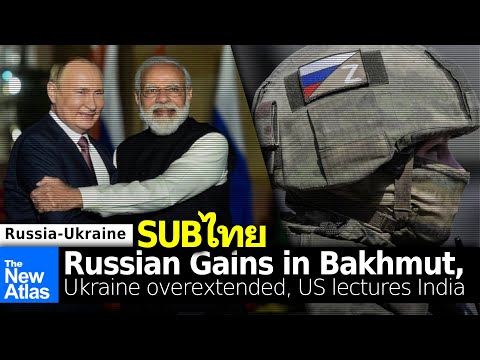
Russian Gains in Bakhmut, Ukraine Overextended, & US Lectures India

 October 17, 2022 (The New Atlas) - Update for Russian military operations against Ukraine for October 17, 2022.  Russian forces are closing...