July 17, 2022 (The New Atlas) - Evidence is emerging that at least some segments of the ongoing protests in Sri Lanka are funded and backed by the US, serving US interests. A “digital strategist” given credit by the Western media for the successful toppling of the Sri Lankan government was a “volunteer” at a US National Endowment for Democracy-funded “election” organization.
Showing posts with label sri Lanka. Show all posts
Showing posts with label sri Lanka. Show all posts
Sunday, July 17, 2022
US Fingerprints Found Behind Sri Lanka Unrest

Debt Traps & Terrorism: The Roots of Sri Lanka’s Crisis
July 17, 2022 (Brian Berletic - New Eastern Outlook) - The island nation of Sri Lanka, located south-southeast of India in the Indian Ocean has suffered economic and now political chaos that has grabbed international headlines.
The Western media has floated narratives ranging from “debt trap diplomacy” perpetrated by China and its Belt and Road Initiative to food shortages spurred by Russia’s “blockade” of the Black Sea. None of this is true, and even within the pages of Western newspapers, this truth is eventually admitted.
Sri Lanka is a nation that has suffered political and economic turmoil since gaining independence from the British Empire in 1948. Like many former British colonies, Sri Lanka inherited deep ethnic and religious divides purposefully perpetuated by the UK and then the US in a bid to maintain Western influence over the ostensibly independent South Asian country. The worst manifestation of this was the Sri Lankan Civil War stretching from 1983 to 2009.
For 26 years the nation faced a taxing armed conflict against the Liberation Tigers of Tamil Eelam (LTTE) composed of Indian Tamils. While there existed genuine ethnic tensions in Sri Lanka, the 26 year long conflict resulted from clandestine support from the US and likely India, both in terms of funding and arms, as well as oblique political support.
US diplomatic cables now publicly available thanks to Wikileaks show how the US embassy in Colombo and representatives of the United Nations’ Office of the High Commissioner for Human Rights (OHCHR) sought to tie the hands of the Sri Lankan government in eliminating the LTTE and how OHCHR staff met with LTTE members and with Washington’s backing, worked with them to form parallel institutions helping expand the LTTE’s political power and thus prolong the conflict.
Other cables reveal how Washington was aware of LTTE fundraising within the United States but took no measures whatsoever to address it.
The war cost the lives of between 80,000-100,000 people according to the United Nations and continues to overshadow national unity and progress to this day. It also undoubtedly cost Sri Lanka nearly three decades of normal economic development.
In addition to the costs Sri Lanka paid and is still paying for the war, the nation is also facing crippling debt. Articles across the Western media like ABC News’, “China becomes wild card in Sri Lanka’s debt crisis,” squarely blame China for Sri Lanka’s crisis and warn the world that other nations doing business with China may face a similar fate.
The article claims:
Yet China only accounts for 10% of all debt owed by Sri Lanka. Another article, this time from Deutsche Welle titled, “Sri Lanka’s foreign debt default: Why the island nation went under,” admits that:
The article also includes a graphic indicating that 47% of Sri Lanka’s debt is owed to International Sovereign Bond holders, 13% to the Western-dominated “Asian Development Bank,” 10% to China but also 10% to Japan, as well as another 9% to the World Bank, 9% to “others” and 2% to India.
China is hardly at the center of Sri Lanka’s debt crisis. Even at a glance, the World Bank and the Asian Development Bank, both dominated by Western financial institutions, hold far more of Sri Lanka’s debt than China. Worse still, when analyzing who actually holds the majority of Sri Lanka’s 47% of ISB debt, Nikkei Asia in a recent article would list US financial institutions and equity firms including BlackRock, Allianz, UBS, HSBC, JPMorgan Chase, and Prudential.
Not only is accusing China of precipitating a debt-driven financial crisis in Sri Lanka disinformation, the fact that it was repeated across the Western media illustrates just how deliberate and concerted efforts are to blame China for a crisis the West itself created.
The Western media also continuously refers to the “war in Ukraine” as a driving factor for rising fuel and food prices, thus triggering an already economically troubled Sri Lanka.
The Washington Post in its article, “How war in Ukraine turned Sri Lanka’s economic crisis into a calamity,” claims:
Neither the Washington Post nor many other Western media outlets promoting this narrative explain how “war in Ukraine” is causing any of these economic repercussions. Doing so would reveal that the US and its European allies, not Russia, are driving up prices by sanctioning Russian fuel, food, and fertilizer (made from petrochemicals), reducing supply and thus drastically raising prices.
When an explanation is required, citing Russia’s “blockade” of the Black Sea is usually mentioned, even after the Pentagon itself admitted during a briefing Ukrainian grain shipments are being blocked by naval mines deployed by Ukraine itself.
An announcement by the US and its allies reversing sanctions would likely send prices immediately in the opposite direction, providing relief for nations like Sri Lanka but also other nations around the globe including in the West – however unlikely that is to happen.
The real irony is that while the West accuses Russia and China of driving Sri Lanka into economic and political chaos, it will be Russia and China who stand the greatest chance of aiding the nation in its time of need. With Sri Lanka’s government stepping down and the nation facing an uncertain political transition, there are no signs at all that the US and its allies will relent regarding the various root causes of Sri Lanka’s crisis they retain the ability to resolve, nor any genuine offer extended to Sri Lanka by the West to aid the nation past this difficult juncture.
Instead, the West is offering Sri Lanka “assistance” through the International Monetary Fund (IMF), a scheme that almost always leaves a nation in even greater economic crisis. Again, the irony will be that Sri Lanka’s best hope to gain the upper hand over the IMF’s predatory practices will be if Russia, China, or perhaps even India intervene and assist in paying off any loan extended by the IMF.
Brian Berletic is a Bangkok-based geopolitical researcher and writer, especially for the online magazine “New Eastern Outlook”.
The Western media has floated narratives ranging from “debt trap diplomacy” perpetrated by China and its Belt and Road Initiative to food shortages spurred by Russia’s “blockade” of the Black Sea. None of this is true, and even within the pages of Western newspapers, this truth is eventually admitted.
Sri Lanka’s History of Crisis
Sri Lanka is a nation that has suffered political and economic turmoil since gaining independence from the British Empire in 1948. Like many former British colonies, Sri Lanka inherited deep ethnic and religious divides purposefully perpetuated by the UK and then the US in a bid to maintain Western influence over the ostensibly independent South Asian country. The worst manifestation of this was the Sri Lankan Civil War stretching from 1983 to 2009.
For 26 years the nation faced a taxing armed conflict against the Liberation Tigers of Tamil Eelam (LTTE) composed of Indian Tamils. While there existed genuine ethnic tensions in Sri Lanka, the 26 year long conflict resulted from clandestine support from the US and likely India, both in terms of funding and arms, as well as oblique political support.
US diplomatic cables now publicly available thanks to Wikileaks show how the US embassy in Colombo and representatives of the United Nations’ Office of the High Commissioner for Human Rights (OHCHR) sought to tie the hands of the Sri Lankan government in eliminating the LTTE and how OHCHR staff met with LTTE members and with Washington’s backing, worked with them to form parallel institutions helping expand the LTTE’s political power and thus prolong the conflict.
Other cables reveal how Washington was aware of LTTE fundraising within the United States but took no measures whatsoever to address it.
The war cost the lives of between 80,000-100,000 people according to the United Nations and continues to overshadow national unity and progress to this day. It also undoubtedly cost Sri Lanka nearly three decades of normal economic development.
China’s Debt Trap Diplomacy?
In addition to the costs Sri Lanka paid and is still paying for the war, the nation is also facing crippling debt. Articles across the Western media like ABC News’, “China becomes wild card in Sri Lanka’s debt crisis,” squarely blame China for Sri Lanka’s crisis and warn the world that other nations doing business with China may face a similar fate.
The article claims:
China says its initiative to build ports and other infrastructure across Asia and Africa, paid for with Chinese loans, will boost trade. But in a cautionary tale for borrowers, Sri Lanka’s multibillion-dollar debt to Beijing threatens to hinder efforts to resolve a financial crisis so severe that the Indian Ocean nation cannot import food or gasoline.Sri Lanka’s struggle is extreme, but it reflects conditions across dozens of countries from South Pacific islands through some of the poorest in Asia and Africa that have signed onto Chinese President Xi Jinping’s Belt and Road Initiative. The total debt of poor countries is rising, raising risks others might run into trouble.Sri Lanka’s 22 million people are in dire straits. Foreign currency ran out in April, leading to food shortages, power cuts and protests that forced a prime minister to resign. Payment on $51 billion of debt to China, Japan and other foreign lenders was suspended.
Yet China only accounts for 10% of all debt owed by Sri Lanka. Another article, this time from Deutsche Welle titled, “Sri Lanka’s foreign debt default: Why the island nation went under,” admits that:
A financial crisis had been brewing for more than a decade in Sri Lanka, where International Sovereign Bonds (ISB) — or market borrowing — constitute a major portion of the country’s foreign debt.
The article also includes a graphic indicating that 47% of Sri Lanka’s debt is owed to International Sovereign Bond holders, 13% to the Western-dominated “Asian Development Bank,” 10% to China but also 10% to Japan, as well as another 9% to the World Bank, 9% to “others” and 2% to India.
China is hardly at the center of Sri Lanka’s debt crisis. Even at a glance, the World Bank and the Asian Development Bank, both dominated by Western financial institutions, hold far more of Sri Lanka’s debt than China. Worse still, when analyzing who actually holds the majority of Sri Lanka’s 47% of ISB debt, Nikkei Asia in a recent article would list US financial institutions and equity firms including BlackRock, Allianz, UBS, HSBC, JPMorgan Chase, and Prudential.
Not only is accusing China of precipitating a debt-driven financial crisis in Sri Lanka disinformation, the fact that it was repeated across the Western media illustrates just how deliberate and concerted efforts are to blame China for a crisis the West itself created.
Putin Price Hikes?
The Washington Post in its article, “How war in Ukraine turned Sri Lanka’s economic crisis into a calamity,” claims:
…after war erupted thousands of miles away in Ukraine, diesel grew more and more scarce in Sri Lanka, leading to daily power cuts starting last month.
Neither the Washington Post nor many other Western media outlets promoting this narrative explain how “war in Ukraine” is causing any of these economic repercussions. Doing so would reveal that the US and its European allies, not Russia, are driving up prices by sanctioning Russian fuel, food, and fertilizer (made from petrochemicals), reducing supply and thus drastically raising prices.
When an explanation is required, citing Russia’s “blockade” of the Black Sea is usually mentioned, even after the Pentagon itself admitted during a briefing Ukrainian grain shipments are being blocked by naval mines deployed by Ukraine itself.
Solutions?
An announcement by the US and its allies reversing sanctions would likely send prices immediately in the opposite direction, providing relief for nations like Sri Lanka but also other nations around the globe including in the West – however unlikely that is to happen.
The real irony is that while the West accuses Russia and China of driving Sri Lanka into economic and political chaos, it will be Russia and China who stand the greatest chance of aiding the nation in its time of need. With Sri Lanka’s government stepping down and the nation facing an uncertain political transition, there are no signs at all that the US and its allies will relent regarding the various root causes of Sri Lanka’s crisis they retain the ability to resolve, nor any genuine offer extended to Sri Lanka by the West to aid the nation past this difficult juncture.
Instead, the West is offering Sri Lanka “assistance” through the International Monetary Fund (IMF), a scheme that almost always leaves a nation in even greater economic crisis. Again, the irony will be that Sri Lanka’s best hope to gain the upper hand over the IMF’s predatory practices will be if Russia, China, or perhaps even India intervene and assist in paying off any loan extended by the IMF.
Brian Berletic is a Bangkok-based geopolitical researcher and writer, especially for the online magazine “New Eastern Outlook”.
Monday, April 29, 2019
Sri Lanka: US-Saudi Terror Behind Deadly Blasts
April 29, 2019 (Tony Cartalucci - NEO) - As predicted, the Sri Lankan Easter Day blasts which killed hundreds and injured hundreds more - have been connected to the so-called "Islamic State" (ISIS).

US Ambassador to Sri Lanka - Alaina Teplitz - would openly claim foreign groups were most likely behind the attacks. Reuters in an article titled, "Foreign groups likely behind Sri Lanka attacks, U.S. ambassador says," would report:
At face value - devastating and disruptive terrorist attacks visited upon Sri Lanka - a nation that has recently and decisively pivoted from West to East and is now a major partner of Beijing's One Belt, One Road (OBOR) initiative - is suspiciously coincidental.
Examining the West's decades of using terrorism - particularly terrorism fuelled by Saudi Wahhabism - and the inception of ISIS itself - leaves Washington and its partners as the prime suspects behind Sri Lanka's tragic terrorist attack - with its motivation strikingly similar to what prompted the US-Saudi aided rise and use of the Muslim Brotherhood and Al Qaeda throughout the Cold War.
DIA Admitted West Sought "Salafist Principality" in Eastern Syria
When US-engineered regime change stalled in Syria between 2011-2012, it became clear more drastic and open measures would be required. This included not only the Western media mobilizing a massive propaganda campaign to account for the increasingly overt role terrorist organizations were playing among supposed "moderate rebel" formations - but also in the sudden appearance, rise, and overwhelming force of the "Islamic State."

It was in a leaked 2012 US Defense Intelligence Agency (DIA) memo (PDF) - however - that revealed it was the US and its allies' deliberate intent to create what it called a "Salafist principality" in eastern Syria. The memo would explicitly state that (emphasis added):
Since then, ISIS has been used as a convenient and even predictable element amid Washington's various gambits as it struggles globally to maintain its unipolar world order.
Washington's "Salafist Principality" vs China
In Asia where Washington's self-proclaimed primacy has waned in recent years as China rises, traditional "allies" like the Philippines have begun to seek bilateral ties with Beijing negating Washington's supposed role in underwriting what it calls its "free, open, and rules-based" order in the Indo-Pacific region.
In 2016, Manila sought to have US troops removed from its territory.
An October 2016 article by the Independent titled, "Philippines president Rodrigo Duterte orders US forces out of country, cutting 65 years of military ties," would report:
US government-funded propaganda outlet "Rappler" would report in a 2019 article titled, "[ANALYSIS] Despite Duterte rhetoric, US military gains forward base in PH," that:
US-Saudi backed extremism in another Southeast Asian state - Myanmar - has created a growing conflict in Rakhine state where China is attempting to build another major leg of its OBOR initiative.
In neighboring Thailand - another pivotal OBOR partner - similar US-Saudi led efforts to sow ethnoreligious tensions and create a vector for ISIS-style terrorism are underway.
Even in China itself - the threat of ISIS militants returning from Syria and expanding an already looming US-Saudi backed extremist threat in Xinjiang - plays into Washington's wider efforts to sabotage OBOR and contain China's regional and global rise.
The recent blasts in Sri Lanka and ISIS' now supposed "interest" in the South Asian state follows massive inroads made by China in including the nation in its OBOR initiative. Highways, railways, and ports developed with China's assistance have transformed Sri Lanka into a strategically valuable partner for Beijing, and yet another example to the world of Washington's waning influence not only in Indo-Pacific - but globally.
The US went as far as creating ISIS in the first place in a desperate bid to rescue its failed regime change campaign in Syria. It and its partners in Riyadh are now the prime suspects behind ISIS' coincidental arrival on the shores of a newly established and major OBOR partner.
ISIS is the New Al Qaeda
If the US using extremism to fight its major power rivals sounds familiar - that's because the US and its Saudi partners used Al Qaeda in precisely the same way throughout the Cold War vis-a-vis the Soviet Union.
Al Qaeda's precursor - the Muslim Brotherhood - took part in a failed attempt to overthrow Syria - then a Soviet ally - in the early 1980s. Many of the fighters that took part in the failed uprising fled to Afghanistan and participated in the US-Saudi backed war against the Soviet Union there.
The virulent perversion of the Islamic faith that serves as the ideological bedrock of groups like Al Qaeda and now ISIS - Wahhabism - is admittedly a political tool used by Riyadh in the aid of Washington's decades-spanning geopolitical ambitions.
In a 2018 Washington Post article titled, "Saudi prince denies Kushner is ‘in his pocket’," it was admitted (emphasis added):
It is admitted that the US and its partners sought the creation of ISIS - its sudden appearance everywhere China is attempting to do business fits the now documented and admitted pattern of Washington's use of extremism to fight and coerce wherever its standing armies cannot afford to intervene and a degree of "plausible deniability" is desired.
When terrorism strikes - as in any sort of criminal investigation - the first question that must be asked is "cui bono?" To whose benefit? The US played a central role in deliberately creating ISIS. If ISIS is indeed behind the attack on Sri Lanka, then it is by extension an act of terror carried out by Washington.
Destabilizing Sri Lanka - a critical South Asian partner of Beijing and its OBOR initiative - with terrorism and ethnoreligious conflict, serves only the interests of China's overt global opponent - Washington - as well as elements within India's ruling elite and intelligence agencies.
The US is both arsonist and self-appointed fireman. And until this racket is fully and repeatedly exposed - until after each terrorist attack the US is put forth as the primary suspect and made to pay a high political price for its use of global terrorism - this game of arson-firefighting will continue at the cost of innocent lives, national development, and global peace and stability.
Tony Cartalucci, Bangkok-based geopolitical researcher and writer, especially for the online magazine “New Eastern Outlook”.

US Ambassador to Sri Lanka - Alaina Teplitz - would openly claim foreign groups were most likely behind the attacks. Reuters in an article titled, "Foreign groups likely behind Sri Lanka attacks, U.S. ambassador says," would report:
The scale and sophistication of the Easter Sunday attacks on churches and hotels in Sri Lanka suggested the involvement of an external group such as Islamic State, the U.S. ambassador said on Wednesday as the death toll jumped to 359.ISIS itself would also later claim responsibility for the attacks. The Washington Post in an article titled, "Sri Lankan Easter bombings, claimed by ISIS, show the group maintains influence even though its caliphate is gone," would claim:
On Tuesday, video emerged of the suspected ringleader of the attacks and seven followers, their faces obscured by scarves, swearing allegiance to the Islamic State and its leader, Abu Bakr al-Baghdadi. The Islamic State also issued a formal communique asserting responsibility for the attacks, which it said targeted Christians and “coalition countries.”Absent from US diplomatic statements and Western media reports is any mention of ISIS' inception, its state sponsors, and even admissions by Western intelligence agencies themselves of Washington and its allies' role in the terrorist organization's rise.
At face value - devastating and disruptive terrorist attacks visited upon Sri Lanka - a nation that has recently and decisively pivoted from West to East and is now a major partner of Beijing's One Belt, One Road (OBOR) initiative - is suspiciously coincidental.
Examining the West's decades of using terrorism - particularly terrorism fuelled by Saudi Wahhabism - and the inception of ISIS itself - leaves Washington and its partners as the prime suspects behind Sri Lanka's tragic terrorist attack - with its motivation strikingly similar to what prompted the US-Saudi aided rise and use of the Muslim Brotherhood and Al Qaeda throughout the Cold War.
DIA Admitted West Sought "Salafist Principality" in Eastern Syria
When US-engineered regime change stalled in Syria between 2011-2012, it became clear more drastic and open measures would be required. This included not only the Western media mobilizing a massive propaganda campaign to account for the increasingly overt role terrorist organizations were playing among supposed "moderate rebel" formations - but also in the sudden appearance, rise, and overwhelming force of the "Islamic State."

It was in a leaked 2012 US Defense Intelligence Agency (DIA) memo (PDF) - however - that revealed it was the US and its allies' deliberate intent to create what it called a "Salafist principality" in eastern Syria. The memo would explicitly state that (emphasis added):
If the situation unravels there is the possibility of establishing a declared or undeclared Salafist principality in eastern Syria (Hasaka and Der Zor), and this is exactly what the supporting powers to the opposition want, in order to isolate the Syrian regime, which is considered the strategic depth of the Shia expansion (Iraq and Iran).On clarifying who these supporting powers were, the DIA memo would state:
The West, Gulf countries, and Turkey support the opposition; while Russia, China, and Iran support the regime.The "Salafist" (Islamic) "principality" (State) would indeed be created precisely in eastern Syria as US policymakers and their allies had set out to do. It would be branded as the "Islamic State" and be used first to wage a more muscular proxy war against Damascus, and when that failed, to invite US military forces to intervene in the conflict directly.
Since then, ISIS has been used as a convenient and even predictable element amid Washington's various gambits as it struggles globally to maintain its unipolar world order.
Washington's "Salafist Principality" vs China
In Asia where Washington's self-proclaimed primacy has waned in recent years as China rises, traditional "allies" like the Philippines have begun to seek bilateral ties with Beijing negating Washington's supposed role in underwriting what it calls its "free, open, and rules-based" order in the Indo-Pacific region.
In 2016, Manila sought to have US troops removed from its territory.
An October 2016 article by the Independent titled, "Philippines president Rodrigo Duterte orders US forces out of country, cutting 65 years of military ties," would report:
The president of the Philippines has promised to dismantle the nation’s 65-year military alliance with the United States, warning Washington not to treat the nation “like a doormat”.The Independent would also report (emphasis added):
Rodrigo Duterte has ordered 28 annual military exercises with US forces to be halted and an ongoing US-Philippines amphibious beach landing exercise to be the last in his six-year presidency.
“This year would be the last,” said Mr Duterte, referring to military exercises involving the US in a speech on Friday in southern Davao city.
“For as long as I am there, do not treat us like a doormat because you’ll be sorry for it. I will not speak with you. I can always go to China.”The following year, beginning in May 2017, ISIS terrorists suddenly appeared, overrunning the city of Marawi. The US used the "serendipitous" development to not only insert US military forces into the fighting - the NYT reported, but has since used the threat of ISIS' resurgence in the Philippines as a pretext to pressure Manila in maintaining a permanent US military presence in the Southeast Asian state.
US government-funded propaganda outlet "Rappler" would report in a 2019 article titled, "[ANALYSIS] Despite Duterte rhetoric, US military gains forward base in PH," that:
The United States has gained a forward base for its Pacific Air Force in the Philippines despite President Rodrigo Duterte’s rhetoric against the country’s oldest security ally and former colonial master and his pivot to China.And despite the "terror" pretext Washington has used to cling to its military holdings in the Philippines, Rappler itself admits that the true goal is confronting China:
The forward deployment of US air assets in the Philippines is important in light of the increasing tension between Washington and Beijing in the disputed South China Sea, a strategic waterway where about $3 trillion of seaborne goods pass every year and where China has constructed man-made islands and begun installing military structures, including possible missile sites.
US-Saudi backed extremism in another Southeast Asian state - Myanmar - has created a growing conflict in Rakhine state where China is attempting to build another major leg of its OBOR initiative.
In neighboring Thailand - another pivotal OBOR partner - similar US-Saudi led efforts to sow ethnoreligious tensions and create a vector for ISIS-style terrorism are underway.
Even in China itself - the threat of ISIS militants returning from Syria and expanding an already looming US-Saudi backed extremist threat in Xinjiang - plays into Washington's wider efforts to sabotage OBOR and contain China's regional and global rise.
The recent blasts in Sri Lanka and ISIS' now supposed "interest" in the South Asian state follows massive inroads made by China in including the nation in its OBOR initiative. Highways, railways, and ports developed with China's assistance have transformed Sri Lanka into a strategically valuable partner for Beijing, and yet another example to the world of Washington's waning influence not only in Indo-Pacific - but globally.
The US went as far as creating ISIS in the first place in a desperate bid to rescue its failed regime change campaign in Syria. It and its partners in Riyadh are now the prime suspects behind ISIS' coincidental arrival on the shores of a newly established and major OBOR partner.
ISIS is the New Al Qaeda
If the US using extremism to fight its major power rivals sounds familiar - that's because the US and its Saudi partners used Al Qaeda in precisely the same way throughout the Cold War vis-a-vis the Soviet Union.
Al Qaeda's precursor - the Muslim Brotherhood - took part in a failed attempt to overthrow Syria - then a Soviet ally - in the early 1980s. Many of the fighters that took part in the failed uprising fled to Afghanistan and participated in the US-Saudi backed war against the Soviet Union there.
The virulent perversion of the Islamic faith that serves as the ideological bedrock of groups like Al Qaeda and now ISIS - Wahhabism - is admittedly a political tool used by Riyadh in the aid of Washington's decades-spanning geopolitical ambitions.
In a 2018 Washington Post article titled, "Saudi prince denies Kushner is ‘in his pocket’," it was admitted (emphasis added):
Asked about the Saudi-funded spread of Wahhabism, the austere faith that is dominant in the kingdom and that some have accused of being a source of global terrorism, Mohammed said that investments in mosques and madrassas overseas were rooted in the Cold War, when allies asked Saudi Arabia to use its resources to prevent inroads in Muslim countries by the Soviet Union.Thus it is all but admitted that the US and Saudi Arabia used extremism as a geopolitical tool to hinder the Soviet Union and both protect and expand Western hegemony globally.
It is admitted that the US and its partners sought the creation of ISIS - its sudden appearance everywhere China is attempting to do business fits the now documented and admitted pattern of Washington's use of extremism to fight and coerce wherever its standing armies cannot afford to intervene and a degree of "plausible deniability" is desired.
When terrorism strikes - as in any sort of criminal investigation - the first question that must be asked is "cui bono?" To whose benefit? The US played a central role in deliberately creating ISIS. If ISIS is indeed behind the attack on Sri Lanka, then it is by extension an act of terror carried out by Washington.
Destabilizing Sri Lanka - a critical South Asian partner of Beijing and its OBOR initiative - with terrorism and ethnoreligious conflict, serves only the interests of China's overt global opponent - Washington - as well as elements within India's ruling elite and intelligence agencies.
The US is both arsonist and self-appointed fireman. And until this racket is fully and repeatedly exposed - until after each terrorist attack the US is put forth as the primary suspect and made to pay a high political price for its use of global terrorism - this game of arson-firefighting will continue at the cost of innocent lives, national development, and global peace and stability.
Tony Cartalucci, Bangkok-based geopolitical researcher and writer, especially for the online magazine “New Eastern Outlook”.
Thursday, April 25, 2019
Sri Lanka Blasts: Terrorism Targets Another Chinese Ally
April 26, 2019 (Tony Cartalucci - NEO) - The recent, tragic Easter attack in the South Asian state of Sri Lanka - killing and injuring hundreds - follows a now unfortunately all too familiar formula.

The New York Times has reported in its article, "What We Know and Don’t Know About the Sri Lanka Attacks," that:
Countering OBOR: Divide and Destroy
Sri Lanka has recently and decisively pivoted toward Beijing as a major partner of the One Belt, One Road (OBOR) initiative. This is despite Washington's best efforts to prevent it from doing so.
Consequently, extremists fuelled by Washington's "clash of civilizations" have helped set the stage for growing violence between Sir Lanka's majority Buddhists and its minority Muslim communities. The resulting violence serves as a medium for US coercion, destabilization, and intervention aimed at undermining Sri Lanka's unity as a nation, and thus its viability as a partner for China.
A nearly identical ploy has been used in nearby Myanmar where US-backed Buddhist extremists battle against US-Saudi-Qatari backed extremism rising from the ranks of the nation's Muslim Rohingya minority.
The resulting violence and growing humanitarian crisis - without coincidence - is unfolding in Myanmar's Rakhine state - precisely where China is attempting to build another leg of its region-spanning OBOR initiative.
Sri Lanka has signed on to OBOR in a big way, with major rail, port, airport, and highway projects all moving forward with Beijing's support. Sri Lanka is also considered by Western policymakers as one of several among China's strategic "String of Pearls," strong points where China can secure maritime routes through waters traditionally dominated by the United States.
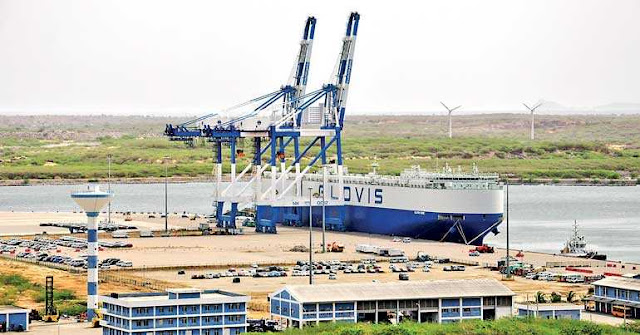
These projects are derided across the Western media with headlines like the New York Times' article, "How China Got Sri Lanka to Cough Up a Port" and France24's article, "In Sri Lanka, the new Chinese Silk Road is a disappointment" - characterizing Washington's growing opposition to China's expanding influence across Asia - a region Washington has long presumed primacy over.
Washington's ability to compete with China regarding regional development is nonexistent. Instead, the US has tried to tempt nations like Sri Lanka with military aid.
AFP in an article titled, "US gives Sri Lankan military US$39 million, countering China’s investments in strategic island," would claim:
It is obvious that "military aid" can in no way compete with massive investments by China aimed at spurring national development through tangible infrastructure projects.
America's inability to compete openly and on equal economic footing has given way to political interference and even the use of violence.
Sri Lanka's Crisis Linked to US-Driven Crisis in Myanmar
In Myanmar, the US is documented to have supported ethnic violence for years. The US all but installed current "State Counsellor" Aung San Suu Kyi into power along with her political party - the National League for Democracy (NLD) lined top to bottom with US State Department-funded "activists."
Despite the liberal facade constructed by the Western media around Suu Kyi, her political party, and factions supporting both - rampant bigotry and racism pervades all three.

Simultaneously, US-funded fronts posing as nongovernmental organizations (NGOs) have worked to co-opt and wield Rohingya communities as an equal but opposing political weapon while US-allies Saudi Arabia and Qatar have begun radicalizing and arming factions within Rohingya communities to carry out armed violence across Rakhine state.
The resulting conflagration affords the US and its partners a pretext to intervene on an ever expanding scale - giving Washington access to and leverage over Myanmar to counter Beijing's growing influence.
And in precisely the same way the US has inserted itself into the heart of Myanmar's political affairs - it is attempting to do so again in other Asian nations - including now Sri Lanka.
Articles from across the Western media including the UK Independent's 2018 article titled, "Violent Buddhist extremists are targeting Muslims in Sri Lanka," even establish direct links between Myanmar's and Sri Lanka's growing conflicts.
The article would admit (emphasis added):

While the West no longer possesses any real means to "conquer" the nations it is now targeting - it does possess the capacity to use resulting divisions to destroy them. If the US cannot hold primacy over Asia - no one will. It is a "War on Peace" waged under the guise of a "War on Terrorism."
Sri Lanka appears to be but the latest victim of Washington's now trademark "slash and burn" foreign policy - where it is fueling conflict to consume political orders that oppose its interests, and building upon the ashes ones that do serve them instead.
In the coming days, weeks, and months - not only will more information emerge linking the recent attacks in Sri Lanka to Washington, Riyadh, and Doha's global network of terrorism - but additional pressure will also be mounted upon Sri Lanka to divest from Beijing and pivot back toward the West.
In reality - Sri Lanka's violence is an artificial construct carried out by a tiny minority of extremists on either side of an equally artificial ethnoreligious divide. The nation and the region must unite in purpose - as peace and stability benefit them all - while chaos benefits only a handful of waning interests from afar.
Tony Cartalucci, Bangkok-based geopolitical researcher and writer, especially for the online magazine “New Eastern Outlook”.

The New York Times has reported in its article, "What We Know and Don’t Know About the Sri Lanka Attacks," that:
The authorities in Sri Lanka said a little-known radical Islamist group, the National Thowheeth Jama’ath, carried out the attacks, with help from international militants.It is also reported that these extremists received assistance for the large-scale attack from foreign sponsors. The attack has put Sri Lanka on the map for many in the general public for the first time - but for all the wrong reasons.
Countering OBOR: Divide and Destroy
Sri Lanka has recently and decisively pivoted toward Beijing as a major partner of the One Belt, One Road (OBOR) initiative. This is despite Washington's best efforts to prevent it from doing so.
Consequently, extremists fuelled by Washington's "clash of civilizations" have helped set the stage for growing violence between Sir Lanka's majority Buddhists and its minority Muslim communities. The resulting violence serves as a medium for US coercion, destabilization, and intervention aimed at undermining Sri Lanka's unity as a nation, and thus its viability as a partner for China.
A nearly identical ploy has been used in nearby Myanmar where US-backed Buddhist extremists battle against US-Saudi-Qatari backed extremism rising from the ranks of the nation's Muslim Rohingya minority.
The resulting violence and growing humanitarian crisis - without coincidence - is unfolding in Myanmar's Rakhine state - precisely where China is attempting to build another leg of its region-spanning OBOR initiative.
Sri Lanka has signed on to OBOR in a big way, with major rail, port, airport, and highway projects all moving forward with Beijing's support. Sri Lanka is also considered by Western policymakers as one of several among China's strategic "String of Pearls," strong points where China can secure maritime routes through waters traditionally dominated by the United States.

These projects are derided across the Western media with headlines like the New York Times' article, "How China Got Sri Lanka to Cough Up a Port" and France24's article, "In Sri Lanka, the new Chinese Silk Road is a disappointment" - characterizing Washington's growing opposition to China's expanding influence across Asia - a region Washington has long presumed primacy over.
Washington's ability to compete with China regarding regional development is nonexistent. Instead, the US has tried to tempt nations like Sri Lanka with military aid.
AFP in an article titled, "US gives Sri Lankan military US$39 million, countering China’s investments in strategic island," would claim:
The US funding for Sri Lanka is part of a US$300 million package Washington is setting aside for South and Southeast Asia to ensure a “free, open, and rules-based order in the Indo-Pacific region”.This "free, open, and rules-based order in the Indo-Pacific region," is how the US regularly refers to US primacy in Asia throughout policy papers, diplomatic statements, and even political speeches.
It is obvious that "military aid" can in no way compete with massive investments by China aimed at spurring national development through tangible infrastructure projects.
America's inability to compete openly and on equal economic footing has given way to political interference and even the use of violence.
Sri Lanka's Crisis Linked to US-Driven Crisis in Myanmar
In Myanmar, the US is documented to have supported ethnic violence for years. The US all but installed current "State Counsellor" Aung San Suu Kyi into power along with her political party - the National League for Democracy (NLD) lined top to bottom with US State Department-funded "activists."
Despite the liberal facade constructed by the Western media around Suu Kyi, her political party, and factions supporting both - rampant bigotry and racism pervades all three.

Simultaneously, US-funded fronts posing as nongovernmental organizations (NGOs) have worked to co-opt and wield Rohingya communities as an equal but opposing political weapon while US-allies Saudi Arabia and Qatar have begun radicalizing and arming factions within Rohingya communities to carry out armed violence across Rakhine state.
The resulting conflagration affords the US and its partners a pretext to intervene on an ever expanding scale - giving Washington access to and leverage over Myanmar to counter Beijing's growing influence.
And in precisely the same way the US has inserted itself into the heart of Myanmar's political affairs - it is attempting to do so again in other Asian nations - including now Sri Lanka.
Articles from across the Western media including the UK Independent's 2018 article titled, "Violent Buddhist extremists are targeting Muslims in Sri Lanka," even establish direct links between Myanmar's and Sri Lanka's growing conflicts.
The article would admit (emphasis added):
Currently, Sri Lanka’s most active Buddhist extremist group is Bodu Bala Sena (Buddhist power force, or BBS). BBS entered politics in 2012 with a Buddhist-nationalist ideology and agenda, its leaders claiming that Sri Lankans had become immoral and turned away from Buddhism. And whom does it blame? Sri Lankan Muslims.The West's use of "Islamophobia" to sell its serial wars of aggression and to divide nations around the globe is a classic example of "divide and conquer."
BBS’s rhetoric takes its cue from other populist anti-Muslim movements around the globe, claiming that Muslims are “taking over” the country thanks to a high birth rate. It also accuses Muslim organisations of funding international terrorism with money from Halal-certified food industries. These aren’t just empty words; in 2014, one of their anti-Muslim protest rallies in the southern town of Aluthgama ended with the death of four Muslims.
BBS also has links to Myanmar’s extremist 969 movement. Led by nationalist monk Ashin Wirathu, who calls himself the “Burmese Bin Laden”, it is notorious for its hardline rhetoric against the Rohingya Muslim community.

While the West no longer possesses any real means to "conquer" the nations it is now targeting - it does possess the capacity to use resulting divisions to destroy them. If the US cannot hold primacy over Asia - no one will. It is a "War on Peace" waged under the guise of a "War on Terrorism."
Sri Lanka appears to be but the latest victim of Washington's now trademark "slash and burn" foreign policy - where it is fueling conflict to consume political orders that oppose its interests, and building upon the ashes ones that do serve them instead.
In the coming days, weeks, and months - not only will more information emerge linking the recent attacks in Sri Lanka to Washington, Riyadh, and Doha's global network of terrorism - but additional pressure will also be mounted upon Sri Lanka to divest from Beijing and pivot back toward the West.
In reality - Sri Lanka's violence is an artificial construct carried out by a tiny minority of extremists on either side of an equally artificial ethnoreligious divide. The nation and the region must unite in purpose - as peace and stability benefit them all - while chaos benefits only a handful of waning interests from afar.
Tony Cartalucci, Bangkok-based geopolitical researcher and writer, especially for the online magazine “New Eastern Outlook”.
Subscribe to:
Posts (Atom)
Russian Gains in Bakhmut, Ukraine Overextended, & US Lectures India
October 17, 2022 (The New Atlas) - Update for Russian military operations against Ukraine for October 17, 2022. Russian forces are closing...
-
 August 3, 2014 ( Tony Cartalucci - NEO ) - The term "Russian aggression" has been inundating headlines across the Western media a...
 -
October 17, 2022 (The New Atlas) - Update for Russian military operations against Ukraine for October 17, 2022. Russian forces are closing...
-
October 15, 2022 (The New Atlas) - Update on Russian military operations in Ukraine for October 15, 2022. Elon Musk placed temporarily on ...

