Showing posts with label myanmar. Show all posts

Saturday, July 9, 2022

Myanmar MiG-29 Crosses into Thai Airspace: The Rest of the Story

July 9, 2022 (Brian Berletic - New Eastern Outlook) - A recent incident involving a MiG-29 fighter aircraft from Myanmar which flew into Thai airspace triggered political fallout particularly instructive in understanding the current dynamics in both countries as well as across wider Asia.


It also gives a glimpse into the dynamics of the ongoing US-Chinese tensions that are the driving force behind much of the region’s political and military conflicts.

The Incident

The Washington Post in an article titled, “Thailand says Myanmar apologized for airspace violation,” would describe the incident claiming:

Video obtained by The Associated Press shows what appears to be a MiG-29 making several circles into Thai airspace over villages and schools before firing on the Myanmar side. Myanmar’s military has been fighting ethnic Karen guerillas on its side of the border with Thailand.

Thailand is no stranger to armed conflict approaching and even briefly crossing over into Thai territory. Myanmar has been mired in ethnic and political violence since gaining independence from the British in 1948. Clandestine arms trafficking from neighboring nations including Thailand, US-funded political organizations using neighboring nations as a base for operations, as well as refugee camps hosting militants using neighboring territory to evade Myanmar’s military means that fighting often unfolds along border regions.

The current fighting along the Thai border is part of a much wider conflict consuming Myanmar following the February 2021 takeover by the nation’s military, ousting a US-backed client regime headed by Aung San Suu Kyi and her National League for Democracy (NLD) party.

Following the February take over, violent protests followed by armed conflict plunged Myanmar into nationwide violence ever since. The recent fighting along the border and occasional cross-border incidents will likely continue into the foreseeable future.

The Reaction

The reaction to the brief border crossing by various political factions in neighboring Thailand were likewise divided along lines between US-backed opposition groups and the current government they seek to undermine and replace.

The Washington Post article noted:

Thailand said Friday that neighboring Myanmar has apologized after one of its fighter jets crossed into Thai airspace on a bombing run along the border, forcing authorities to evacuate hundreds of schoolchildren and scramble air force jets to the area.

Prime Minister Prayuth Chan-ocha said Thailand did not want to escalate the incident, which took place on Thursday over Phop Phra district in Thailand’s Tak province.

And that:

Prime Minister Prayuth Chan-ocha said Thailand did not want to escalate the incident, which took place on Thursday over Phop Phra district in Thailand’s Tak province.

“The military attaches have spoken to each other, and they have apologized, and our foreign ministries have talked. This may seem like a serious incident, but it depends on us if we want to escalate this. Currently the two sides enjoy a good relationship and are able to talk,” Prayuth told reporters at a public appearance.

Thailand deployed two F-16 fighter aircraft in what was a significantly delayed “intercept,” and lodged a complaint with Myanmar’s government. Both moves were more or less a formality.

Myanmar and Thailand are in relatively good standings with one another as are all ASEAN (Association of Southeast Asian Nations) members. One of the purposes of ASEAN is to maintain regional peace and prosperity and to quickly resolve disagreements. Non-interference in the internal political affairs of neighboring nations is also a guiding principle.

Despite significant pressure placed by the United States on all ASEAN members to interfere in Myanmar’s ongoing conflict, besides token gestures, ASEAN has remained relatively uninvolved.

Political opposition groups in Thailand condemned the Thai government’s reaction, stating that the brief incursion was indeed a serious threat to Thailand implying that the Thai military should have responded with force. The condemnation is meant to stoke public outrage and pressure the Thai government into overreacting in the future.

This same opposition has on several occasions staged protests regarding Myanmar and the Thai government’s refusal to interfere. ABC News in a March 2021 article titled, “Thai marchers link their democracy cause to Myanmar protests,” as well as many other publications across the West would report on growing “cooperation” between various regional protest groups.

The Implications

In addition to political opportunism, the condemnation by Thailand’s opposition is linked to the fact that the US government is backing both the Thai opposition as well as their counterparts in Myanmar. Both groups are members of the wider so-called “Milk Tea Alliance,” a regional alliance consisting of anti-China organizations funded by the US. Just as US-sponsored opposition groups supported each other during the 2011 “Arab Spring,” the “Milk Tea Alliance” pools its resources, helping amplify the impact of their individual and collective political objectives.

The “Milk Tea Alliance” is a stand-in for a US-led Southeast Asian “NATO.” No current government in the region seeks to risk economic prosperity and tangible development through trade and partnership with China to join any sort of US-led effort to confront and contain China so Washington has built a parallel network of political parties, media organizations, and social movements in a bid to coerce current governments to adopt an anti-China stance or overthrow and replace them if they do not.

Both Myanmar and Thailand in particular have close and growing relationships with China. Thailand counts China as its largest trade partner and is building a high-speed rail line that will connect it to China via the now completed Laos-China high speed railway.

Myanmar hosts infrastructure for China’s Belt and Road Initiative (BRI) including bridges, roads, hydroelectric dams, and pipelines which move hydrocarbons from Rakhine state located on the Bay of Bengal to Yunnan province in China. The latter project is of particular importance because it allows China to circumvent various straits, waters, and ports repeatedly designated as potential targets by US military planners, that if blocked or disrupted, would destroy China’s economy.

The US-backed opposition in Myanmar has even attacked BRI infrastructure and other Chinese investments, highlighting the anti-Chinese agenda of US political meddling in Myanmar and across the wider region.

In February of this year, Myanmar opposition media, the Irrawaddy (funded by the US government through the National Endowment for Democracy), would report in their article, “China-Backed Pipeline Facility Damaged in Myanmar Resistance Attack,” that:

An off-take station of the China-backed oil and gas pipelines was damaged when a local resistance group attacked regime forces guarding the facility in Mandalay Region’s Natogyi Township…

The article also claimed:

Anti-Chinese sentiment swelled in Myanmar following the military coup last February, with many people believing Beijing had a hand in the takeover. At that time, there were calls for a boycott of Chinese products, along with calls to blow up the pipelines if China refused to condemn the regime.

In reality, violent opposition movements in Myanmar, Thailand, and beyond are part of a wider proxy conflict the United States is waging against China. In addition to direct tensions with China through sanctions, interference, and threats of military violence, the US is also undermining Chinese-friendly governments along China’s periphery.

The brief incursion by Myanmar’s MiG-29 aircraft and the quick resolution of the incident with the Thai government reflects a growing regional awareness this proxy conflict.

The US-backed opposition in Thailand calling for rash, confrontational measures reflects the same irrational, self-destructive agenda the US-backed government in Kiev adopted from 2014 onward and whose fate provides a glimpse into the divisive, even deadly policies that would be quickly implemented by a US-backed anti-Chinese government in Southeast Asia.

Thailand, should the US-backed opposition come to power in upcoming elections, would be much more inclined to escalate toward open conflict with Myanmar as well as eagerly adopt measures demanded by the US in terms of economically and diplomatically isolating Myanmar, all while uprooting and overturning Thai-Chinese relations back home. It’s an alarming prospect the US-backed Thai opposition’s reaction to this recent cross-border incident serves as a warning for.

Brian Berletic is a Bangkok-based geopolitical researcher and writer, especially for the online magazine “New Eastern Outlook”.

Tuesday, April 26, 2022

Myanmar Violence: a Slow Burn US Proxy War

April 26, 2022 (Brian Berletic - New Eastern Outlook) - The ongoing violence in Myanmar may have faded into the background of global media coverage as much more intense conflict shapes up within and along Ukraine’s borders in Eastern Europe and as Washington raises the prospect of direct conflict with China in Asia. However, Myanmar’s conflict serves as a point of destabilization which may impact the wider stability of Southeast Asia and thus undermine China in a more indirect but still significant manner.


Myanmar’s Fight Against Foreign Interference

The conflict began when Myanmar’s military took power from the government of Aung San Suu Kyi and her National League for Democracy (NLD) party in February 2021. While the Western media portrays this as an undemocratic military dictatorship deposing an elected government – Aung San Suu Kyi and the NLD through their collective US backing – had hijacked the nation’s electoral system.

The US National Endowment for Democracy’s (NED) webpage for Myanmar (still called by its British colonial nomenclature “Burma” by the NED) has at least 57 programs and organizations listed involving every aspect of Myanmar’s society from education and the judicial system, to media, ethnic relations, political campaigning, and supposed “human rights” advocacy groups.

With millions of dollars a year pouring in from the US government through NED, a powerful political machine was created capable of effortlessly installing into power pro-Western candidates through elections tainted by this blatant and extensive foreign interference.

Compounding this foreign interference was the fact that Aung San Suu Kyi’s administration included as key high-level advisors two British citizens (Robert San Pe and Joseph Fisher) and an Australian citizen (Sean Turnell). They crafted policy for everything from overhauling Myanmar’s judicial system, to its economic policy, to rewriting Myanmar’s constitution.

The military’s seizure of power was meant to uproot this foreign interference and restore sovereignty throughout Myanmar’s institutions.

Violent protests against the ousting of Aung San Suu Kyi quickly escalated into armed conflict with the backing of the United States, its allies, and a vast network across Southeast Asia of so-called “nongovernmental organizations” (NGOs) funded by Western governments. The remnants of Aung San Suu Kyi’s government formed the “National Unity Government” (NUG) which in turn created an armed “People’s Defense Force” (PDF).

Hundreds have died in the violence. While the Western media claimed Myanmar was heading into “civil war,” in reality the prospect of war has mostly subsided and has been replaced instead by the persistent threat of a high-intensity terrorist campaign carried out by the NUG’s PDFs as well as opportunistic armed ethnic groups that have on-and-off fought Myanmar’s central government since the nation gained independence from Britain in 1948.

Slow Burn Terrorism Sold by the West as “Fighting for Freedom”

Just as the Western media attempted to pass off Al Qaeda and the so-called “Islamic State” in Syria as “freedom fighters,” or paper over Nazi military formations operating within the Ukrainian military, the fact that Myanmar’s opposition is waging a nationwide terrorist campaign has been continusously spun by the likes of the BBC.

A recent BBC video report titled, “Inside the people’s resistance in Myanmar” follows armed fanatics as they destroy civilian infrastructure, raid guard shacks, and at one point in the video – plan and then supposedly storm and destroy the private home of an individual accused of being an “informant” – an accusation that when directed at members of opposition as grounds for arrest by Myanmar’s government is dismissed by Western “rights” groups and governments as “politically motivated.”

The BBC never produces any evidence that the targeted home belonged to an actual informant nor explains how extrajudicial violence against “informants” is justified. The BBC filmed the “raid” which appears entirely staged, complete with BBC cameras set up inside the home to film the militants arriving and entering the house.

While the BBC’s footage was obvious propaganda, the targeting of innocent civilians by deadly vigilantism in support of the ousted US-sponsored client regime is all too real.

The US government through the NED funds virtually every English-language media platform operating in or around Myanmar including Myanmar Now, The Irrawaddy, Democratic Voice of Burma (DVB), and Mizzima. And it is in the pages of these media platforms that admissions are piecemeal made to the level of terrorism and mass murder the “people’s resistance” actually consists of.

Myanmar Now in an August 2021 article would admit a terrorist named La Pyae Wun of the PDF who targeted rail security guards warned his organization would kill anyone at all perceived as working with the government. Myanmar Now claimed;

According to La Pyae Wun, that means that anyone in uniform who continues to work for the junta, including traffic police, firefighters, and even Red Cross workers, is fair game.

NED-funded Irrawaddy would also admit to abuses in a March 2022 article titled, “Resistance Leader and Former Monk Admits Committing War Crimes in Upper Myanmar,” claiming:

Fighters from the Yinmabin People’s Defense Force (YMB-PDF) in Sagaing Region have committed murder and other war crimes, the YMB-PDF leader told The Irrawaddy.

The article would detail the violence which included abducting, coercing, robbing, torturing and killing dozens of people.

Like other US-sponsored proxy wars – particularly in Libya and Syria from 2011 onward – the fanatics the US has helped arm and support in various regime change conflicts often end up as fractured terrorist organizations as likely to kill one another as they are likely to kill innocent civilians or government and military personnel.

Myanmar is Just a Part of a Wider Proxy War on China 

While the US claims its interests in Myanmar is the restoration of “democracy,” it is very clear that Myanmar is just one of several proxy crises Washington is cultivating along China’s periphery specifically to undermine, encircle, and contain China itself.

It is no surprise that these same US NED-funded media platforms are eager to report threats and attacks on Chinese investments across Myanmar.

A May 2021 Irrawaddy article titled, “Deadly Attack on Pipeline Station Spotlights China’s High Stakes in Myanmar,” would admit:

Since Myanmar’s military staged a coup on Feb. 1, no country seems more concerned than China over the unfolding chaos in the Southeast Asian nation. Given its investments in major infrastructure and other projects in the country, as well as its roughly US$16-million per day border trade with Myanmar, Beijing has good reason to be worried. Among its many investments in its southern neighbor, the 800-kilometer-long oil and natural gas twin pipelines that run from Myanmar’s western region to China are seen as having strategic importance. The crude oil pipeline transports 22 million tons annually, while the natural gas pipeline carries 12 billion cubic meters of gas.

Security personnel guarding the pipeline were attacked and killed as part of a wider anti-China component to the US sponsored conflict that also saw nationwide attacks on Chinese factories according to AP.

More recently, The Irrawaddy reported in an article titled, “Myanmar Resistance Threatens Chinese Mines,” reported:

China-backed projects in Myanmar are now under threat from resistance forces with 16 groups in Sagaing Region warning Chinese-run copper mines in Salingyi to halt operations.

Salingyi is home to the Chinese-run Letpadaung, Sapetaung and Kyesintaung copper mines and resistance groups in Salingyi and Yinmabin have called on miners to down tools and join the civil disobedience movement (CDM) by May 5.

The opposition’s threats not only target Myanmar, China and their collective economic prosperity, but also the lives and wellbeing of workers at the mines. The Irrawaddy is happy to report that the Chinese mining company being targeted is also being sanctioned by the US government, illustrating yet another example of how the US works in tandem with Myanmar’s opposition in the division and destruction of the country and the targeting of Chinese interests in the country.

The US has applied similar pressure elsewhere across Southeast Asia such as Cambodia – a nation targeted by increasing sanctions simply because of its close relationship with China and because of the United States’ desire to isolate it within the Indo-Pacific region.

While the slow-burn proxy war the US is waging in Myanmar is thousands of miles away from the front lines in Ukraine the similarities are inescapable. The US strategy of installing client regimes into power composed of violent fanatics to steer a nation onto an otherwise irrational collision course with its closest and most important trading partners (Ukraine and Russia, Myanmar and China) is consistent in the methods employed.

The solution in Ukraine appears to be Russia’s military eliminating the forces used as proxies by the West to endanger the lives of Ukrainians and Russians alike. For Myanmar, the problem is somewhat more complex. While the US-backed opposition and their militant formations are fond of targeting and killing civilians and the softest of military targets, they avoid direct combat with Myanmar’s military at all costs. Many of the largest armed ethnic groups as well as foreign sponsored groups supporting them reside outside of Myanmar’s territory.

To truly contribute to Myanmar’s stabilization, Southeast Asia and its neighbors including India and China would need to uproot both these armed groups and these Western-sponsored fronts aiding and abetting them from the entire region’s territory.

The Collective Security Treaty Organization (CSTO) was involved in January 2022 in helping stabilize Kazakhstan from US-sponsored violence. The Solomon Islands has reached a defense agreement with China to help prevent future violence like that seen in November 2021.

Although unlikely in the near future, Southeast Asia through ASEAN (Association of Southeast Asian Nations) could conceivably create similar arrangements to confront and uproot Western interference undermining peace, stability, and prosperity in the region – starting in Myanmar and removing from the region’s shoulders the prospect of forign-sponsored political violence everywhere in ASEAN once and for all.

Brian Berletic is a Bangkok-based geopolitical researcher and writer, especially for the online magazine “New Eastern Outlook”.

Monday, April 25, 2022

US Proxy War in Myanmar Threatens China and the rest of Asia

April 25, 2022 (The New Atlas) - A deadly conflict continues to play out in Southeast Asia’s Myanmar - part of a wider US effort to destabilize, divide, and destroy nations partnered with China in pursuit of China’s encirclement and containment. 


Understanding, exposing and helping place pressure on relevant policymakers to solve this US proxy conflict is key not only to stability in Southeast Asia, but stability across all of Asia including - and especially - for China.

References: 

National Endowment for Democracy (NED) - BURMA 2021 (Myanmar):
https://www.ned.org/region/asia/burma-2021/

National Unity Government (NUG) - homepage: 

https://www.nugmyanmar.org/en/

NED - Zin Mar Aung: 

https://www.ned.org/fellows/ms-zin-mar-aung/

CJR - Myanmar’s Other Reporters (regarding Myanmar Now’s NED funding):

https://www.cjr.org/special_report/myanmars-other-reporters.php

NED Grant Search - Irrawaddy: 

https://www.ned.org/wp-content/themes/ned/search/grant-search.php?organizationName=&region=&projectCountry=Burma&amount=&fromDate=&toDate=&projectFocus%5B%5D=&projectFocus%5B%5D=&projectFocus%5B%5D=&projectFocus%5B%5D=&projectFocus%5B%5D=&projectFocus%5B%5D=&projectFocus%5B%5D=&projectFocus%5B%5D=&projectFocus%5B%5D=&projectFocus%5B%5D=&projectFocus%5B%5D=&projectFocus%5B%5D=&projectFocus%5B%5D=&search=&maxCount=100&orderBy=HighAwardAmount&start=1&sbmt=1

Myanmar Now - After a bold attack, PDF fighters consider their next move: 

https://www.myanmar-now.org/en/news/after-a-bold-attack-pdf-fighters-consider-their-next-move

Irrawaddy - Resistance Leader and Former Monk Admits Committing War Crimes in Upper Myanmar:

https://www.irrawaddy.com/news/burma/resistance-leader-and-former-monk-admits-committing-war-crimes-in-upper-myanmar.html

Irrawaddy - Deadly Attack on Pipeline Station Spotlights China’s High Stakes in Myanmar: 

https://www.irrawaddy.com/news/burma/attack-oil-and-gas-pipelines-china-off-take-station-spotlight-stakes-junta-regime-protect-protesters-arson-attack-strategic-investment-unsc-support.html

AP - Attacks on Chinese-run factories in Myanmar vex Beijing:

https://apnews.com/article/beijing-china-yangon-myanmar-28fb917e46d609dde6da395f85a065b5

Irrawaddy - Myanmar Resistance Threatens Chinese Mines: 

https://www.irrawaddy.com/news/burma/myanmar-resistance-threatens-chinese-mines.html

CNBC - U.S. orders arms embargo on Cambodia, cites Chinese influence: 

https://www.cnbc.com/2021/12/09/us-orders-arms-embargo-on-cambodia-cites-chinese-influence.html

BBC - Kazakhstan: Why are there riots and why are Russian troops there?: 

https://www.bbc.com/news/explainers-59894266

NEO - US Sanctions Cambodian Leaders Amid US-China Rivalry: 

https://journal-neo.org/2021/10/12/us-sanctions-cambodian-leaders-amid-us-china-rivalry/

NEO - New US Embargo on Cambodia Over Friendship with China:

https://journal-neo.org/2021/12/23/new-us-embargo-on-cambodia-over-friendship-with-china/

NEO - Solomon Islands: A Risky Move Out From Under Western Control: 

https://journal-neo.org/2022/04/07/solomon-islands-a-risky-move-out-from-under-western-control/


Tuesday, July 20, 2021

If US Can’t Have Myanmar, No One Will

July 21, 2021 (Joseph Thomas - NEO) - A South China Morning Post (SCMP) article citing US corporate and government institution “associates” inadvertently gave away the entire game unfolding in Southeast Asia’s Myanmar.


It is a conflict where US-backed armed opposition groups (previously depicted by the Western media as “peaceful” “pro-democracy” activists) are fighting Myanmar’s central government, police and military for control of the country. 


The conflict clearly threatens both existing Chinese investments and the future of further investment and development projects. The resulting violence benefits neither China nor Myanmar, but most certainly benefits China’s chief rival, the United States. 


Background of Myanmar’s Current Crisis 


In February of this year Myanmar’s military ousted the government of Aung San Suu Kyi and her National League for Democracy (NLD) political party. While the West depicts this as a coup against a democratically elected government, Aung San Suu Kyi and her NLD were created by and for Western special interests with virtually every aspect of the party funded and supported by US and British government money and with Suu Kyi herself maintaining a entourage of foreign advisors. 


The purpose of installing a US client regime in power in Myanmar was part of a much wider long-standing effort to encircle and contain China. Myanmar shares a border with China and counts China as its largest and most important trade partner. For Beijing, Myanmar is a crucial partner in extending its Belt and Road Initiative (BRI) with pipelines, ports, and roads all aready in use or under construction. 


With the US client regime ousted from power, a secondary objective of burning the nation to the ground, thus blocking China’s BRI and leaving a failed state on China’s border to contend with has taken precedence. 


Armed ethnic groups, originally part of the British Empire’s colonial army in then Burma, armed and trained by both the US and UK during World War 2 and ever since maintained to destabilise Myanmar since achieving independence from Britain in 1948, have stepped up hostilities against Myanmar’s current government, police and military. 


These ethnic groups are also allegedly providing arms and training to “pro-democracy activists” who have since transformed into what are being called “people’s defence forces” (PDF). 


PDF militants are not only attacking military positions but are also carrying out a campaign of terrorism, attacking schools, electricity offices and court buildings, according to even opposition media outlets like US government-funded Myanmar Now. 


Death Squads Seek to Derail Myanmar-China Relations


With this all in mind, SCMP’s article, “As the West leaves a void in Myanmar, China ignores its own advice to invest,” ultimately reveals US ambitions in fanning the flames of armed conflict in Myanmar are designed to block Chinese investments, cripple Myanmar’s economy and ultimately derail indefinitely China’s BRI ambitions in the country. 


The article cites associates from the United States Institute of Peace, the Wilson Centre and the Stimson Centre, each either directly tied to the US government, or funded by Western corporate-financier interests including arms manufacturers, energy giants, banks and industrial conglomerates. 


Their collective narrative is one where China risks investing in a destabilised nation with escalating violence, a narrative well suited for Washington and is encirclement/containment policy toward China. 


Little treatment or insight is given to who is fuelling this violence. Weapons do not spring from the ground nor grow on trees. They are manufactured and shipped to the battlefield. 


With many militants sporting what are clearly US-manufactured M-16 assault rifles and Eastern Bloc weapons, questions about how they ended up in Myanamr’s jungles and on the streets of its towns and cities remain unasked by the Western media. 


The US has been revealed to have shipped weapons around the globe to support militancy elsewhere (most notably in Syria). There, Eastern Bloc weapons were procured by the US Central Intelligence Agency and then airlifted to militants operating along and within Syria’s borders. 


The New York Times in an article titled, “Arms Airlift to Syria Rebels Expands, With Aid From C.I.A.,” noted: 


From offices at secret locations, American intelligence officers have helped the Arab governments shop for weapons, including a large procurement from Croatia, and have vetted rebel commanders and groups to determine who should receive the weapons as they arrive, according to American officials speaking on the condition of anonymity.


There are also US-linked groups operating inside Myanmar’s borders including the “Free Burma Rangers” led by former US special operations soldier David Eubank. US diplomatic cables published by Wikileaks reveal that David Eubank and his “Free Burma Rangers” are in regular contact with the US Embassy in Myanmar as well as the US Consulate in neighbouring Chiang Mai, Thailand. 


The “Free Burma Rangers” openly provide military training and non-lethal logistical support to ethnic armed groups across Myanmar, according to Small Wars Journal. Videos freely available online show Westerners participating in armed patrols inside of Myanmar suggesting that weapons are also being brought in through these supposed “aid” groups. The participation of “Free Burma Rangers” in Iraq and Syria makes it even clearer that it serves as a front working adjacent to or fully within US foreign policy objectives. 


Since February, many of these US-backed armed ethnic groups have taken what was a low-intensity conflict with the central government to a campaign of armed terrorism including within Myanmar’s urban centres. 


Myanmar Now has daily headlines of murders carried out by PDF militants against local administrators as well as civilians “suspected” of collaborating with the government.


A recent article from July 5, 2021 titled, “Resistance fighters in Bago kill man accused of helping military crush protest stronghold,” would admit: 


Local resistance fighters have claimed responsibility for the killing of a man accused of helping the military carry out its deadly assault against a protest stronghold in Bago in April.


The same article also admitted: 


Shortly before the assassination, the Bago branch of the People’s Defense Force (PDF) also set off bombs at the Hantharwaddy Township administration office and the township electricity office in Nyaung Wine.


Western “human rights” groups used to politically undermine Myanmar’s current government and military have at the same time been deafeningly silent over the campaign of concerted terrorism used by US-backed opposition groups in their attempt at paralysing Myanmar on a local level. 


This violence will make control over the country difficult and in turn, make it difficult to implement joint projects with China or even protect existing Chinese-built infrastructure and investments. 


While China is depicted by the West as a growing threat to global peace and stability, it was China that was building bridges connecting the divided people of Myanmar together and building dams to power cities like Mandalay, driving development, opening markets and creating opportunities.


Washington’s contribution to the region will be deliberately rendering Myanmar a failed state at the heart of Asia, presenting a security threat to its neighbours and a blackhole where once there were economic opportunities and the promise of development. 


The SCMP article would note the quandary Washington was presenting Beijing: 


Arguing that the situation was now at a crossroads, [Jason] Tower from the US Institute Peace said Beijing could either work with the international community to find a political solution or move forward with economic corridor projects in the face of increasingly militarised opposition.


When we realise “political solution” equates to reinstalling the US-backed client regime to power and continuing a policy of pivoting toward Western “liberalisation” and the replacement of real development with IMF and World Bank predatory capital, and that the “increasingly militarised opposition” is a product of a US proxy war with both Myanmar’s government and ultimately Chinese interests in the region, we then fully realise this is the US demanding it gets its way with Myanmar, or there will be no Myanmar. 


Joseph Thomas is a Bangkok-based geopolitical researcher and writer, especially for the online magazine “New Eastern Outlook”.   


Monday, July 5, 2021

Myanmar’s Crisis Follows Predictable ‘Libya Model’ Pattern

July 6, 2021 (Joseph Thomas - NEO) - All too predictably, the crisis in Myanmar has rapidly spiralled out of control with what we were told were “peaceful” “pro-democracy” protesters transforming into heavily armed militants fighting Myanmar's central government, its police force and its armed forces with war weapons. 


Of course, the protests were never peaceful. The Western media only claimed as much to then depict subsequent security operations against what were in fact very violent protests and a nascent militancy as “brutal repression” and as a means to justify more direct Western intervention in a political crisis already driven by decades of Western interference. 


But just as was the case in similarly US-engineered conflicts in Libya and Syria in 2011, the ability to cover up the violence of the opposition, their use of war weapons and terrorism, as well as their carrying out of atrocities has become impossible to conceal. 


A June 2, 2021 Reuters article titled, “Boycott and bombings mar Myanmar's new school year,” would note that growing armed attacks from the opposition prompted security forces to stand guard at schools and bring students “under armed escort from their homes.” 


The article noted that teachers were also in fear for their safety, going to school in “normal clothing” and then changing into their government uniforms “only inside the school.” 


Despite admitting to a “a series of bombings” targeting educational institutions across Myanmar, Reuters deliberately attempts to downplay the terrorism and add ambiguity when attributing who is carrying out the terrorism.


However, opposition media inside Myanmar including US government-funded ‘Myanmar Now,’ have quoted leaders of armed opposition groups admitting to their terror campaign against schools and other public facilities. 


Myanmar Now’s June 3, 2021 article, “As spate of killings continues, anti-junta forces warn of more to come,” would claim (emphasis added): 


While peaceful protests continue—albeit on a far smaller scale than in the early days of the movement—they have been increasingly overshadowed in recent weeks by almost daily reports of shootings and bombings.


One of the most recent came on Tuesday afternoon, when a lone gunman shot at two soldiers stationed outside the No. 32 Basic Education High School in Mandalay’s Pyigyidagun Township, killing one and injuring the other.


Unlike many such incidents, this one could be attributed to a particular group—the Mandalay People’s Defence Force (PDF), part of a nationwide network of local civilian resistance forces that aims to coalesce into a federal army.


“Our PDF team has started carrying out guerrilla activities in Mandalay,” said Bo Nat Khat, one of the group’s leaders. He also claimed responsibility for a recent series of small explosions in five townships.


The Myanmar Now article would also report: 


Speaking to Myanmar Now by phone, he also acknowledged that the shift to more confrontational tactics could make life more dangerous for ordinary citizens.


“We don’t want people to go to crowded places such as the electricity office or the courts,” he warned.


He insisted, however, that the only civilian targets would be officials and others who have collaborated with the regime in its bid to cement its hold on power.


These so-called “People’s Defense Forces” are clearly not acting in self-defence but instead are openly admitting to carrying out violence to remove the current government from power and to seize control of the country for themselves and the so-called “National Unity Government” (NUG) chaired by the remnants of Aung San Suu Kyi’s US-backed National League for Democracy (NLD) party. 


Thus, just as Reuters and many others did in 2011 regarding Libya and Syria, the Western media is deliberately ignoring admissions from among the opposition itself to the use of terrorism and instead, continuing to depict the crisis in Myanmar as a one-sided campaign of violence by the nation’s government and military. 


While the United Nations and other supposed international institutions have continuously condemned and pressured Myanmar’s government and military in line with Washington’s foreign policy objectives, there have been recent admissions by even them regarding atrocities being carried out by armed opposition groups. 


A June 17, 2021 press release from the UN in Myanmar would report: 


The UN in Myanmar is alarmed at recent acts of violence that illustrate a sharp deterioration of the human rights environment across Myanmar.


One such case is the discovery of two mass graves in Myawaddy Township (Kayin State), containing the human remains of twenty-five people who had reportedly been detained on 31 May by the Karen National Defense Organization (KNDO).


The “Karen National Defense Organization” (KNDO) is among several ethnic armed groups propped up by the US and British governments for decades as part of an ongoing effort to divide Myanmar territorially and undermine the nation’s central government and military since it gained independence from Britain in 1948. 


The US and British governments had openly armed and trained these groups during World War 2 and have since provided them with support through organisations like USAID, the National Endowment for Democracy (NED) and through more clandestine and indirect forms of support, particularly in regards to providing arms and military training. 


These ethnic armed groups now play a key role in training the so-called PDFs fighting government forces in Myanmar's urban centres as well as funnelling war weapons to these armed groups. 


Little if any mention is made of the atrocities carried out by these ethnic armed groups, atrocities that have been ongoing throughout the decades in their fight to divide Myanmar into a patchwork of Western-sponsored ethnic narco-terror fiefdoms. But these are atrocities now expanding as armed conflict spreads across the country, now under increased international scrutiny, making it increasingly difficult to hide.   


The current conflict was easily predicted if we understand the foreign interests involved in engineering it. It is equally predictable that the Western media will continue spinning, downplaying or altogether attempting to cover up opposition terrorism and atrocities now being carried out inside Myanmar in a deliberate effort to assist US, British and European Union efforts to sell continued and escalating pressure on Myanmar’s government and military. 


The end goal is collapsing the current government, dismantling Myanmar’s powerful and independent military and leaving Myanmar a divided and destroyed failed state unable to function as a constructive partner to its neighbours and main trade partners, namely China and Thailand.  


China’s many ongoing projects within Myanmar including the extension of its One Belt, One Road initiative will be open to attack by militant groups the US will be able to more openly back and maneuver within Myanmar. This is essentially the entire objective of Anglo-American interference in Myanmar's internal political affairs, the encirclement and containment of China by dismembering an important partner along Beijing’s periphery.   


A concerted effort through alternative media and at the UN by Myanmar’s allies will be required to stave off the implementation by Western interests of the ‘Libya Model’ now playing out in Southeast Asia. 


Joseph Thomas is a Bangkok-based geopolitical researcher and writer, especially for the online magazine “New Eastern Outlook”.   

Tuesday, May 25, 2021

Washington's, Not Myanmar's "National Unity Government"

May 26, 2021 (Brian Berletic - LD) - We're told that Myanmar's "National Unity Government" (NUG) represents the democratic will of the people. In reality it's a creation of and fully serves US and British interests.


In this video, I cover the deep US government funding that has been poured into several of the NUG's key personalities over the course of years before coming to power. While the Western media claims Myanmar's government toppled a "democratically elected" government, in reality it is clear Myanmar's military is trying to reassert the nation's sovereignty, stripped from it by Western interference. 


References:

National Unity Government - Official Website:
https://www.nugmyanmar.org/en/

Aung San Suu Kyi (NUG State Counselor)

US National Endowment for Democracy (NED) - 2012 DEMOCRACY AWARD:
https://www.ned.org/events/2012-democracy-award/
ABC Australia - Aung San Suu Kyi and Australian adviser Sean Turnell reportedly charged In Myanmar with official secrets violations:
https://www.abc.net.au/news/2021-04-01/sean-turnell-aung-san-suu-kyi-myanmar-charged-official-secrets/100046216

Min Ko Naing (Announced NUG)

France24 - Opponents of Myanmar's junta set up national unity government:
https://www.france24.com/en/asia-pacific/20210416-opponents-of-myanmar-s-junta-set-up-national-unity-government
NED - HONORING MIN KO NAING AND “EXAMINING THE TRANSITION TO DEMOCRACY IN BURMA”:
https://web.archive.org/web/20131023181154/https://www.ned.org/events/examining-the-transition-to-democracy-in-burma
Voice of America - 1988 Generation Students Group Backing Aung San Suu Kyi:
https://www.voanews.com/east-asia/1988-generation-students-group-backing-aung-san-suu-kyi
Irrawaddy - George Soros Gets Down to Business With 88 Generation Leaders:
https://www.irrawaddy.com/news/burma/george-soros-gets-down-to-business-with-88-generation-leaders.html

*Ja Htoi Pan (NUG Deputy Minister of Education)

Kachinland Research Centre (KRC) - Social Research Methodology Course (Ja Htoi Pan listed as Strategic Advisor, KRC):
https://kachinlandrc.org/2020/03/06/social-research-methodology-course-certificate-program/
KRC - Safe and Dignified Returns? (USAID-funded):
https://kachinlandrcorg.files.wordpress.com/2019/12/the-returned-idps-in-nam-sang-yang-full-report-english.pdf

Lian Hmung Sakhong (NUG Minister of Federal Union Affairs)

The Centre for Development and Ethnic Studies (CDES) (YouTube channel) - Ferderalism in Myanmar by CDES Executive Director Dr.Lian H. Sakhong at Munich International Federalism Days 2016:
https://youtu.be/D3RT9P5CaC0
DEVEX - The Centre for Development and Ethnic Studies (CDES) (funding):
https://www.devex.com/organizations/centre-for-development-and-ethnic-studies-cdes-117967
CDES (Facebook) - Canada Government-funded Book Lunch Syposium:
https://www.facebook.com/CDES.centre/photos/a.1429186383973335/2770962319795728/
CDES (Facebook) - Announcing US State Department’s YSEALI meeting:
https://www.facebook.com/CDES.centre/photos/a.1429186383973335/2457479177810712/
Hanns Seidel Stiftung Foundation - About Us:
https://www.hss.de/en/about-us/our-mission/

Zin Mar Aung (NUG Minister of Foreign Affairs)

US National Endowment for Democracy - Fellowship: Zin Mar Aung:
https://www.ned.org/fellows/ms-zin-mar-aung/
US NED - BURMA 2015: THE MAKE OR BREAK MOMENT FOR DEMOCRATIZATION (2015):
https://www.ned.org/events/burma-2015-the-make-or-break-moment-for-democratization/
US Department of State - 2012 International Women of Courage Award:
https://2009-2017.state.gov/s/gwi/iwoc/2012/index.htm
US Department of State - 2012 International Women of Courage Award (Full Video):
https://youtu.be/BxYZSfDJI88?t=2336
Yangon School of Political Science (Facebook) - Francis Fukuyama 2015 talk (NED BoD):
https://www.facebook.com/Yangon-School-of-Political-Science-332409810154072/photos/1004050106323369
NED - Francis Fukuyama:
https://www.ned.org/experts/francis-fukuyama-2/
Yangon School of Political Science (Facebook) - Chevening Scholarship:
https://www.facebook.com/Yangon-School-of-Political-Science-332409810154072/photos/1243717279023316
Yangon School of Political Science (Facebook) - UK Embassy talk:
https://www.facebook.com/Yangon-School-of-Political-Science-332409810154072/photos/1283950125000031
Yangon School of Political Science (Facebook) - US Embassy “Federalism” talk (2016):
https://www.facebook.com/Yangon-School-of-Political-Science-332409810154072/photos/1282834518444925

Win Myat Aye (NUG Minister of Humanitarian Affairs and Disaster Management)

Reuters - Exclusive: Myanmar rejects citizenship reform at private Rohingya talks:
https://www.reuters.com/article/us-myanmar-rohingya-meeting-exclusive-idUSKBN1JN0D7
UNHCR - Statement by H.E Dr. Win Myat Aye, Union Minister for Social Welfare, Relief and. Resettlement of Myanmar (2019):
https://www.unhcr.org/5da828347.pdf
BBC - Minister blames 'terrorists' for Rakhine house burning:
https://www.bbc.com/news/av/world-asia-41343887

Aung Myo Min (NUG Minister of Human Rights)

British Council - Aung Myo Min:
https://www.britishcouncil.org.mm/life-stories/interviews/aung-myo-min
NED - Annual Report 2016 (page 40):
https://www.ned.org/wp-content/uploads/2018/03/annual-report-2016-final-web.pdf
Irrawaddy - Chinese Media Say Western Groups Paying Myanmar NGOs to Oppose Investment Projects:
https://www.irrawaddy.com/news/burma/chinese-media-say-western-groups-paying-myanmar-ngos-oppose-investment-projects.html

Sasa (NUG Minister of International Cooperation)

Humanitarian Aid Relief Trust (HART) - Dr Sasa and Baroness Cox – A Story of Health and Hope:
https://www.hart-uk.org/blog/dr-sasa-and-baroness-cox-a-story-of-health-and-hope/

Naw Susanna Hla Hla Soe (NUG Minister of Women, Youths and Children Affairs)


UNDP - Myanmar - Region and State Hluttaw Leaders Convene at the Third Leadership Seminar, find ways to improve effectiveness:
https://www.mm.undp.org/content/myanmar/en/home/presscenter/articles/2018/05/14/region-and-state-hluttaw-leaders-convene-at-the-third-leadership-seminar-find-ways-to-improve-effectiveness.html
Forum Asia - Southeast Asia Peoples’ Summit on Myanmar:
https://www.forum-asia.org/?p=34484
Forum Asia - Donors:
https://www.forum-asia.org/?page_id=21688
Irrawaddy - To Help Burma Rise, Karen Woman Takes a Stand:
https://www.irrawaddy.com/opinion/to-help-burma-rise-karen-woman-takes-a-stand.html
World Vision - World Vision and Ministry of Home Affairs sign collaboration agreement:
https://www.wvi.org/article/world-vision-and-ministry-home-affairs-sign-collaboration-agreement

*Ei Thinzar Maung (NUG Deputy Minister of Women, Youths and Children Affairs)

Twitter - Ei Thinzar Maung Profile:
https://twitter.com/EithinzarMM
Twitter - Ei Thinzar Maung’s Anti-Chinese Statement:
https://twitter.com/EithinzarMM/status/1371767306045566981
Twitter - Ei Thinzar Maung Calls for “Asian Spring”:
https://twitter.com/EithinzarMM/status/1374016588731588609
Twitter - Ei Thinzar Maung Backing US-Funded Sedition in Thailand/Hong Kong:
https://twitter.com/EithinzarMM/status/1374027275482492929

* there are 17 senior leaders/ministers. Ei Thinzar Maung and Ja Htoi Pan are NUG Deputy Ministers.

Brian Berletic, formally known under the pen name "Tony Cartalucci" is a geopolitical researcher, writer, and video producer (YouTube here, Odysee here, and BitChute here) based in Bangkok, Thailand. He is a regular contributor to New Eastern Outlook and more recently, 21st Century Wire. You can support his work via Patreon here.

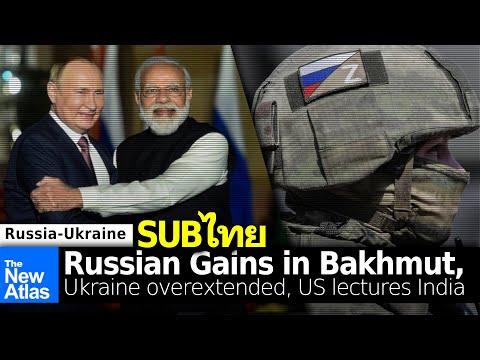
Russian Gains in Bakhmut, Ukraine Overextended, & US Lectures India

 October 17, 2022 (The New Atlas) - Update for Russian military operations against Ukraine for October 17, 2022.  Russian forces are closing...